Libya Government Sues to Cancel Oil Deal
Libya’s Tripoli government wants a court to cancel a 2023 oil deal it moved to end in April, while the company says the government’s own ministers endorsed it.

Energy: Libya
Libya’s Tripoli-based government has asked a court in the capital to cancel a 2023 oil deal with the private company Arkenu, court papers reported on Tuesday 24 November 2026 show. The Government of National Unity (GNU), led by Prime Minister Abdulhamid Dbeibah, wants the deal with the state National Oil Corporation (NOC) suspended and then annulled.
Libya’s oil fields and terminals are split between rival camps, and shutdowns regularly cut output. A fight over a deal that covers two of the country’s biggest fields therefore bears directly on supply risk for oil buyers.
Key Facts
- Who. Libya’s Tripoli-based government against Arkenu, a private oil company, and the state National Oil Corporation.
- What. A lawsuit seeks to suspend, then annul, the 2023 oil production-sharing deal.
- Where. A court in Tripoli, Libya.
- When. Court papers reported Tuesday 24 November 2026; no hearing date is known.
- As of. As of 26 November 2026, 07:59 GMT
Libya’s Tripoli government wants a court to cancel a 2023 oil deal it moved to end in April, while the company says the government’s own ministers endorsed it.
Arkenu was set up in 2023 and soon became the first private company known to export crude oil from Libya. Under a production sharing agreement it received a portion of the oil from two of the country’s biggest fields in exchange for investing in their development.
A report by the UN Panel of Experts on Libya, a group of independent sanctions monitors, said in March 2026 that Arkenu had moved more than US$3 billion to bank accounts outside the country. The panel described the company as the result of a mutually beneficial deal between Ibrahim Dbeibah, the prime minister’s nephew and adviser, and Saddam Haftar, the son and deputy of Khalifa Haftar, the military commander who controls eastern Libya and large parts of the south.
In April 2026 Prime Minister Dbeibah instructed authorities to take steps to end the agreement, citing widespread public opposition. The GNU cabinet had already withdrawn its approval in January 2025, yet the contract stayed active.
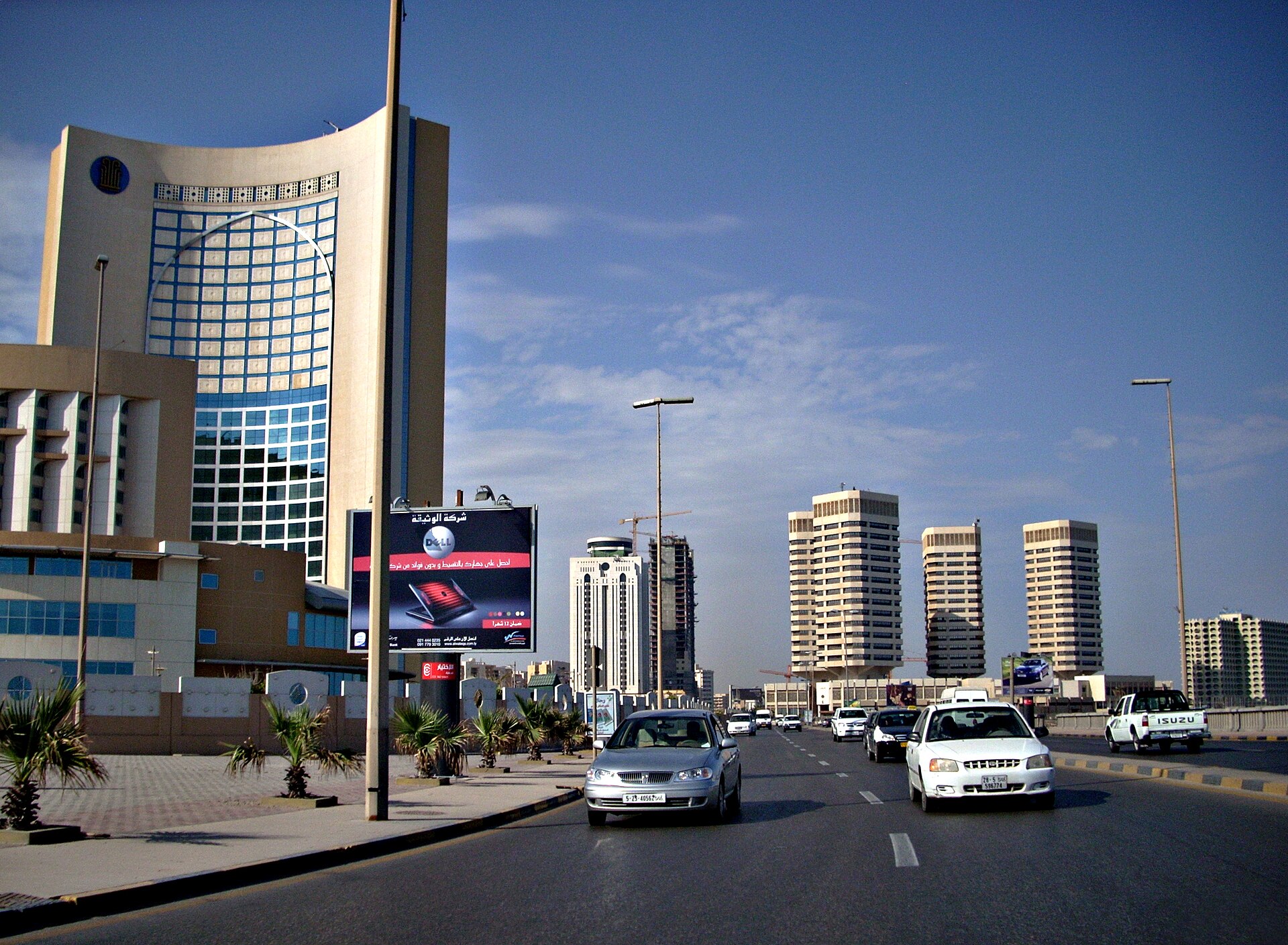
The government says the contract was “marred by legal and procedural irregularities”. It also argues that Arkenu failed to meet the legal and technical requirements to carry out oil development and production.
Arkenu rejects the case and says its agreement with the NOC “is a commercial agreement, endorsed by the Government of National Unity’s own Council of Ministers”. It adds that any attempt by the same government to annul it would raise “serious questions, including as to the proper forum for a commercial agreement”.
The company says it has not received a copy of the filing and that, to its knowledge, no proceedings have been served. It also rejects the panel’s description of its revenue and says the oil and proceeds were handled in line with its NOC deal.
Arkenu denies that Saddam Haftar has any direct or indirect ownership interest or management role, and an official in Haftar’s office said he had no connection to the company, calling it “a Libyan entity with a known board of directors”. A GNU official denied any link between Ibrahim Dbeibah and Arkenu, pointing to a commercial registration that does not list him.
Concerns over the deal have put intense political pressure on the prime minister from powerful groups in Misrata, his hometown in western Libya, where the Haftars are mistrusted. An influential military body in Misrata called earlier this month for an immediate end to the deal, saying “Libyan oil is a red line”.
Libya has been divided between rival administrations since a civil war broke out after the NATO-backed uprising that toppled Muammar Gaddafi in 2011. Tensions have eased considerably since Khalifa Haftar was repelled from an attempt to seize Tripoli in 2019-2020, with the rival legislative bodies agreeing on a unified budget.
The NOC is headquartered in Tripoli, while many of its fields, pipelines and terminals are under the control of Khalifa Haftar’s Libyan National Army, his eastern-based force, in the east and south. Shutdowns regularly impede Libyan oil output.
The court papers give no filing date, and no hearing date is known. No ruling annulling the deal has been announced.
Frequently Asked Questions
What is Arkenu?
Arkenu is a private company set up in 2023 that exports crude oil from Libya under a production sharing deal with the state National Oil Corporation. It was the first private company known to do so.
Does Arkenu accept the lawsuit?
No. It says its agreement was commercial and endorsed by the government’s own ministers, and that the courts may not be the proper forum.
When will the court decide?
No hearing date is known. The court papers give no filing date either.
Sources
Court papers in the GNU suit (reported 24 November 2026); statements by the GNU, Arkenu and an official in Saddam Haftar’s office; UN Panel of Experts on Libya report (March 2026); instruction of Prime Minister Dbeibah (April 2026).
Connected Coverage
Libya news · Libya’s Arkenu Oil Deal Still Unresolved · Libya Reopens Sharara Oil Pipeline
This article was produced by The Rio Times’ automated AI newsroom. Editorial responsibility: Matthias Camenzind, Publisher and Editor-in-Chief. The Rio Times also runs Ask Rio Times, which answers from 100,000+ of our own articles, the daily Latin America Power Map, and prediction-market odds on elections and markets.. How we use AI · Report an error