Latin America Defense Monitor — September 19–25, 2026
Weekly Edition · Sunday, 27 September 2026 · Issue #23
Executive Summary
The Big Picture: This week’s Latin America Defense Monitor opens in New York, not in the jungle or at sea. On 22 September, President Donald Trump met Venezuela’s acting president, Delcy Rodríguez, briefly on the sidelines of the UN General Assembly — the first meeting between the two since US forces captured Nicolás Maduro in January. On 23 September, Rodríguez made her UN debut and promised elections, without a date. Twenty years after Hugo Chávez stood at the same podium and called an American president “the devil,” his successor thanked the current one.
The military track did not pause for diplomacy. US Southern Command struck a go-fast boat in the Caribbean on 19 September, killing four people. That took the year-old campaign to 234 dead in 70 strikes, according to a USNI News tally. CNN reported that MQ-9 Reaper drones flying over Africa will move to the command covering South America. And the State Department’s US$52 million aid shift — money taken from Slovakia, North Macedonia, Tunisia and Iraq for Panama, Peru, Ecuador and Colombia — was notified to Congress on 15 September and still has no published split by country.
In Colombia, the army rescued four hostages, one a minor, from FARC dissidents in Antioquia on 19 September. An intelligence file naming guerrilla cells in ten public universities put the recruitment fight on the front pages. In Peru, the UNITAS naval exercise — 24 nations, more than 5,300 people — closed at Callao at the end of the week. This edition was planned with a cyber-defense component and, for the first time, a high-altitude lake phase. And Bolivia expelled an alleged member of Brazil’s Primeiro Command da Capital to Brazilian police at the border.
Bottom Line Up Front: Venezuela’s diplomatic rehabilitation and America’s military build-up are now running in the same week, in the same region, sometimes in the same country. The spectrum runs from partnership to protectorate, and this week moved the marker toward partnership in Caracas while the strike campaign, the drone move and the aid shift kept the military track pointed south. This newsletter tracks both, and this week they crossed in New York.
Latin America Defense Monitor: Where Things Stand
| Country | Status | What’s Happening |
|---|---|---|
| Venezuela | High | Trump–Rodríguez meeting held (22 September); Rodríguez promises elections at UN debut, no date given (23 September); TotalEnergies deal signed (19 September); legal basis of interim presidency still unpublished. |
| US (SOUTHCOM) | High | Caribbean strike on 19 September kills four; USNI News tally now 234 dead in 70 strikes; MQ-9 Reaper drones reported moving from Africa to SOUTHCOM; US$52m in aid shifted to four Latin partners. |
| Colombia | High | Four hostages rescued in Antioquia (19 September), two alleged guerrillas killed; intelligence file claims ELN and dissident cells in 10 public universities; four ELN hostages still held, exchange refused. |
| Peru | Active | UNITAS LXVII closes at Callao with 24 nations, cyber-defense and a first high-altitude lake phase planned; Southern Vanguard jungle exercise wrapped 18 September; F-16 scandal still unresolved in Congress. |
| Ecuador | Elevated | Pledged US vessels and US$45m package still pending; courts keep testing the legal edges of the US presence; Taura air-base rules question unanswered. |
| Bolivia | Active | Expels alleged PCC member to Brazil’s Federal Police at Puerto Suárez (19 September). |
| Argentina | Watch | Training frigate ARA Libertad returns from 161-day voyage (19 September); US sale of four Black Hawks cleared (11 September), contract pending; Falklands dispute quiet this week. |
| Brazil | Watch | Election season dominates; AV-MTC cruise missile test flights resumed in August; no new regional defense announcements. |
| Mexico | Watch | On the US major-transit list; no new border or maritime incidents reported this week. |
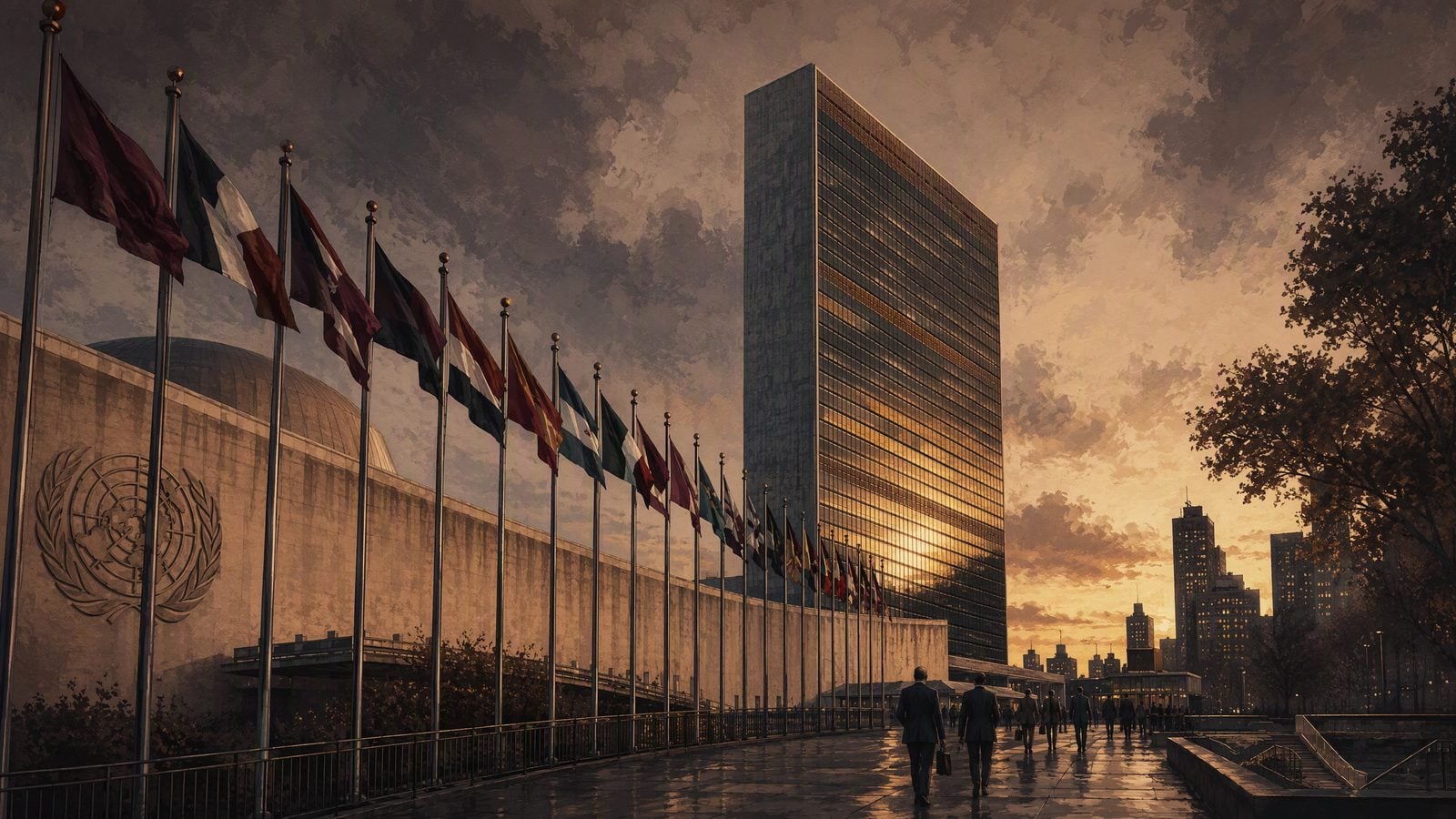
On 22 September, President Donald Trump and Venezuela’s acting president, Delcy Rodríguez, met on the sidelines of the UN General Assembly in New York. It was their first meeting since the January operation that captured Nicolás Maduro, nearly nine months after US aircraft struck Caracas.
On 23 September, Rodríguez addressed the General Assembly — her debut on that podium, as UN News reported. She said Venezuela was “being reborn” after a year of crisis, thanked the US president for restoring relations, and promised elections. She gave no date. Trump told her that elections need to happen, Axios reported, also without a date.
The symbolism ran deeper than the schedule. Twenty years ago this week, Hugo Chávez stood at the same podium and called President George W. Bush “the devil.” Rodríguez, his movement’s heir, used the same stage to thank an American president. The arc from January’s strikes to September’s handshake has no recent precedent in the hemisphere.
The oil frame holds the arrangement together. In late August, the White House detailed an oil deal that it says gives the Pentagon a stake in a new Venezuelan oil company. France’s TotalEnergies signed an agreement with Caracas on 19 September. What is not known: the date of any election; the legal basis of Rodríguez’s presidency, whose constitutional caretaker limit passed in July; and the full terms of the energy agreements.
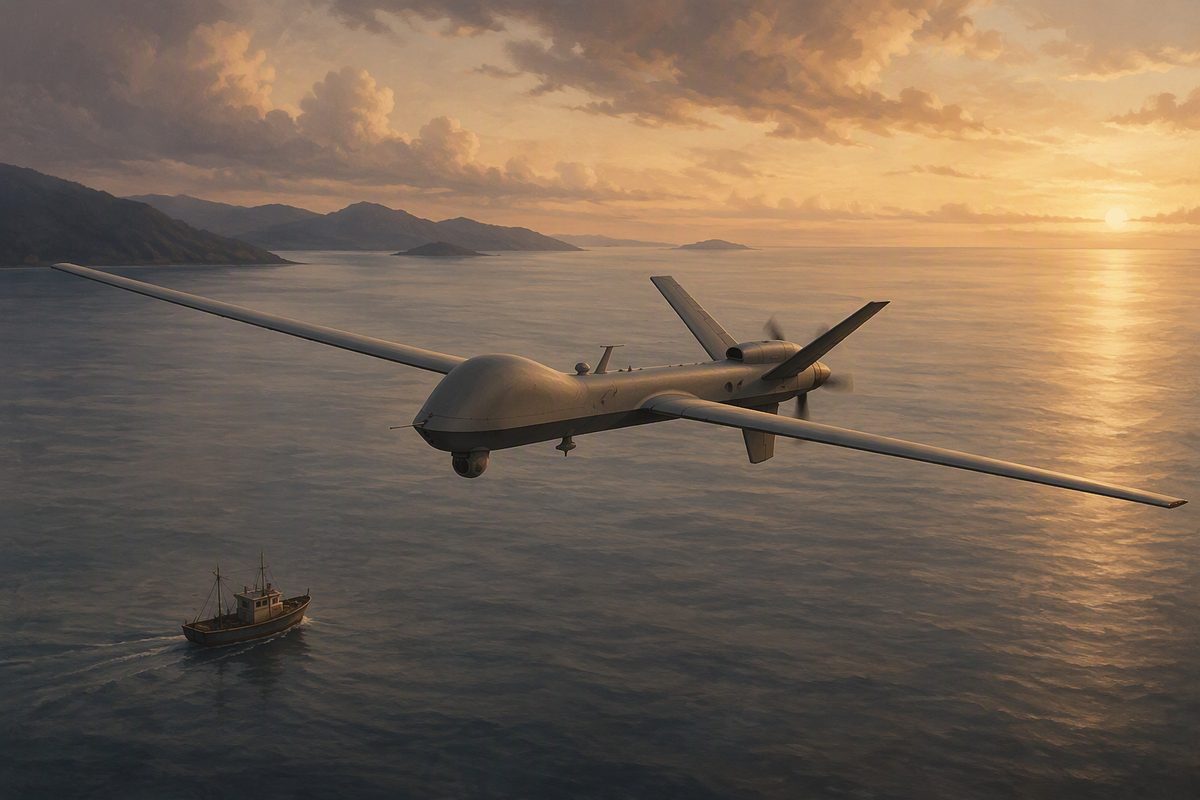
Two moves this week drew the American military map for the coming year. On 18 September, CNN reported, citing six sources, that MQ-9 Reaper drones now flying over Africa will move to US Southern Command. One source said “most” of them would go; the number is not public, and potential operations in Ecuador were mentioned.
The second move is money. As The Rio Times reported, the State Department notified Congress that it will reprogram US$52 million in Foreign Military Financing — funds earmarked for Slovakia, North Macedonia, Tunisia and Iraq — to Panama, Peru, Ecuador and Colombia. The department says the money will “combat narcoterrorism in our backyard,” help secure the Panama Canal, and prevent adversaries from establishing “strategic footholds,” a phrase widely read as China. The notice went to Congress on 15 September, and no split by country has been published.
On the water, the campaign continued: Southern Command said it struck a go-fast vessel in the Caribbean on 19 September, killing four people it described as narco-terrorists, as The Rio Times covered separately. The dead were not identified, and no drug seizure was announced.
On 19 September, Colombian troops rescued four people, one of them a minor, who had been held by FARC dissidents in rural Gómez Plata, Antioquia, as The Rio Times reported. Two alleged guerrillas were killed and one captured. The army said the kidnappers belonged to a unit led by a commander known as La Mona, part of Estructura 36, a dissident network under the commander known as Calarcá. President Abelardo de la Espriella hailed the rescue on social media as a blow against the E36 “terrorist group.”
A second front opened on paper. On 19 September, the news magazine Semana published an intelligence document claiming that the ELN and FARC dissidents run clandestine cells in ten public universities. The document says the groups recruit through student collectives. No court has verified the findings, and the universities have not confirmed them.
The ELN still holds four hostages in Norte de Santander — three officers of the Dijín criminal-investigation police and a civilian woman. On 17 September, the president rejected the exchange the group proposed. The submission-law framework, offering reduced sentences for full confessions, is still moving through Congress.
UNITAS LXVII, the 67th edition of the world’s longest-running multinational naval exercise, closed with a ceremony in La Punta, Callao, at the end of the week. Peru hosted 24 nations and more than 5,300 personnel over nearly two weeks, with ships, submarines and aircraft from across the hemisphere and Europe.
The program included a dedicated cyber-defense component and, for the first time, a planned lake phase on Lake Titicaca, above 3,800 meters. It also included amphibious landings north of Lima and a riverine phase in the Amazon. The hardware told the alignment story. Spain sent its AEGIS frigate Álvaro de Bazán; Argentina its destroyer Almirante Brown; the US its littoral combat ship Minneapolis–Saint Paul and a P-8A Poseidon patrol aircraft. Colombia, Ecuador and Chile were among the other delegations.
The jungle parallel exercise, Southern Vanguard 2026, wrapped on 18 September, according to regional defense outlets. It was held at the Peruvian Army’s Jungle School in Sauce, near Tarapoto, and trained US, Argentine, Chilean and Peruvian troops together from 8 September.
On 19 September, Bolivian police expelled a Brazilian citizen allegedly linked to the Primeiro Command da Capital — the PCC, Brazil’s largest criminal organization, born in São Paulo’s prisons and now active across South America, as The Rio Times reported from the border. He was driven under escort to Puerto Suárez, on the border with Brazil, and handed to Brazil’s Federal Police after an expulsion order was served at the migration office. His name was not released, and no court has ruled on his alleged gang links.
The handover followed an administrative expulsion order, not a court ruling. Similar expulsions of alleged PCC members from Bolivia to Brazil have happened before.
The 19 September strike was the latest in a campaign that began in early September 2025. According to a USNI News tally based on Southern Command posts, 234 people have died in 70 strikes. Other trackers differ slightly, depending on which incidents they include. No official cumulative count has been published.
The legal frame is unchanged and unresolved. Washington says it is in an armed conflict with cartels it has designated as terrorist organizations; many legal scholars say drug trafficking is a crime for police and courts, not a war. In 2025 the UN human rights office said the strikes breached international law. On 20 September, UN special rapporteur Ben Saul said they “plausibly constitute crimes against humanity.” No court has ruled.
| Country | The Deal | Where It Stands | Why It Matters |
|---|---|---|---|
| US → Latin America | MQ-9 Reaper drone fleet transfer (from Africa) | Reported 18 September; basing not announced | Moves persistent surveillance to the hemisphere; Ecuador a possible theater |
| US → Panama, Peru, Ecuador, Colombia | US$52 million in Foreign Military Financing | Notified to Congress 15 September; no split published | First concrete money behind the Rubio-tour alignment; taken from European and Mideast partners |
| Colombia | US$1 billion US security package (August) plus a share of the US$52m | Announced; implementation unclear | A large package that finances the offensive |
| Ecuador | US$45m package plus additional US naval vessels (announced 9 September) | Pending in Washington | Would fund the US-facing navy; first delivery tests the Taura legal question |
| Argentina | Four UH-60 Black Hawks | US sale cleared 11 September (about US$140m); contract pending | First US rotorcraft in years, arriving mid-Falklands tension |
| Brazil | AV-MTC cruise missile (300 km range, with Avibras) | Test flights resumed in August 2026 | The region’s only domestic cruise-missile program is back from a four-year pause |
| Venezuela | TotalEnergies agreement; US stake in reserves | Signed; terms partly unpublished | Security relationship financed through resources, not appropriations |
What the coming editions of the Latin America Defense Monitor will be tracking:
Nearly nine months ago, US aircraft struck Caracas and captured its president. This week, the American president met that president’s successor at the United Nations, and she promised elections from the same podium where her political father once declared war on American presidents. The speed of that arc remains without recent precedent, and this week it absorbed the hemisphere’s attention.
Underneath the handshake, the structure hardened. Drones are crossing the Atlantic southward. Aid money is crossing the Atlantic westward. A boat went down in the Caribbean on the week’s first day, four more families were notified in whatever form that notification takes, and the public record still cannot say exactly how many have died in a year of this. Colombia rescued four hostages and discovered its universities on a recruitment map. Two dozen nations finished rehearsing together off Callao.
The pattern of the past month holds: one track builds partnerships in capital cities, the other builds capacity over the sea. Both tracks now run through the same countries, and neither has a published rulebook. The Latin America Defense Monitor will keep reading both.
Frequently Asked Questions
Did Trump and Delcy Rodríguez meet at the UN?
Yes. They met briefly on the sidelines of the UN General Assembly in New York on 22 September, their first meeting since US forces captured Nicolás Maduro in January. A day later, Rodríguez told the Assembly that elections will be held in Venezuela, but she gave no date.
How many people have US boat strikes killed?
A strike in the Caribbean on 19 September killed four people, according to US Southern Command. That brought the campaign’s toll to 234 dead in 70 strikes since September 2025, according to a USNI News tally. No official cumulative count has been published.
Which countries get the US$52 million in US military aid?
On 15 September, the State Department told Congress it will move US$52 million in Foreign Military Financing to Panama, Peru, Ecuador and Colombia. The money comes from funds earmarked for Slovakia, North Macedonia, Tunisia and Iraq. No split by country has been published.
Sources: US Southern Command statements via Stars and Stripes and Reuters; USNI News on the strike toll; Axios and Reuters on the Trump–Rodríguez meeting; CNN on the Reaper move; PBS, NPR, The Guardian, UN News and Al Jazeera on UNGA week; the Associated Press, Los Angeles Times, Time and Euronews on the aid shift; Noticias RCN, Infobae and Semana on Colombia; La Patria and ERBOL on Bolivia; the Argentine Navy’s Gaceta Marinera, Diálogo and Defense.com on UNITAS; Defense.com and Zona Militar on Southern Vanguard; The Rio Times’ own reporting.
Background: US Strike on Caribbean Boat Kills Four as Reaper Drones Head to South America.
Background: US Shifts US$52 Million in Military Aid to Colombia, Ecuador, Peru and Panama.
Previous edition: September 12–19, 2026.
This article was produced by The Rio Times’ automated newsroom system. How we use AI · Report an error