Kenya’s Oldest Geothermal Plant Is Rebuilt
Kenya’s oldest geothermal plant gets a new lease of life, but the added power is small next to the country’s needs.

Kenya · Energy
Kenya’s oldest geothermal power station has finished a rebuild and is now in trials. Peter Njenga, managing director and chief executive of KenGen (Kenya Electricity Generating Company, the state-controlled power producer), said on Wednesday 25 November 2026 that the Olkaria I plant will lift output from 45 to about 63 megawatts.
A megawatt (MW) is a unit of power, and geothermal plants turn underground steam into electricity. Njenga said President William Ruto is due to commission the plant on Monday 7 December 2026.
Key Facts
- Who. KenGen, Kenya’s state-controlled power producer, led by Peter Njenga.
- What. Olkaria I geothermal plant rebuilt, from 45 MW to about 63 MW.
- Where. Olkaria field near Naivasha, Nakuru County, Rift Valley.
- Next. Commissioning set for Monday 7 December 2026.
- As of. 25 November 2026, 08:30 GMT.
Kenya’s oldest geothermal plant gets a new lease of life, but the added power is small next to the country’s needs.
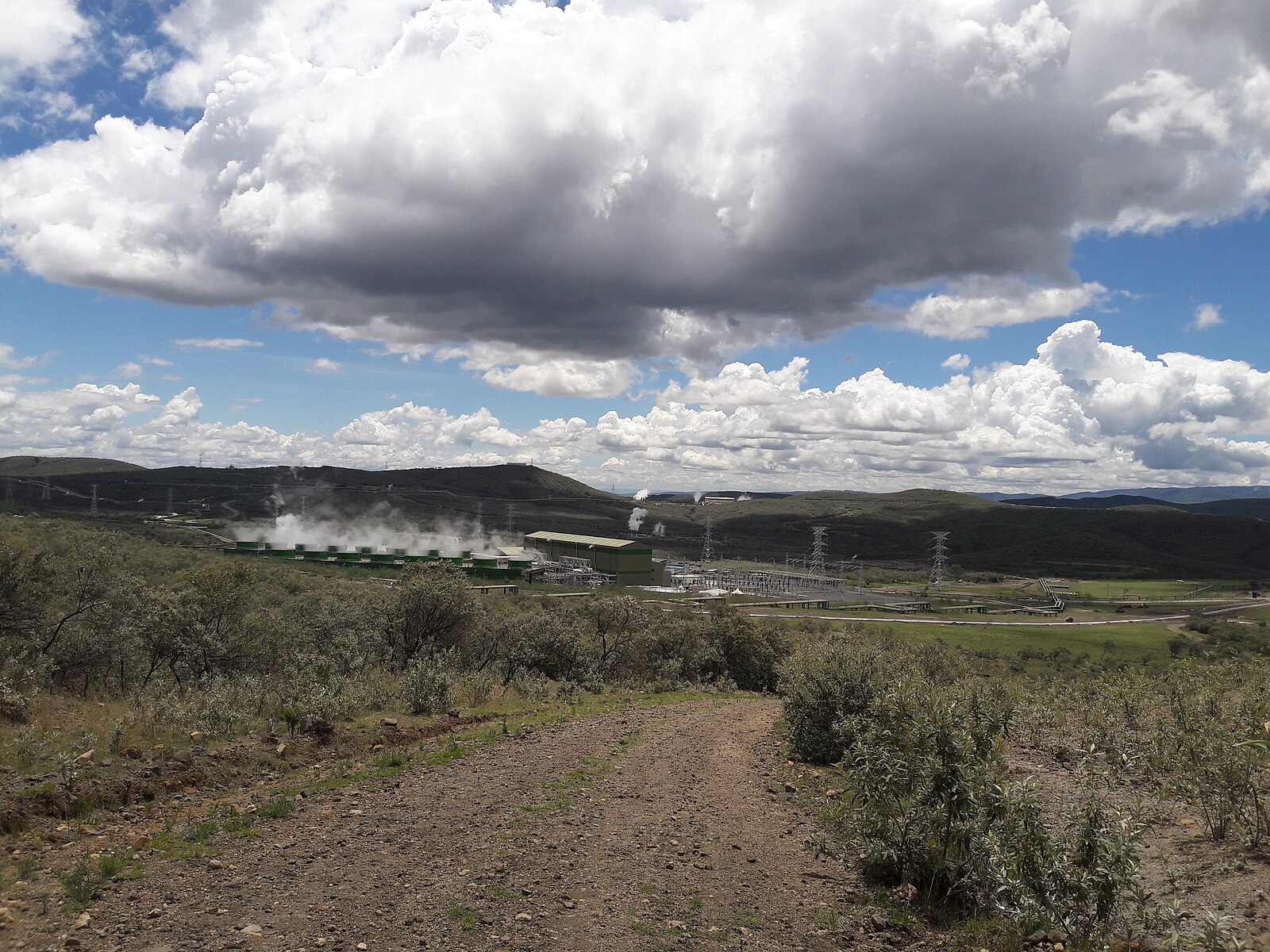
Olkaria I stands in the Olkaria geothermal field near Naivasha, in Nakuru County in Kenya’s Rift Valley. KenGen says on its project page that it is the first geothermal plant in Africa, commissioned in 1980.
KenGen’s project page says the aim is to raise installed capacity from 45 MW to 63.3 MW and to extend the plant’s operating life by more than 25 years. The scope covers rehabilitating the plant and its steam gathering system, and building a gas-insulated substation, a compact switching station that links the plant to the grid.
The page treats 63.3 MW as the plant’s new total, which is about 18 MW more than before. Some reports of the announcement say KenGen added 63.3 MW to the grid, and one report of its annual meeting gives 60.5 MW, so the exact output is still to be confirmed.
Njenga said on 25 November that the rehabilitation works at the oldest Olkaria plant are complete. The plant is in trials before commissioning.
The timetable has been public for some time. In March 2024 KenGen said completion was scheduled for December 2026, so the announcement comes ahead of that date.
In March 2024 Njenga said: “We are confident the project will be completed on time and within budget.” KenGen’s project page, which still shows the work as 83% complete, does not report the final cost.
KenGen’s project page lists no cost for the rebuild, and it does not say when the work began. The 18 MW gain equals 0.7% of Kenya’s peak demand of 2,549 MW.
A fertiliser plant at the Green Energy Park, a special economic zone at Olkaria, would need 165 MW from geothermal, about nine times the added output. The real gain at Olkaria I is therefore a longer life, 25 years or more by KenGen’s aim, rather than a large jump in supply.
That still matters because KenGen’s capital investment in the year to 30 June 2026 was KSh 15.5 billion (about US$119 million at 130 per US$), spread across its projects. In the year to 30 June 2026 KenGen supplied 8,975 gigawatt-hours (a measure of electricity delivered), or 57.2% of national demand, according to Njenga.
That share is why an 18 MW gain, small as it is, matters for a grid that leans on one company. Njenga said several investors are already on site at the Green Energy Park.
Its tenants include a fertiliser producer.
Related coverage: KenGen Seeks Investors for 5,540 Megawatts · KenGen Olkaria Licence Flaw Unfixed 18 Years
More: Kenya news
One date is already fixed for the company itself: Ronoh Kibet Charles, KenGen’s incoming managing director, takes over from Njenga on Monday 1 February 2027, KenGen announced in October 2026. The commissioning on Monday 7 December 2026 comes eight weeks before that handover.
Frequently Asked Questions
Does the rebuild solve Kenya’s power needs?
No, it mainly extends the life of an old plant rather than adding much supply.
What is geothermal power?
It is electricity made from steam heated by hot rock deep underground, drawn up through wells in the Rift Valley. The steam spins turbines that drive generators.
Why does the plant’s age matter?
KenGen’s stated aim for the rebuild is a longer operating life for the plant. That spares Kenya from having to build a replacement for the same site.
Sources: KenGen, Olkaria I Units 1, 2, 3 Rehabilitation Project page (https://www.kengen.co.ke/projects/olkaria-1-units-1-2-3-rehabilitation-project/); KenGen statements, 25 November 2026; RT exchange rate, 25 November 2026.
This article was produced by The Rio Times’ automated AI newsroom. Editorial responsibility: Matthias Camenzind, Publisher and Editor-in-Chief. The Rio Times also runs Ask Rio Times, which answers from 100,000+ of our own articles, the daily Latin America Power Map, and prediction-market odds on elections and markets.. How we use AI · Report an error