
COMPANIES · KENYA
Key Facts
- —The country Kenya is East Africa’s largest economy and one of the world’s leading users of geothermal power.
- —Why it matters KenGen, the listed state-backed power producer, may lose legal control of geothermal wells it drilled at Olkaria.
- —Why now A new audit finding made public on Wednesday, 14 October, shows the licence flaw remained unfixed in August 2026.
- —What happened A 2008 licence recorded one coordinate as 21,000 instead of 192,000, shrinking the 204 square kilometre area KenGen applied for.
- —The numbers The ministry admitted the error in 2017, then gave part of the area to another developer in 2018.
- —What it means for you Foreign energy investors in Kenya will watch whether the state protects licensed assets when its own records are wrong.
- —Still open The value of the stranded wells and the generating capacity at stake have not been disclosed.
A KenGen Olkaria licence error has left some of the company’s geothermal wells outside its legal boundary, Kenya’s Auditor-General has found. The flaw dates to a licence issued on Friday, 19 September 2008, and had still not been corrected by August 2026.
For US investors and power developers, the case tests how well Kenya protects licensed energy assets. Olkaria, in the Rift Valley near Lake Naivasha, is central to the country’s electricity supply.
The finding appears in the latest Auditor-General report, which Business Daily reported on Wednesday, 14 October. KenGen, formally the Kenya Electricity Generating Company, is listed on the Nairobi Securities Exchange and controlled by the government.
How the KenGen Olkaria Licence Error Happened
KenGen applied for the geothermal licence on Monday, 7 February 2000, according to the audit. The Ministry of Energy and Petroleum issued it more than eight years later, in September 2008.
The licence defines the field by four corner points, marked A, B, C and D. One coordinate was recorded as 21,000 instead of 192,000, which distorted the boundaries of the 204 square kilometre area.
The audit says the mistake turned a rectangular field into a triangle on paper. Parts of the geothermal domes, along with wells and steam pipes KenGen had built, ended up outside the licensed territory.
The ministry acknowledged the error in 2017, according to the audit. It still had not corrected it by August 2026, despite repeated reminders from KenGen management.
The problem deepened in 2018, when part of the affected area was cut from KenGen’s licence. That land was then allocated to another geothermal developer, which the reported extracts do not name.
“Geothermal wells, steam infrastructure and other assets developed by the company are outside the company’s licensed area,” the audit says. It adds that this restricts KenGen’s control of and access to strategic geothermal resources.
Why Olkaria Matters to Kenya’s Power Supply
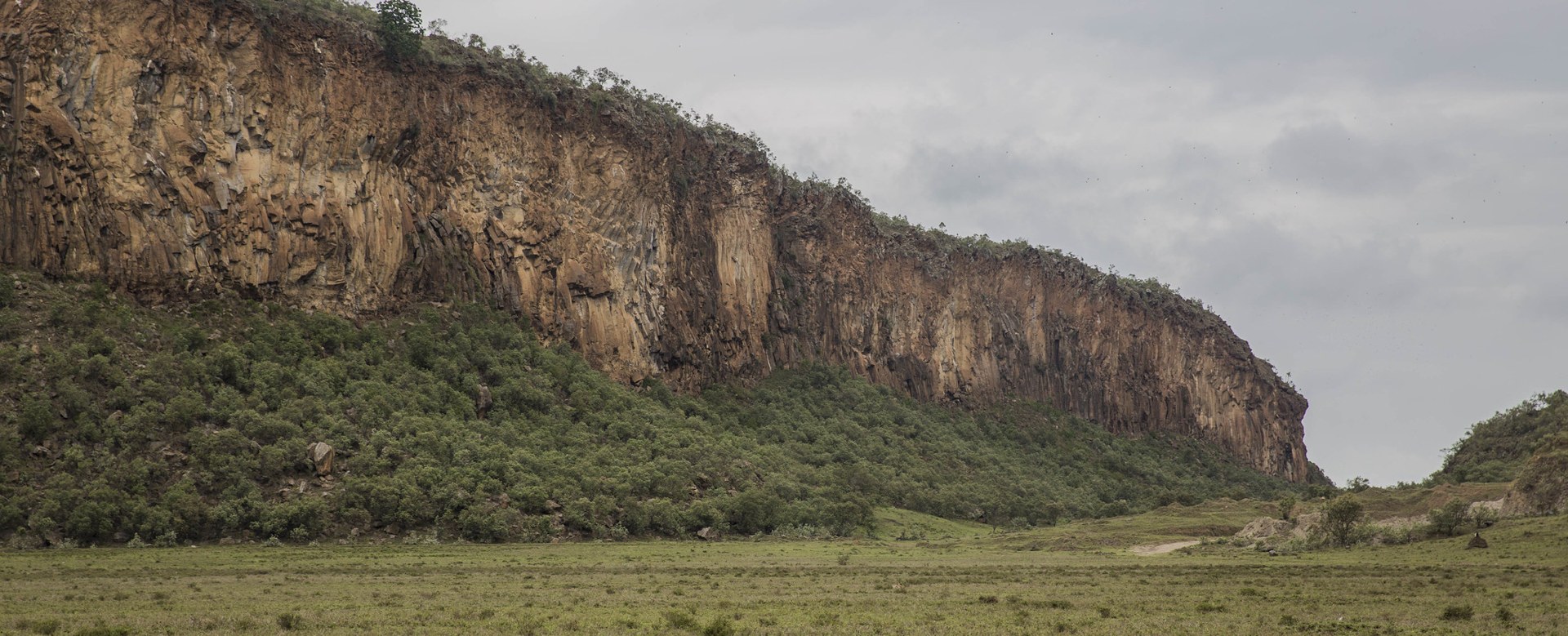
Olkaria lies inside the Hell’s Gate area of Nakuru County and hosts several KenGen power stations and wellhead plants. The company describes itself as a producer of hydro, geothermal, wind and thermal power across Kenya.
Business Daily’s reading of the report puts the wider Olkaria portfolio at 88.2% of KenGen’s geothermal base as of June 2026. That share shows why any doubt over the boundaries carries weight for the company.
The auditors warn that KenGen is exposed to the risk of losing rights over strategic resources and its investments there. The stakes rise if the disputed boundaries overlap with productive wells or steam-gathering systems.
There is a stabiliser in the story, however. Nothing in the reported findings suggests that power output from Olkaria has been cut or that any plant has stopped running.
The error is also administrative rather than geological, so a corrected licence map could in principle resolve it. The difficulty is that part of the land now sits with a second licence holder.
For background on the country’s energy base, see Kenya Natural Resources Explained 2026. Our KenGen company profile tracks the listed shares.
What It Means for US Readers
Kenya courts foreign capital for power, including geothermal projects backed by development lenders and private developers. A dispute over who holds rights to drilled wells raises questions about title security for any outside investor.
US firms that supply drilling services, turbines or finance to East African geothermal projects will watch how the ministry responds. A quick correction would ease concern, while a long dispute could slow new projects.
Shareholders in KenGen face a narrower question about the value of assets that now sit outside its licence. The company has not yet said how much of its investment is affected.
Readers following who shapes Kenya’s economy can find the main institutions in Who Runs Kenya’s Economy, the Key Players in 2026. The energy ministry and KenGen both feature among those actors.
What Is Not Known
The precise value of the assets inside the disputed area could not be established from the available information. The amount of generating capacity directly affected is also unknown.
KenGen had not responded to Business Daily’s request for comment by the time of publication. The ministry has not publicly explained why the correction has taken nearly a decade.
It is also unclear whether the second developer has drilled in the excised zone. Any route to a fix, whether a new licence map or compensation, has not been announced.
Frequently Asked Questions
What is the KenGen Olkaria licence error?
A 2008 geothermal licence for KenGen recorded one boundary coordinate as 21,000 instead of 192,000. The mistake shifted the licensed area and left some KenGen wells and pipes outside it.
Who found the problem?
Kenya’s Auditor-General flagged it in the latest audit of the company. The audit says the energy ministry admitted the error in 2017 but had not fixed it by August 2026.
Has power output from Olkaria fallen?
The reported findings do not say that any plant has stopped or that output has dropped. The risk described is legal, concerning rights over wells and infrastructure.
Why does another developer matter?
In 2018 part of the affected area was removed from KenGen’s licence and given to another geothermal developer. That makes a simple correction harder, because a second party now holds rights there.
What happens next?
No corrective step or timetable has been announced by the ministry or KenGen. Investors will look for a revised licence map or a statement from the company.
Sources: Business Daily, KenGen risks losing Olkaria wells over 18-year licence blunder, 14 October 2026 (Auditor-General report extracts); Kenya Electricity Generating Company (KenGen), company website.
Editorial responsibility: Matthias Camenzind, Editor-in-Chief · Editorial standards · Report an error