JBS, Marfrig Cattle Supply Boost as US Reopens Mexico Border
Shares of JBS and Marfrig successor MBRF surged after the USDA announced a phased reopening of its southern border to Mexican cattle imports, easing a supply shortage.
JBS Marfrig cattle supply prospects improved sharply after the United States government announced a phased reopening of its southern border to Mexican cattle imports, ending a closure triggered by a New World screwworm outbreak. Shares of the Brazilian meatpacking giants, which operate massive beef processing networks on US soil, climbed on the news – JBS about 10% and Marfrig’s successor MBRF about 5.5% – as investors bet on easing cattle shortages that have squeezed margins across the American beef industry.
—USDA announcement. The USDA announced a phased reopening of southern cattle ports starting August 24, 2026, with Douglas, Arizona.
—Screwworm inspections. All cattle entering through reopened ports will receive a full USDA inspection for New World screwworm.
—Market reaction. Shares of JBS (JBSS3) rose about 10% and MBRF (MBRF3) – which controls US processor National Beef – gained roughly 5.5%; US peer Tyson climbed about 7%.
—Supply chain logic. Reopening Mexican cattle imports eases US cattle shortages, improving availability and potentially lowering input costs for processors.
—Phased approach. The reopening is gradual and contingent on Mexico’s progress, with no firm dates yet for ports in New Mexico.
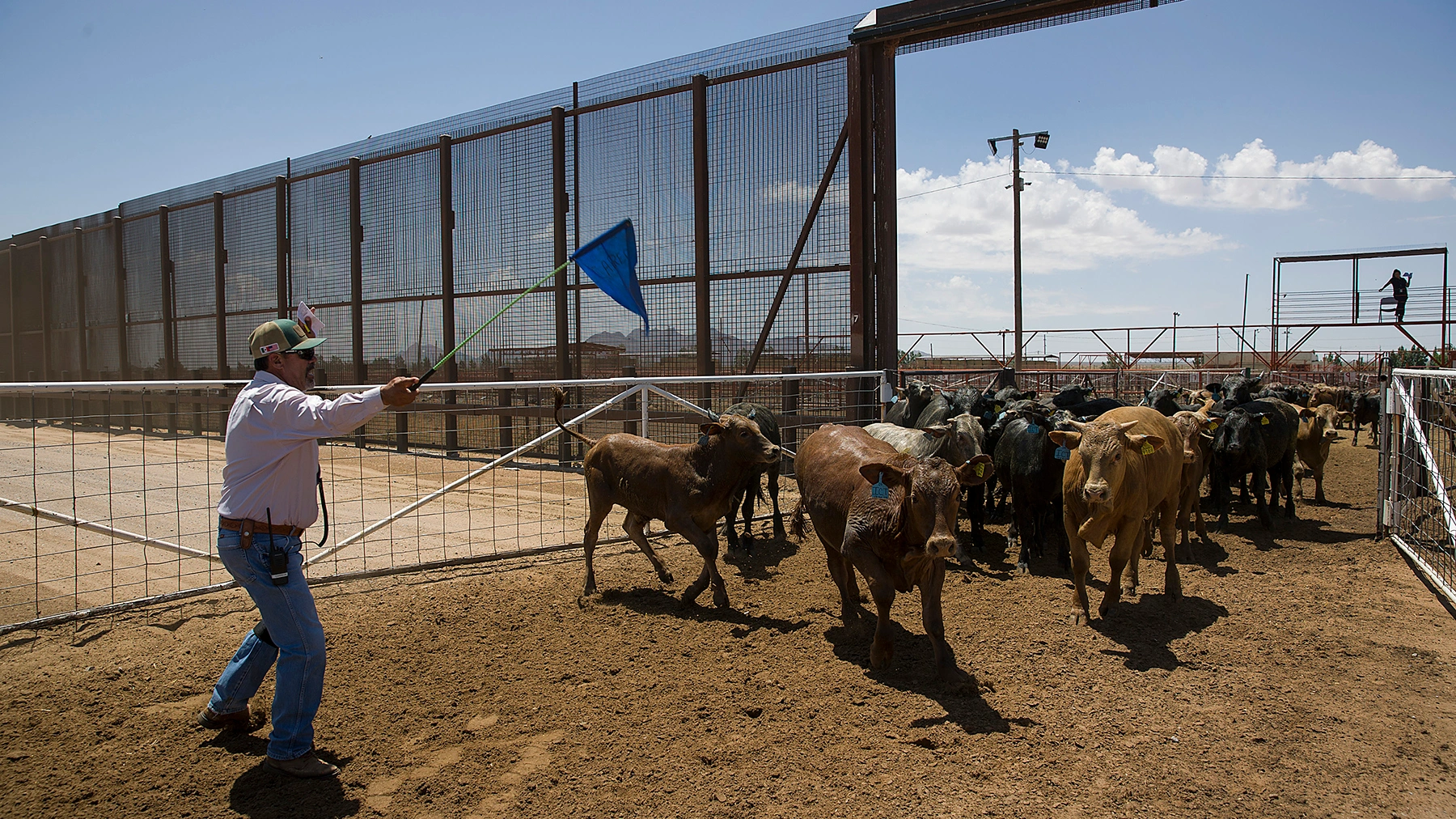
The Border Reopening: A Phased Plan
The US Department of Agriculture (USDA) confirmed on July 24, 2026, that it will begin lifting the suspension on Mexican cattle imports. The first port of entry to resume operations will be Douglas, Arizona, set to reopen on August 24.
The federal announcement specified that the Animal and Plant Health Inspection Service (APHIS) would then initiate steps to reopen ports in Santa Teresa and Columbus, New Mexico. However, the USDA did not provide firm dates for those subsequent locations, stressing that the entire process is contingent on Mexico’s adherence to a joint action plan.
To mitigate risk, every single animal entering through the reopened ports will undergo a full USDA inspection for New World screwworm. Officials noted that as of July 22, the nearest active screwworm case was approximately 325 miles away from the Douglas entry point.
The phased design means the supply relief will be gradual. The USDA explicitly warned that the reopening could be paused or adjusted if the epidemiological risk changes, adding a layer of uncertainty for cattle buyers.
Why Mexican Cattle Matter to US Beef Processors
The United States cattle herd has been contracting, making the country increasingly reliant on imported feeder cattle from Mexico to sustain its beef production capacity. Mexico is a critical supplier of lightweight cattle that are sent to American feedlots to be fattened before slaughter.
When the border closed due to the screwworm detection, that vital artery of livestock was severed. US beef processors, particularly those operating in border states, faced a tightening supply of animals just as domestic cattle prices remained elevated.
This dynamic creates a classic margin squeeze: processors must pay high prices for scarce cattle while competing in wholesale beef markets where prices cannot always keep pace. Reopening imports directly addresses the supply side of that equation, potentially lowering procurement costs for slaughterhouses.
For companies with large US slaughter and processing footprints, even a partial restoration of Mexican cattle flows can materially improve plant use rates and operating margins. The market reaction reflects this direct link between border policy and processor profitability.
Live Company IntelligenceJBS N.V. — the full investor dossier
Wall Street view
Valuation & profitability
Price & risk
$11.4552-wk high
$17.27
Revenue trend · 6y
Ownership
Dividend
The Brazilian Giants’ American Footprint
To understand why a US border policy moves stocks on Brazil’s B3 exchange, foreign investors must grasp the scale of JBS and Marfrig in the United States. JBS USA is one of the largest beef processors in the country, operating numerous slaughterhouses and fabricating facilities.
Marfrig – now part of the merged group MBRF – controls its US exposure through National Beef Packing Company, the fourth-largest US beef processor. For both Brazilian parent companies, the North American market represents a dominant share of total revenue and operational profit.
When US cattle supply tightens, the earnings before interest, taxes, depreciation, and amortization (EBITDA) generated by these American subsidiaries comes under direct pressure. Conversely, any policy that loosens cattle supply is a tailwind for their largest profit centers.
The share moves after the announcement – JBS up about 10% and MBRF (MBRF3) about 5.5% – reflect the market’s rapid recalculation of the earnings power of these US-domiciled assets. At an exchange rate of 5.1 Brazilian reais to the US dollar (USD/BRL 5.1), every dollar of improved margin in the US translates into a significant boost to consolidated results reported in reais.
The New World Screwworm Threat
The New World screwworm (Cochliomyia hominivorax) is a parasitic fly whose larvae feed on the living tissue of warm-blooded animals, including cattle. An infestation can be fatal if untreated, making it a devastating threat to livestock herds.
The screwworm was officially eradicated from the United States in 1966 and from Mexico by 1991, following a decades-long sterile insect technique program. However, it persists in parts of South America and the Caribbean, creating a constant risk of reintroduction through the movement of infested animals.
The detection of new cases in Mexico prompted the USDA to suspend cattle imports as a biosecurity measure to protect the US herd. The phased reopening signals that authorities believe the immediate outbreak is being contained, but the rigorous inspection protocol at ports like Douglas highlights that the threat is not considered eliminated.
For foreign investors unfamiliar with agricultural biosecurity, this episode illustrates how a single veterinary health issue can disrupt a multi-billion-dollar cross-border supply chain. The market’s sensitivity to the reopening highlights just how fragile the just-in-time livestock supply system can be.
Market Implications and Gradual Recovery
While the share price reaction was immediate, the actual flow of cattle into the United States will be a slow trickle before it becomes a stream. With only the Douglas, Arizona port opening on August 24, and no timeline for the larger New Mexico crossings, the total volume of imported cattle will initially be limited.
Analysts caution that the full benefit to processor margins will take quarters to materialize. The cattle feeding cycle means that animals imported as feeders in late August will not reach slaughter weight for several months, delaying the impact on beef production volumes.
Furthermore, the USDA’s cautious tone and the conditionality of the reopening introduce political and sanitary risk. Any new screwworm detection near the border could halt imports again, creating volatility for companies like JBS and MBRF that have become structurally dependent on binational cattle flows.
For long-term investors in Brazilian protein exporters, the episode reinforces a key thesis: these are effectively global companies whose operational fortunes are dictated by sanitary policies and cattle cycles in their host countries, not just demand in their home market.
More: Brazil news in English, every day from The Rio Times.
Frequently Asked Questions
Connected Coverage
Sources: USDA.
This article was produced by The Rio Times’ automated newsroom system. How we use AI · Report an error
LatAm Markets: Live Signals → — real-time movers, turnover leaders and FX across Latin America.
Read More from The Rio Times