A Sahel Junta and a Coastal Democracy Just Agreed Where Their Border Runs
West Africa · GEOPOLITICS
Key Facts
- —Agreement Ivory Coast and Mali adopted the definitive route of their shared border at the fourth meeting of their joint technical border commission, held in Bamako from 21 to 25 August 2026.
- —Documents The two sides approved a draft delimitation treaty and validated the reference framework for future demarcation work and the installation of border markers.
- —Groundwork The meeting reviewed a joint reconnaissance mission carried out from 12 to 19 April 2026 in the Pogo–Zégoua border zone.
- —Next step Both governments are expected to formally sign the delimitation treaty before the end of 2026. Physical marking of the border has not yet begun.
A Sahel junta and a coastal democracy just agreed where their border runs. The deal, reached in Bamako and announced on 26 August, is a quiet piece of cooperation between two states on opposite sides of West Africa’s deepest political rupture.
Ivory Coast and Mali have adopted the definitive route of their shared border, closing the legal stage of a process that now moves toward physically marking the frontier on the ground.
The agreement came at the fourth meeting of the joint technical commission on the demarcation of the border, held in Bamako, the Malian capital, from 21 to 25 August, according to a statement published by the Ivorian government on 26 August.
What the Ivory Coast–Mali border agreement covers
Border work happens in two stages, and the distinction matters. Delimitation is the legal act of defining where a boundary runs on paper. Demarcation is the physical act of marking it on the ground.
This agreement is the first of the two. Experts from both countries reached a consensual position on the route, adopted the draft of a delimitation treaty, and validated the framework that will govern demarcation and the installation of boundary markers.
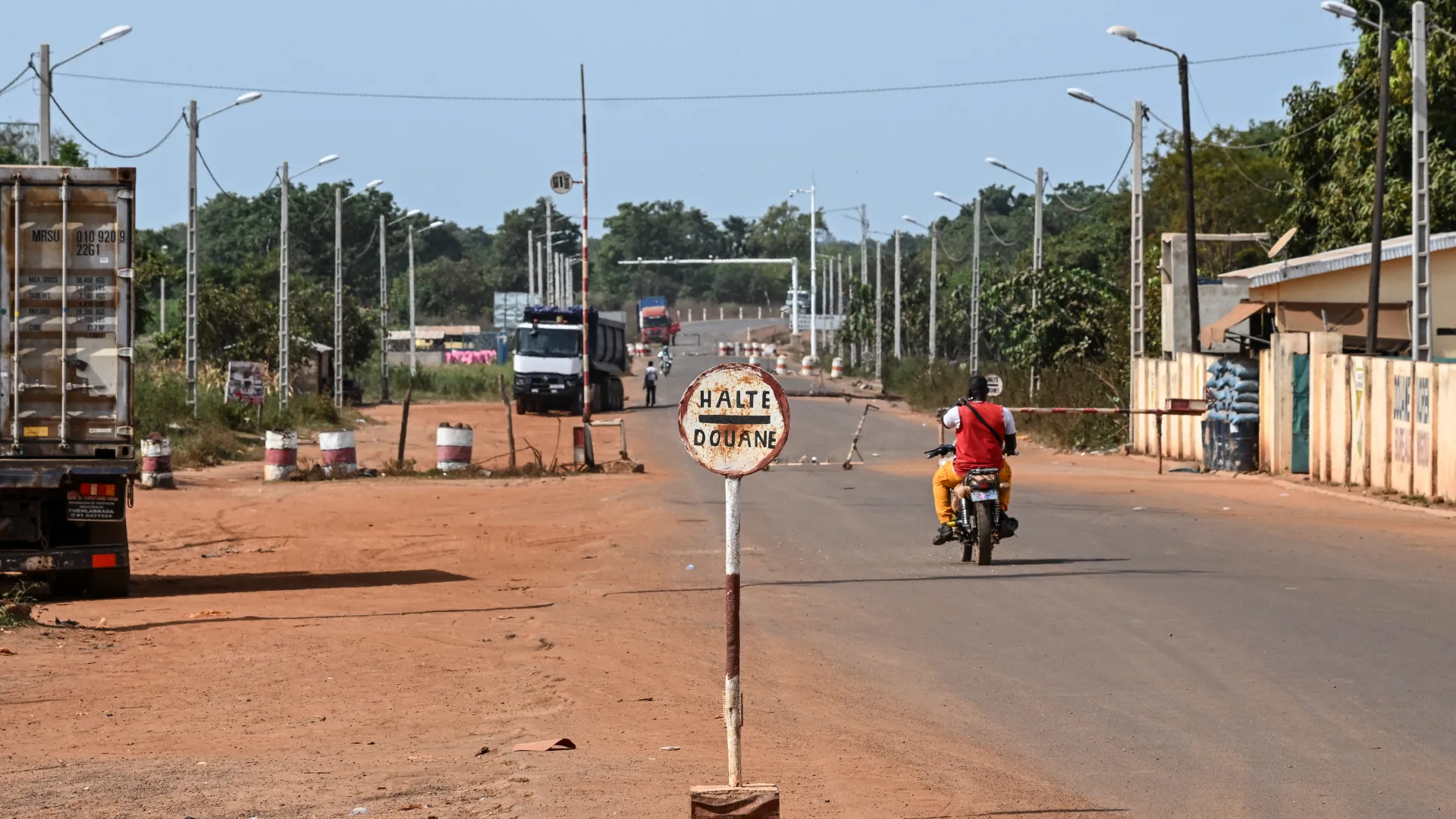
The Ivorian delegation was led by Diakalidia Konaté, the executive secretary of Ivory Coast’s National Borders Commission. The technical basis for the talks was a joint reconnaissance mission conducted from 12 to 19 April 2026 in the zone around Pogo in Ivory Coast and Zégoua in Mali, on the main road corridor linking the two countries.
Both governments are now expected to sign the delimitation treaty before the end of 2026. Only after that does demarcation — the placing of physical markers — begin, and it has not started yet.
Two governments that are supposed to be estranged
The political context makes this more interesting than a boundary survey normally is. Mali has withdrawn from ECOWAS, the Economic Community of West African States, and anchored itself in the Alliance of Sahel States alongside Burkina Faso and Niger.
Ivory Coast has remained one of the bloc’s most committed members and one of the loudest critics of the Sahel juntas. Relations between Abidjan and Bamako hit a low in July 2022, when Mali detained 49 Ivorian soldiers it accused of being mercenaries; they were held for months and released only in January 2023.
Yet the technical commission has continued to meet, and has now completed its fourth session with a consensual outcome. That is a reminder that state machinery often keeps working when the politics above it does not.
It is also a practical necessity. The Pogo–Zégoua corridor is one of the routes through which landlocked Mali reaches Ivorian ports, and neither government benefits from ambiguity along it.
Why a settled border is worth money
Undefined boundaries are expensive in ways that rarely make headlines. They complicate customs, obstruct infrastructure that has to cross them, and give both smugglers and armed groups room to operate.
For a landlocked country, the arithmetic is starker still. Mali’s imports and exports move overwhelmingly by road to coastal ports, and every hour of friction at a crossing is a cost carried by Malian consumers.
A delimited border also makes cross-border investment easier to finance. Mining concessions, power lines and road projects near a frontier are difficult to underwrite when the frontier itself is contested.
Border communities have their own stake. A clearly defined line is expected to help manage farmland, livestock movements and relations between farmers and herders in areas where readings of the frontier have differed.
The West African question this leaves open
ECOWAS has spent two years absorbing the departure of three member states, and the standard assumption is that regional integration is going backwards. This agreement complicates that assumption.
What appears to be emerging instead is bilateralism: states dealing directly with their neighbours on the specific things they need, outside the weakened multilateral framework. That is a downgrade from a common market, but it is not a rupture.
Border definition is usually the last thing hostile neighbours agree on and the first thing they weaponise, so a consensual route between Abidjan and Bamako is a genuine signal about intent. It says both capitals expect the crossing to keep carrying trade regardless of who governs in Bamako.
The caveat is real: the treaty has not been signed, and the end-of-2026 timetable is an announced intention rather than a commitment. Both governments have missed announced deadlines before.
Frequently Asked Questions
What did Ivory Coast and Mali agree?
Technical experts from both countries consensually adopted the definitive route of their shared border and approved a draft delimitation treaty, plus the framework for future demarcation work.
When and where were the talks held?
The fourth meeting of the joint technical border commission ran from 21 to 25 August 2026 in Bamako. It reviewed a joint reconnaissance mission carried out from 12 to 19 April 2026 in the Pogo–Zégoua zone.
When will the treaty be signed?
Both governments are expected to sign before the end of 2026. That is a stated intention rather than a confirmed date.
Why is this politically notable?
Mali has left ECOWAS and joined the Alliance of Sahel States, while Ivory Coast remains a committed ECOWAS member. Relations were badly strained by Mali’s detention of 49 Ivorian soldiers in 2022 and 2023.
Has the border been physically marked?
No. Demarcation, meaning the installation of boundary markers on the ground, has not begun. Only the framework governing it has been validated.
Connected Coverage
West Africa’s institutional rupture runs through the Sahel bloc’s new parliament in Niamey and Guinea’s exit from the eco currency plan. The wider regional contest is mapped in Africa: The New Scramble, with more on our Western Africa hub.
Sources
This article was produced by The Rio Times’ automated newsroom system. How we use AI · Report an error · Editorial responsibility: Matthias Camenzind, Editor-in-Chief