RIO DE JANEIRO, BRAZIL – The country’s government decided to ban beef exports to curb rising prices, a restriction similar to those implemented for a decade until 2015. If past interventions serve as a guide, Argentina’s new ban on beef exports will not succeed in holding down inflation.
Beef prices are surging 65% year-on-year and are well above the 46% inflation rate that prompted Argentine President Alberto Fernández to suspend beef shipments from the world’s 5th largest exporter for 30 days.
While the measure may reap quick political benefits, the long-term consequences for the beef sector are well known in Argentina, which implemented similar restrictions for a decade until 2015: ranchers abandon the business, production drops, and price pressure mounts again.
“It’s not even clear to me whether this will have a genuine impact on controlling food inflation,” said María Castiglioni, director of C&T Asesores, a consulting firm in Buenos Aires. “To lose market share when it takes so long to open new export markets and start losing jobs in a sector that is working well, this measure is truly inexplicable.”
Fernández felt the impact of the export ban firsthand in 2006, when he served as chief of staff to President Néstor Kirchner, the late husband of current Vice President Cristina Fernández de Kirchner, who also ruled the country from 2007 to 2015. Just like now, the plan at the time was to offer more beef to the local market and lower domestic prices.
But it backfired. When ranchers turned their backs on the industry after the ban, Argentina lost almost 20% of its cattle herd in 2011. Cattle prices increased more frequently in the ensuing years, including a 126% annual increase at the end of 2010, and the country was overtaken by Uruguay and Paraguay in the international market.
So far, the official decree that would implement the new ban has not been published. Still, the announcement has sparked the wrath of the industry: chambers of commerce have suspended beef sales for several days and cattle ranchers are calling for protests.
Like the old ban, cattle ranchers and associations fear that this ban could last much longer than originally announced.
“In 2006, the ban was supposed to last for 180 days and ended up lasting 10 years,” said Miguel Schiariti, president of the Chamber of Industry and Commerce of Meat and Derivatives (CICCRA), referring to the strict export controls since then. “They are blaming the industry for prices, but inflation is the government’s fault because of the fiscal deficit and money printing.”
Old manual
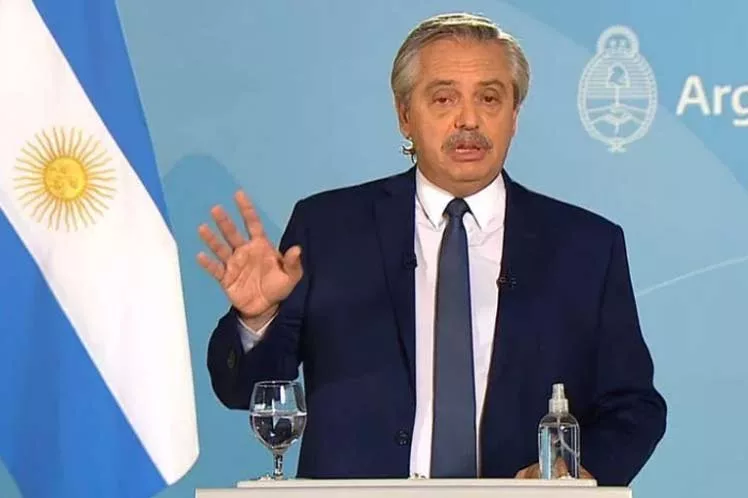
Fernández argued that he was forced to take these measures because global commodity prices have skyrocketed in recent months, causing beef prices in Argentina to “spiral out of control.”
International demand “has created distortions in domestic prices that can no longer be tolerated,” Fernández told a radio station on Tuesday. “We can not continue to watch beef prices rise month by month without any justification.”
More: Argentina news in English, every day from The Rio Times.
In depth
This article was produced by The Rio Times’ automated AI newsroom. Editorial responsibility: Matthias Camenzind, Publisher and Editor-in-Chief. The Rio Times also runs Ask Rio Times, which answers from 100,000+ of our own articles, the daily Latin America Power Map, and prediction-market odds on elections and markets.. How we use AI · Report an error