Europe Intelligence Brief — Thursday, September 10, 2026
Executive Summary
Europe Intelligence Brief for September 10: The ECB raises its deposit rate to 2.50 per cent in Berlin, its second increase of the year, Serbia's
Europe & Russia Intelligence Brief — Thursday, September 10, 2026
Key Facts
- The hike. The European Central Bank raised its deposit rate by a quarter of a percentage point to 2.50 per cent at a governing council meeting held in Berlin on Thursday, the second increase of the year, with euro-area inflation at 3.3 per cent in August and energy inflation at 14.3 per cent.
- The deal. Volkswagen and its works council agreed a restructuring that will cut 100,000 jobs by the end of the decade, management and labour aligning on the largest workforce reduction in the company’s history as European carmakers absorb the energy shock.
- The switch. Serbia’s Aleksandar Vučić resigned the presidency and announced his candidacy for prime minister, with a parliamentary election set for 25 October — the date, finally, for a succession he has choreographed for months.
- The order book. Ukraine is contracting for roughly 1,000 Patriot missiles from its allies, its defence chief said, the largest single air-defence commitment of the war as the UN counted 437 civilian deaths in July, the highest monthly toll since March 2022.
- The bet. Schroders is buying Hungarian government bonds in what Bloomberg called a 1990s-style bet on euro adoption, the first serious convergence trade the region has produced since Budapest’s political reset.
- The agenda. Sweden’s election campaign is being set by far-right leader Jimmie Åkesson, Bloomberg reported, as the September vote approaches with migration and energy prices doing the sorting.
Thursday’s Europe made its choices in capital letters. The central bank chose Berlin for its rate decision and restraint for its language; Wolfsburg chose the largest restructuring in its history; Belgrade chose a date; Kyiv chose a thousand missiles. Each decision prices the same input: a war in the Middle East that has pushed energy costs back to the top of every European ledger.
Read in English, German, French, Italian, Spanish, Polish and Russian, across the continent’s largest outlets and our own Europe desk.
Berlin: The ECB’s Second Move Of The Shock Year
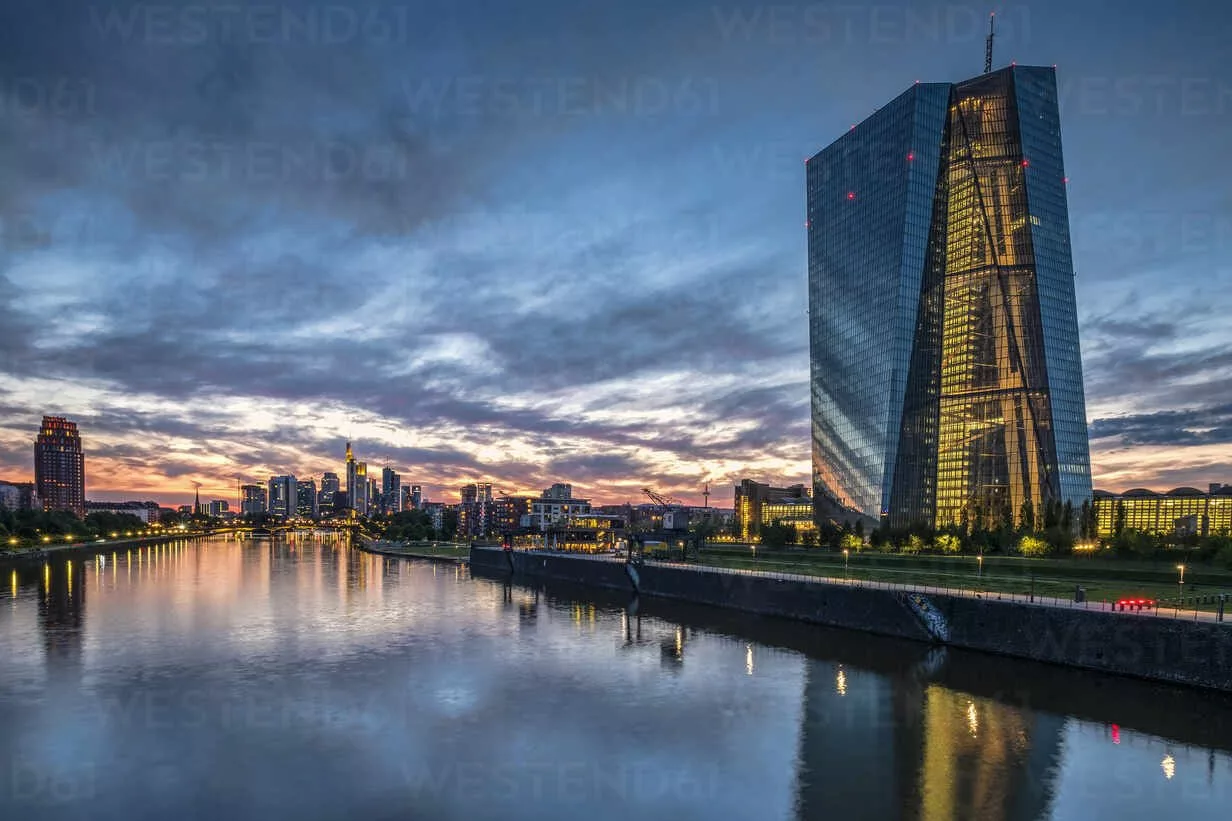
The European Central Bank’s governing council, meeting away from Frankfurt in Berlin, raised the deposit rate to 2.50 per cent from 2.25 per cent on Thursday, matching a June increase and delivering the move all 65 economists in a Reuters survey had predicted. Euro-area inflation reached 3.3 per cent in August, with energy inflation running at 14.3 per cent after Brent crude returned above US$100 a barrel for the first time since July.
The statement’s language matters more than the move, which markets had fully priced: policymakers signalled readiness to tighten further if the inflation outlook does not improve, while the updated staff projections — the first since June — were watched for whether the energy shock is treated as persistent or passing. Economists surveyed by Reuters largely expect Thursday’s increase to be the cycle’s last, even as futures markets price a third.
The Berlin venue was its own message: the council holds one meeting a year outside Frankfurt, and Germany supplied it. It also supplied the succession question hovering over the press conference — President Christine Lagarde has hinted she may not serve out her term to October 2027, and Chancellor Friedrich Merz’s government is weighing Bundesbank president Joachim Nagel as her successor, as Reuters reporting carried by Chinese financial media described.
Wolfsburg: One Hundred Thousand Jobs, Agreed
Volkswagen and its works council reached agreement on a restructuring that will eliminate 100,000 jobs by the end of the decade, Bloomberg and the Economic Times reported on Thursday — management and labour aligned on the largest workforce reduction in the company’s history. European carmakers are absorbing a double shock: energy costs lifted by the Middle East war, and a Chinese competitive presence in electrification that domestic incumbents have spent years underestimating.
A cut of this size agreed rather than imposed is a signal of how far the conversation has moved: the works council signed because the alternative was worse, and German industrial policy now openly prices a smaller car sector. The knock-on runs through central Europe’s supplier belt and, on this side of the Atlantic, through the Mexican and Brazilian plants that have long been the group’s most profitable.
Belgrade: The Date Arrives, And The Office Changes
Aleksandar Vučić resigned the Serbian presidency and announced he will contest the prime ministership at a parliamentary election set for 25 October, as bne IntelliNews reported and Wednesday’s edition anticipated. The choreography matters as much as the move: a presidency with ceremonial weight traded for an office with operational control, at the head of a party list rather than a personality cult.
The opposition’s task between now and 25 October is to make the ballot about the office Vučić is leaving as much as the one he seeks. The international file — Serbia’s EU alignment versus its wartime-era partnerships — will be argued through the campaign, but the election’s real subject is the concentration of a decade and a half of power in one career.
Kyiv: A Thousand Missiles
Ukraine’s defence chief said the country is contracting for roughly 1,000 Patriot missiles from its allies, as carried in Wednesday’s regional wires — the largest single air-defence commitment of the war. It lands beside the UN’s count of 437 civilian deaths in July, the highest monthly toll since March 2022, which this desk reported on Wednesday.
The order is less a procurement than a statement of expected intensity: missile inventories across the alliance were sized for expeditionary campaigns, not for a continental air war in its fourth year. Every Patriot battery delivered to Ukraine is a battery not covering somewhere else, and European capitals know the arithmetic even when they do not say it.
Budapest: The Convergence Trade Returns
Schroders is buying Hungarian government bonds in what Bloomberg called a 1990s-style bet on euro adoption — the first serious convergence trade the region has produced since Budapest’s political reset earlier this year. The logic is structural: a country whose politics have normalised can price towards the euro area it eventually intends to join, and every step of that repricing pays the holders of its paper.
The trade also carries a message about the neighbourhood: convergence requires a believable accession path, and Hungary’s is suddenly the continent’s least improbable. For the euro-sceptic politics that defined Budapest for a decade, the return of the bond-market convergence bid is the kind of verdict that arrives without an election.
Stockholm: Åkesson Sets The Agenda
Bloomberg reported on Thursday that Sweden’s election campaign is being set by far-right leader Jimmie Åkesson, with migration and energy prices doing the sorting among voters ahead of the vote. In a European autumn thick with elections, Sweden’s is the one where the incumbent conversation has most visibly been captured by its challenger’s themes.
The energy column is the part that travels: Sweden’s electricity debate, like Germany’s industrial one, is ultimately about who pays for the war’s hydrocarbon premium. That question has now outlasted every government that tried to answer it briefly.
What This Means From Latin America
A euro area tightening into an energy shock is not a neutral fact for this hemisphere. Latin America’s euro-denominated borrowers — from Mexican corporates to Chilean utilities — face a stronger currency and dearer refinancing at exactly the moment the region’s own energy bills rise; and the ECB’s restraint, if Thursday’s hike really is the last, sets the external rate environment Mexico’s accelerating inflation and Brazil’s subsidy programme must navigate.
Volkswagen’s 100,000-job restructuring reaches this hemisphere through the group’s Puebla and Brazilian plants, historically its profit centres, which now carry more of the group’s weight as Europe shrinks — a quiet transfer of automotive gravity toward the Americas that no trade negotiation announced. And Ukraine’s thousand-missile order book is a reminder that European security spending will crowd the development and climate budgets Latin American diplomacy had hoped to draw on.
What We Are Watching
- Lagarde’s press conference language — whether Thursday’s statement keeps the door open to a December move, as futures markets price, or closes it, as most economists expect.
- The succession file — whether Berlin moves to nominate Joachim Nagel for the ECB presidency, and what Lagarde’s Davos-shaped next chapter does to the council’s balance.
- VW’s implementation timeline — how the 100,000 reductions are phased, and which plants outside Germany absorb the work that remains.
- Serbia’s campaign — whether the opposition can make 25 October a referendum on fifteen years of one career, or whether the choreography holds.
- The Patriot pipeline — how quickly the roughly 1,000 missiles become deliveries rather than contracts, and which allied inventories pay for them.
- Sweden’s vote — whether Åkesson’s agenda-setting converts into a governing arithmetic, and what that does for the Nordic energy debate.
Frequently Asked Questions
What did the ECB decide on Thursday?
The governing council, meeting in Berlin, raised the deposit rate by a quarter of a percentage point to 2.50 per cent — the second increase of the year after June’s move — with euro-area inflation at 3.3 per cent in August and energy inflation at 14.3 per cent. All 65 economists in a Reuters survey had predicted the move; the debate now is whether it is the cycle’s last.
What did Volkswagen announce?
Volkswagen and its works council agreed a restructuring eliminating 100,000 jobs by the end of the decade — the largest workforce reduction in the company’s history, reported by Bloomberg and the Economic Times. Management and labour aligned on the package as European carmakers absorb war-driven energy costs and intensifying Chinese competition.
What is happening in Serbia?
Aleksandar Vučić resigned the presidency and will run for prime minister at a parliamentary election set for 25 October, trading ceremonial weight for operational control at the head of his party’s list. bne IntelliNews reported the sequence, which Wednesday’s edition had anticipated.
Why are Hungary’s bonds attracting buyers?
Schroders is buying Hungarian government debt in what Bloomberg described as a 1990s-style bet on euro adoption: a normalised political path towards the euro area lets the country’s paper reprice towards convergence. It is the first serious convergence trade the region has produced since Budapest’s political reset earlier this year.
Sources: Reuters, Bloomberg, bne IntelliNews, The Economic Times, Yahoo Finance, European Central Bank, Dunya News, Sina Finance · 3–10 Sep 2026.
This article was produced by The Rio Times’ automated newsroom system. How we use AI · Report an error · Editorial responsibility: Matthias Camenzind, Editor-in-Chief
LatAm Markets: Live Signals → — real-time movers, turnover leaders and FX across Latin America.