EU Follows Trump’s Lead, Lifts Economic Sanctions on Post-Assad Syria
European Union foreign ministers unanimously agreed Tuesday to lift all remaining economic sanctions on Syria, following a similar move by the United States last week. The decision comes five months after the fall of Bashar al-Assad’s regime in December 2024.
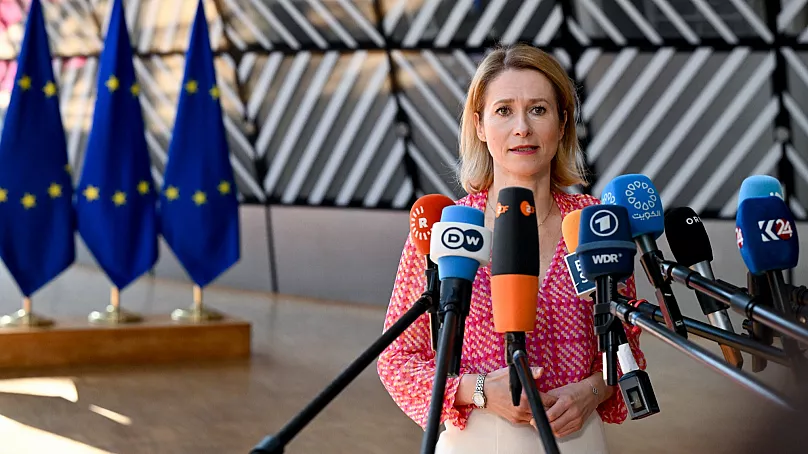
EU foreign policy chief Kaja Kallas announced the decision after the Foreign Affairs Council meeting in Brussels. She emphasized that the sanctions relief aims to support Syria’s economic recovery while maintaining targeted restrictions against former regime officials.
“We want to help the Syrian people rebuild a new, inclusive and peaceful Syria,” Kallas stated. The EU will keep sanctions in place for individuals associated with Assad’s regime and those responsible for human rights violations.
The EU had already eased some restrictions in February 2025, suspending sanctions on Syria’s energy and transport sectors. Tuesday’s decision completes this process by lifting remaining financial sector sanctions that had isolated Syrian banks from the global financial system and frozen central bank assets.
President Donald Trump announced America’s sanctions relief during his Middle East tour last week. “I will order the cessation of sanctions against Syria to give them a chance for greatness,” Trump declared after meeting with Syria‘s interim President Ahmed al-Sharaa in Saudi Arabia.
The EU’s decision appears directly influenced by Trump’s announcement, which accelerated Brussels’ timeline. European officials had been working on a gradual roadmap but quickly finalized their plans following the American move.
Syria Hails Sanctions Relief as a Step Toward Recovery
Syria’s government celebrated the decision as a “historic victory.” Foreign Minister Asaad al-Shaibani claimed the sanctions relief would enhance national security and promote stability. Economy Minister Mohammad Nidal al-Shaar called it “a critical first step” while acknowledging that “recovery won’t happen overnight.”
Syria faces enormous reconstruction challenges after 14 years of devastating civil war. The conflict killed over 350,000 people and displaced millions. According to UN figures, about 90% of Syrians currently live in poverty, with public electricity available only two hours daily.
The sanctions relief aims to facilitate investment in local enterprises and attract foreign capital needed for rebuilding. Syria reportedly requires hundreds of billions of dollars to reconstruct its damaged infrastructure.
Both the EU and US will maintain arms embargoes and restrictions on technology that could be used for internal repression. EU officials warned that sanctions relief is “reversible and conditional on continued progress” and threatened new individual sanctions against those inciting ethnic tensions.
Interim President al-Sharaa has actively sought to reverse Syria’s international isolation since taking power. Earlier this month, he reportedly offered the United States access to Syria’s natural resources, similar to a minerals agreement Washington recently signed with Ukraine.
This article was produced by The Rio Times’ automated newsroom system. How we use AI · Report an error
Read More from The Rio Times