Engineering the Sky: The High-Stakes Game of Solar Geoengineering
Imagine a world where technology could tweak Earth’s thermostat. Major environmental groups are now pouring millions into research that could make this possible.
They’re exploring solar geoengineering—tactics like scattering reflective particles or enhancing cloud brightness to dial down the sun’s heat.
Yet, this isn’t science fiction; it’s a controversial plan gaining traction. Researchers are exploring if these methods can mitigate accelerating climate change and stabilize global temperatures.
Institutions like Cornell University and several Chinese scientific agencies are at the forefront, pushing the boundaries of our understanding.
The stakes? Potentially huge. At a recent United Nations meeting, a fiery debate underscored the lack of global consensus on such drastic measures.
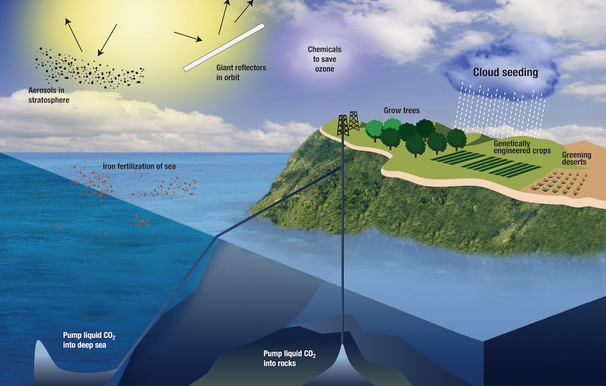
Critics worry about unforeseen consequences, fearing that tampering with nature could trigger catastrophic events.
Environmental ethicists argue that manipulating the climate could disrupt ecosystems, harm biodiversity, and shift weather patterns unpredictably.
Still, opponents argue that we must explore every avenue. The Environmental Defense Fund advocates for both cutting emissions and preparing alternative solutions.
In addition, their goal is clear: equip policymakers with the knowledge to make informed decisions amidst climatic uncertainty.
This isn’t just about cool scientific experiments. It’s a race against time, balancing the promise of innovation with the peril of unknown side effects.
As the planet warms, the discussion around solar geoengineering is not just relevant—it’s crucial.
In short, this research could redefine our relationship with the planet’s climate system, for better or worse, making it imperative to tread carefully in this high-stakes game.
This article was drafted with automated assistance and reviewed before publication. How we use AI · Report an error
Read More from The Rio Times