Eduardo Bolsonaro Dismissed From Federal Police for Abandoning His Post
Brazil · Politics
Key Facts
- —What happened Eduardo Bolsonaro dismissed: Justice Minister Wellington César Lima e Silva signed the Federal Police order on 18 September 2026.
- —Where it appeared Personnel Ordinance No. 135 was published in the Diário Oficial da União, the federal gazette, on Monday 21 September 2026.
- —Why he was fired Abandonment of post: an unjustified absence from work of more than 30 consecutive days, under federal civil service law.
- —How it began A Federal Police disciplinary inquiry opened in early 2026 and recommended dismissal in July 2026.
- —The catch He is no longer a federal deputy; the Chamber stripped his seat for absences on 18 December 2025.
- —Why it matters A Supreme Court conviction in June 2026 had also ordered the loss of his police post; that ruling is still under appeal.
The former president’s son, a police clerk since 2010, stopped reporting for work after losing his seat in Congress. He has lived in the United States since February 2025.
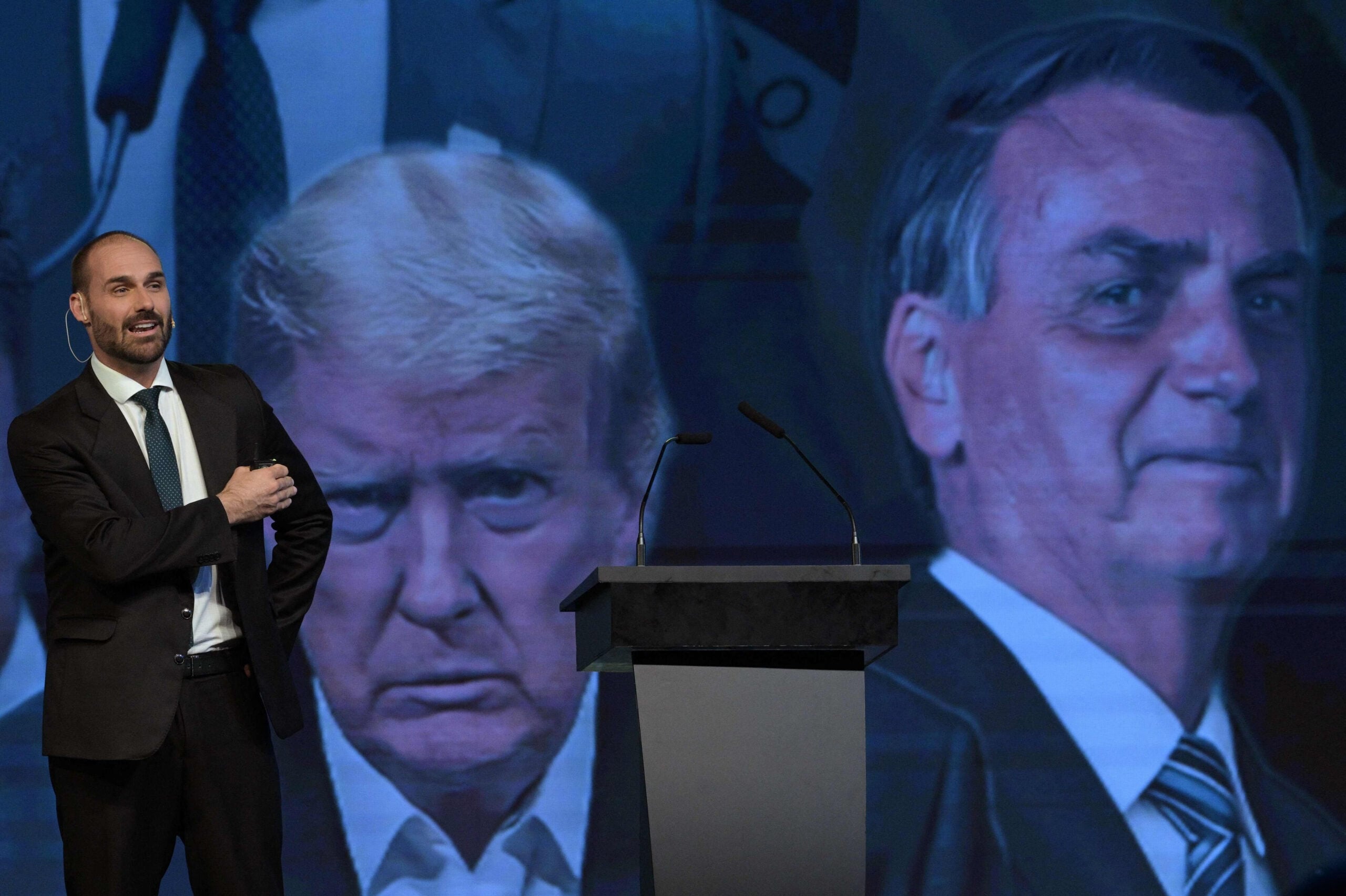
Eduardo Bolsonaro dismissed: that is the verdict of Brazil’s Justice Ministry on the former president’s son. He was fired from his job as a Federal Police clerk for abandoning his post.
Justice Minister Wellington César Lima e Silva signed the order on Friday 18 September 2026. It was published in the Diário Oficial da União, the federal government’s official gazette, on Monday 21 September 2026.
The document is Personnel Ordinance No. 135, O Tempo reported. It closes a disciplinary case the Federal Police opened after he failed to return from the United States.
What the order says
Eduardo Bolsonaro, 42, joined the Federal Police in 2010 through a public entrance exam. He held the rank of escrivão, a clerk who records statements and assembles case files.
The ordinance finds that he committed the disciplinary offence of abandonment of post.
It says he was absent “without justification for a period exceeding thirty consecutive days”. That is the text as quoted by ND Mais, crediting Record’s R-7 portal.
The minister who signed it took office in January 2026, replacing Ricardo Lewandowski. It is his second spell in the job, after serving under former president Dilma Rousseff.
What abandonment of post means
Brazil’s federal civil servants are governed by Law 8.112 of 1990, the statute that sets their rights and duties. Its Article 138 defines abandonment as intentional absence from work for more than 30 consecutive days.
Article 132 of the same law lists abandonment among the offences punished with dismissal. Legal commentary stresses that the absence must be deliberate.
One analysis argues that absences caused by illness or imprisonment should not count.
The penalty cannot be imposed without a hearing. It requires a PAD, or processo administrativo disciplinar, an internal disciplinary inquiry in which the employee may present a defence.
A case that began early this year
The Federal Police opened that inquiry in early 2026. CartaCapital dates it to January, while Jovem Pan places it in February.
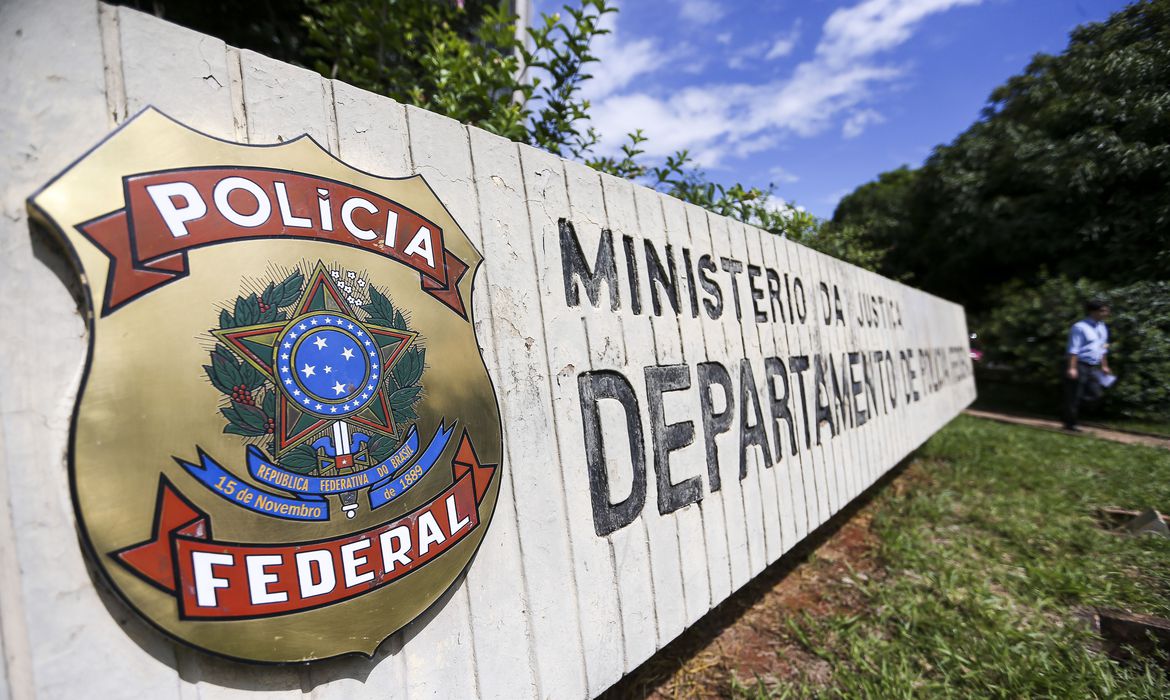
Metrópoles reported that he had been absent from his post in Rio de Janeiro since February 2026. The force concluded the inquiry in July and recommended his dismissal to the Justice Ministry.
That recommendation was reported on Tuesday 21 July 2026, when the final decision passed to the minister. The signature on 18 September 2026 completes the process.
Metrópoles also reported that he has been ordered to hand back his police identification and his service firearm.
No longer a deputy
The dismissal does not touch a seat in Congress, because he no longer holds one. He had been on leave from the police while serving as a federal deputy for São Paulo.
On Thursday 18 December 2025 the Chamber of Deputies’ governing board declared that he had lost his mandate. The Constitution strips deputies who miss one third of the chamber’s voting sessions in a year.
His seat passed to Missionário José Olimpio, a fellow member of the Liberal Party, who had been filling it since March 2025. With the mandate gone, he was expected back at his police desk in Rio de Janeiro.
Why he is in the United States
Eduardo Bolsonaro moved to the United States in February 2025. He took leave from the Chamber from March to July 2025 and did not come back.
He says he left Brazil to escape political persecution. From Washington he campaigned for American sanctions and tariffs against Brazil and its judges, over the trial of his father, Jair Bolsonaro.
In July 2026 the United States granted him permanent residence, a so-called green card. Correio Braziliense reported that it was issued on 20 July 2026 and is valid for ten years.
A conviction that also ordered him out
The Supreme Federal Court, Brazil’s highest court, had already moved against him. On Tuesday 16 June 2026 its First Panel unanimously convicted him of coercion in the course of judicial proceedings.
The four justices sentenced him to four years and two months in a semi-open regime. They also barred him from office for eight years.
The ruling also ordered the loss of his Federal Police post once the conviction becomes final, according to reports of the judgment.
On 18 September 2026, the same day the minister signed the dismissal, the panel unanimously rejected his defence’s motion for clarification. The administrative dismissal takes effect on its own, whatever happens to the criminal case.
The response
No new statement from Eduardo Bolsonaro or his lawyers appeared in the reports published on Monday 21 September 2026. He had already given his view in July.
On 21 July 2026, the day the police recommendation was reported, he gave an interview to the news site Metrópoles. He said the outcome depended on Lula’s justice minister.
“Se ele não me demitir, quem vai ser demitido é ele,” he said. In other words, the minister would himself be fired if he did not sign.
“É uma decisão política,” he added, calling it a political decision.
He also said it was not Lula’s style to give opponents a break. He has long described his stay abroad as flight from persecution by Brazil’s courts.
Right-leaning outlets also framed Monday’s decision politically. Revista Oeste and Jovem Pan headlined it “Governo Lula demite Eduardo Bolsonaro”, meaning the Lula government fires Eduardo Bolsonaro.
Other outlets, including CartaCapital and Correio Braziliense, reported it as the end of a routine disciplinary case. No other named politician was reported calling it retaliation by Monday.
For Eduardo Bolsonaro, dismissed from the police and out of Congress, the ties to Brazilian public service are now largely cut. He remains in the United States.
More: Brazil coverage, every day from The Rio Times.
Frequently Asked Questions
When was Eduardo Bolsonaro dismissed, and by whom?
Justice Minister Wellington César Lima e Silva signed Personnel Ordinance No. 135 on 18 September 2026. It was published in the Diário Oficial da União, the federal gazette, on 21 September 2026. The Federal Police, which answers to the Justice Ministry, had recommended the dismissal in July 2026 after a disciplinary inquiry.
What is abandonment of post in Brazil?
Under Law 8.112 of 1990, which governs federal civil servants, abandonment is intentional absence from work for more than 30 consecutive days. The law punishes it with dismissal. The penalty can only follow an internal disciplinary inquiry, known as a PAD, in which the employee can offer a defence.
Is Eduardo Bolsonaro still a member of Congress?
No. The Chamber of Deputies’ governing board declared the loss of his mandate on 18 December 2025. It found he had missed at least one third of the chamber’s voting sessions that year, the constitutional limit. His seat is held by Missionário José Olimpio of the Liberal Party.
Has he been convicted of a crime?
Yes, in a separate case. The Supreme Federal Court’s First Panel convicted him of coercion in judicial proceedings on 16 June 2026, sentencing him to four years and two months. It rejected his motion for clarification on 18 September 2026, and the case remains under appeal. The police dismissal itself is an administrative penalty, not a criminal finding.
Sources: O Tempo on Ordinance No. 135, Revista Oeste on the signing and publication dates, Metrópoles on the dismissal, Metrópoles on the July recommendation, Metrópoles interview with Eduardo Bolsonaro, Poder360 on his July remarks, ND Mais on the ordinance text, CartaCapital on the disciplinary inquiry, Jovem Pan on the dismissal, Chamber of Deputies on the loss of his seat, Imirante on the June conviction, ConJur on the rejected appeal, Agência Brasil on the minister’s appointment, Correio Braziliense on the green card
This article was produced by The Rio Times’ automated newsroom system. How we use AI · Report an error
Read More from The Rio Times