Costa Rica President Seeks Gold Mine Vote
Fernández wants voters to decide whether open-pit gold mining can return to Crucitas, but the Assembly, a constitutional review and a divided opposition stand in the way.

Politics: Costa Rica
On Friday 27 November 2026, Costa Rica’s president, Laura Fernández, announced she will push for a national referendum on allowing open-pit gold mining at Crucitas. The site lies in Cutris district, San Carlos canton (county), Alajuela province, about 200 km north of San José, near Nicaragua.
She spoke at Escuela El Campo in Ciudad Quesada, beside Yara Jiménez, president of the Legislative Assembly, and Rodrigo Chaves, her predecessor, now minister of the Presidency. For readers abroad, the plan would reopen a fight over a mine that Costa Rica shut 16 years ago.
Key Facts
- Who. President Laura Fernández, with Assembly president Yara Jiménez, head of Costa Rica’s Congress.
- What. Fernández asked the Assembly to start a vote on bill 24.717, open-pit gold mining at Crucitas.
- Numbers. At least 29 deputies must vote yes to call the referendum.
- Power Index. Costa Rica ranks 9th of 14 in The Rio Times Latin America Power Index, with 35.5 points (November 2026 edition).
- As of. 27 November 2026, 22:30 GMT.
Fernández wants voters to decide whether open-pit gold mining can return to Crucitas, but the Assembly, a constitutional review and a divided opposition stand in the way.
Crucitas has been a flashpoint ever since the concession of the Canadian company Infinito Gold was cancelled and the mine closed 16 years ago. A 2010 law banned open-pit mining across the whole country.
Illegal mining has continued at the site, and Costa Rican authorities link it to gold smuggling into Nicaragua. That smuggling has caused diplomatic friction between the two countries.
The bill at the centre of the plan, number 24.717, was filed in November 2024 under Chaves. It would give a company, chosen through an auction, the right to explore and exploit metallic open-pit mining in Cutris.
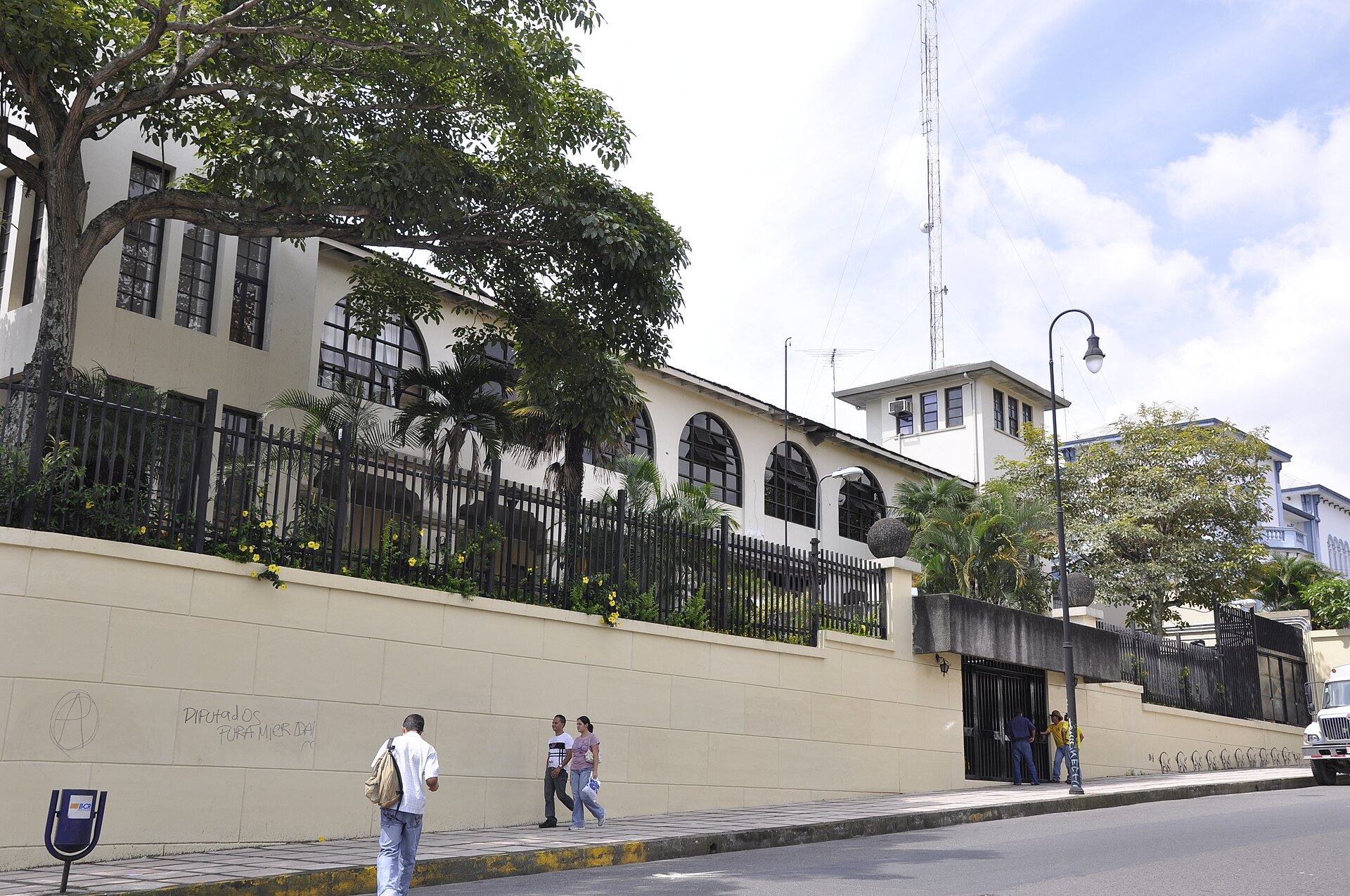
The idea of a referendum has been building for weeks. In September 2026 the Colegio de Geólogos de Costa Rica, the country’s professional body of geologists, proposed one, and on 4 November Chaves said he would put the idea to Fernández.
In June 2026 Fernández toured Crucitas and said she would not push a new bill. A week later the ruling party and the opposition set up a technical table to review the pending motions, with options from tougher penalties to health and water measures.
On Friday she called the situation a “national calamity”. “The situation in Crucitas is absolutely unsustainable: they are not only plundering our gold, they are causing environmental damage without precedent in national history,” Fernández said, in the president’s words as translated from Spanish.
She added, in the same translated remarks: “They have already robbed us of US$2 billion that belonged to the people of Costa Rica.” She said the money funds organised crime and drug trafficking, but the government did not detail at the announcement how it reached that estimate.
Fernández also cited a 61% rise in Nicaragua’s gold exports, as reported by Nicaragua’s government, equal to US$1,995 million by her figure. That number alone does not show how much of the gold comes from Costa Rican soil.
Fernández said officers walk three days to reach affected sites and have seized weapons, money, fuel, timber and drugs. She also mentioned malaria outbreaks and about 10,000 hectares of invaded land.
Opposition parties do not share her view. Frente Amplio, a left-wing opposition party, opposes open-pit mining because of environmental damage and little benefit for the local community.
The Partido Liberación Nacional (PLN), the main centre-left opposition party, proposes “tokenisation” instead. That would turn ownership of the gold into digital tokens on a blockchain, a shared digital ledger.
Legal doubts have also surfaced. Deputy Edgardo Araya, of Frente Amplio, warned before the announcement that a referendum on Crucitas would be illegal, and another deputy argued that mining cannot go to a vote because it would be an environmental rollback.
Fernández formally handed Jiménez the request on Friday to start the legislative procedure. A joint call by the Executive and the Assembly needs at least 29 votes from deputies.
The call would then face constitutional review. The bill has been held up in the Assembly’s Environment Committee, which handles it, with about 400 motions pending on 4 November and 146 withdrawn by two opposition parties, the PLN and Frente Amplio.
The vote would be on bill 24.717. In practice, it would test whether the 2010 open-pit ban gives way for Crucitas.
That would move a dispute from a stalled committee to the ballot box. For any company that eventually wins an auction, the stake is exploration rights in a border zone where illegal mining and smuggling already operate.
No date for the referendum has been announced. It is also open whether constitutional review will allow it to go ahead.
Frequently Asked Questions
What is Costa Rica’s president proposing?
Laura Fernández wants voters to decide whether open-pit gold mining can be allowed at Crucitas. She has asked the head of the Legislative Assembly to begin the legislative procedure.
Can the referendum go ahead?
It needs a joint call by the Executive and the Assembly and would then face constitutional review. Some deputies argue that mining cannot legally be put to a vote.
Why is Crucitas so contested?
Costa Rican authorities link illegal mining there to gold smuggling and diplomatic friction with Nicaragua. Frente Amplio says open-pit mining damages the environment and does little for local people.
Sources
Published Friday 27 November 2026 · Source: Statement of the Presidency of Costa Rica, 27 November 2026; Legislative Assembly bill 24.717 · Asamblea Legislativa
Connected Coverage
More: Costa Rica news
Costa Rica Has Held Only One Referendum · Costa Rica Says US Helicopters Aid Gold Raid
This article was produced by The Rio Times’ automated AI newsroom. Editorial responsibility: Matthias Camenzind, Publisher and Editor-in-Chief. The Rio Times also runs Ask Rio Times, which answers from 100,000+ of our own articles, the daily Latin America Power Map, and prediction-market odds on elections and markets.. How we use AI · Report an error