Colombia Stocks Flat as Peso Falls 1.83% | Colombia Market Report, Oct 30
Key Facts
- Colombia’s main stock index, the COLCAP, edged up 0.04% to 2,491 points on Friday, a flat close on a day of heavy Wall Street losses.
- The peso weakened 1.83% to 3,224 per US dollar, so the flat index lost about 1.8% in dollar terms.
- The central bank held its rate at 12.25% in a 4-3 vote; three of seven directors wanted a rise to 12.50%.
- For US investors: the New York shares of oil company Ecopetrol lost 0.52% to US$17.19 and those of the bank Bancolombia 1.65% to US$92.02.
- Prediction markets: Polymarket, a prediction market, puts 55.0% on no change in December, as of 30 October 2026, 7:48 pm ET.
Today’s Focus
Colombia’s main stock index, the COLCAP, edged up 0.04% to 2,491 points on Friday 30 October, a flat close on a day when the S&P 500 fell 1.82% and the Nasdaq 2.86%. The calm hides a currency move, because the peso lost 1.83% to 3,224 per US dollar.
For a US investor the two numbers belong together: a flat index and a 1.83% weaker peso mean Colombian shares were worth about 1.8% less in dollars. The main cause is a global risk-off day, with the Brazilian real, a close regional peer, also losing 1.12%.
The central bank held its policy rate at 12.25% in a 4-3 vote, with three directors wanting a rise of 0.25 percentage points. Inflation of 6.3% in September is still double the 3% target, so the bank sounds restrictive while it admits the economy lost momentum in the third quarter.
What matters today. For a US investor in Colombian assets, the high rate pays well, but a peso that can drop 1.83% in a day can erase a week of carry, and the next tests are the December rate decision and the peso’s level near 3,200.
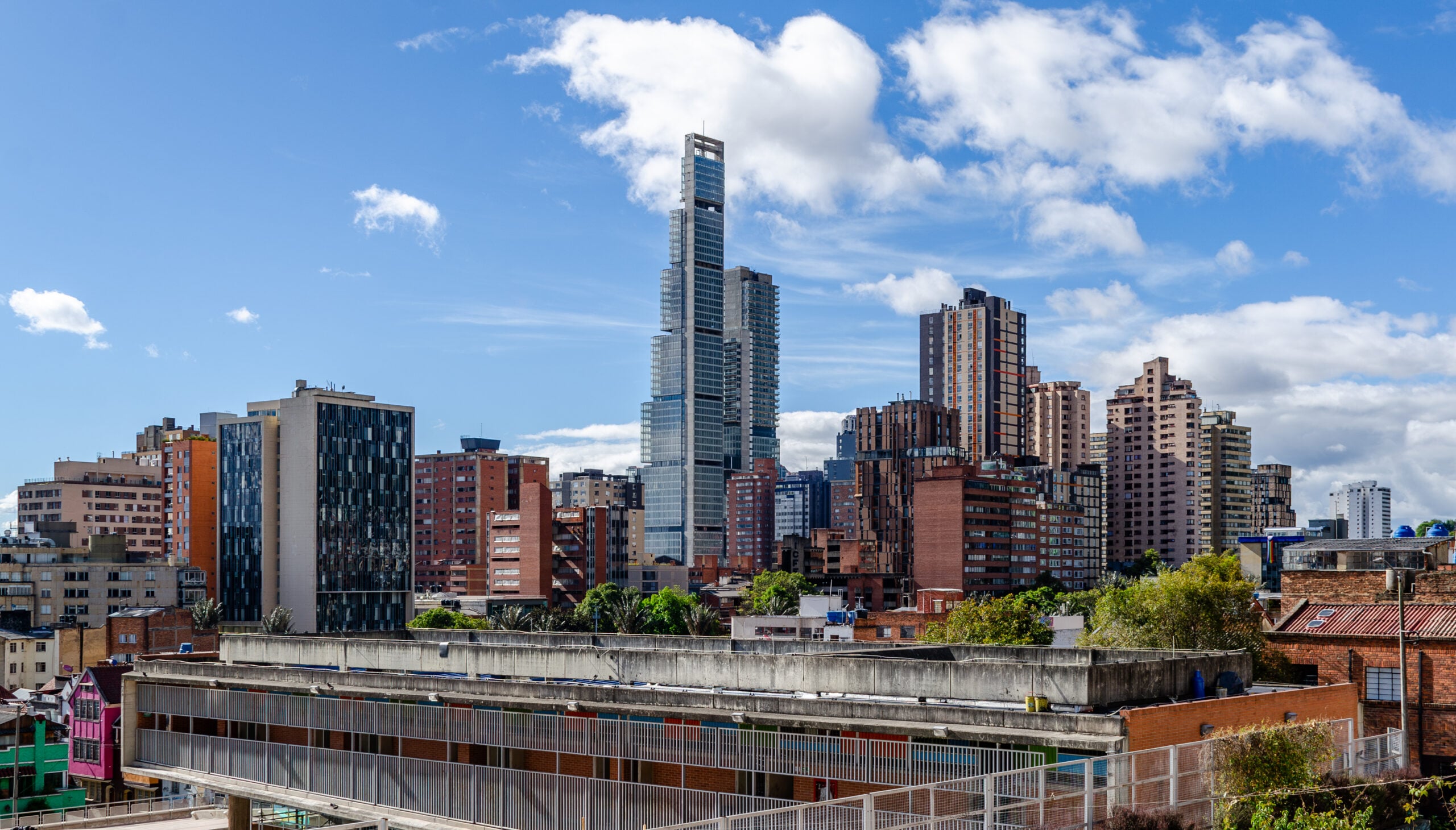
01 The session in one read
The COLCAP closed at 2,491 points on Friday 30 October, up 0.04% from 2,489.93 on Thursday, which was itself a 0.63% fall. On Wednesday 28 October it stood at 2,505.79, so the index has lost about 0.6% over the last two sessions and sits just under the 2,500 level traders watch.
The peso moved far more than shares. The dollar rose 1.83% to 3,224 pesos, its fourth gain in a row, and is up 1.18% over five sessions.
The dollar’s rise of 1.83% was far larger than the index move. Over 20 sessions, however, the peso has still gained 2.83%, so Friday’s drop is a pullback.
We rank the causes by weight. The first, with medium confidence, is the global sell-off and the slide of the Brazilian real, because the peso fell on the same day that US shares and regional currencies fell together.
The second, with lower confidence, is the central bank’s split vote and the pressure on public finances. The variable to watch is the peso: a close back below 3,200 would show the scare is fading.
02 The day’s numbers
| Measure | Level | Change | Read |
|---|---|---|---|
| COLCAP | 2,491 | +0.04% | Flat close |
| USD/COP | 3,224 | +1.83% | Peso weaker for a fourth day |
| Ecopetrol (US shares) | US$17.19 | −0.52% | Oil giant slipped |
| Bancolombia (US shares) | US$92.02 | −1.65% | Largest bank fell |
| S&P 500 | 7,580 | −1.82% | Wall Street sold off |
| VIX volatility | 19.42 | +12.91% | Fear gauge jumped |
| US dollar index | 101.96 | −0.07% | Global dollar steady |
The global dollar index barely moved, so the peso’s fall was not a story of a strong US dollar. The US 10-year Treasury yield stayed near 4.93%, the price of dollar borrowing, so the pressure came through risk appetite.
Oil, the key driver for Colombia, barely helped: the US Oil Fund rose only 0.38%. That left the index without the support it often gets from crude on days when global shares fall. Rio Times · Live Market Intelligence
Live Market IntelligenceColombia — Live Market Board
Colombia — Live Market Board
Instrument Last Change YoY Prev. High Low Volume
COLCAP
2,490.92
+0.04%
—
—
—
—
—
USD/COP
3,149
+3.06%
-18.02%
3,056
3,173
3,111
—
BRENT
109.58
-5.38%
+66.99%
115.81
111.92
109.00
34,268
WTI
100.12
-1.61%
+63.30%
101.76
102.82
99.77
201,568
ECOPETROL
17.36
-0.23%
+86.31%
17.40
17.71
17.22
402,817
BANCOLOMBIA
96.18
-0.23%
+68.95%
96.40
97.45
95.66
85,636
GRUPO AVAL
4.76
+0.42%
+13.67%
4.74
4.82
4.68
90,387
TECNOGLASS
37.99
-0.07%
-36.40%
38.01
38.14
37.61
35,541
CREDICORP
368.43
-1.49%
+43.59%
374.02
378.12
368.43
62,467
BUENAVENTURA
28.65
+0.72%
+33.16%
28.44
28.71
27.87
314,023
SOUTHERN COPPER
192.19
+3.32%
+50.65%
186.01
193.86
185.75
649,631
03 Why it moved — a global sell-off, a split central bank and the peso
The main cause is the global risk-off day. The S&P 500 fell 1.82% to 7,580 and the Nasdaq 2.86% after worries over artificial-intelligence spending, and investors sold the currencies of emerging markets as well as shares.
The Brazilian real, which usually moves with the peso, lost 1.12% to 5.44 per US dollar, a sign that the pressure was regional. Because Colombia needs dollar inflows to cover its deficits, a risk-off day hits the peso before it hits shares.
The central bank’s <a href=”https://www.riotimesonline.com/colombia-central-bank-holds-rate-12-25-percent-split-vote-2026/”>Interest Rate Decision</a> came on Friday afternoon: Banco de la República held its rate at 12.25%, the level set when it raised by 0.25 percentage points in September. The vote was 4-3, and three directors wanted a rise to 12.50%.
The bank gave three reasons for holding: the economy lost momentum in the third quarter, with weaker public and private spending and soft factory and retail data, public finances are a first-order factor for the outlook, and El Niño could push up food and regulated prices. It said it would keep policy restrictive, has not ruled out another rise and gave no date for a first cut.
Annual inflation was 6.3% in September, with core inflation at 6.0%, against a target of 3%. A real policy rate of about 6 points is what attracts foreign bond buyers, but a weaker peso erases that return for dollar-based investors.
Colombia’s <a href=”https://www.riotimesonline.com/colombia-unemployment-cement-september-2026/”>Unemployment Rate</a> fell to 8.0% in September from 9.4% in August and 8.2% a year earlier, according to the statistics office DANE, against a forecast of 9.2%. That helps explain why the bank can hold, as jobs rebounded after a weak August.
Cement Production rose 2.0% from a year earlier to 1,263.1 thousand tonnes, a little above the forecast of 1.7%, while August production had fallen 1.9%. Domestic dispatches grew 1.1%, so the building sector is growing but only slowly.
The bank is also watching the government’s Rescue Law, a government plan filed in Congress on Thursday. Because public finances are a first-order factor for the bank, the bill matters for the peso as much as the rate does.
Oil gave little help, since the US Oil Fund gained only 0.38%. Ecopetrol’s New York shares fell 0.52% and Bancolombia’s 1.65%, which fits an index that closed flat while the currency fell.
04 The day’s movers
| Driver | Level / Move | Change | Note |
|---|---|---|---|
| Ecopetrol (EC) | US$17.19 | −0.52% | Oil giant, state-controlled |
| Bancolombia (CIB) | US$92.02 | −1.65% | Largest bank |
| USD/COP | 3,224 | +1.83% | Fourth gain in a row |
| Brazilian real (USD/BRL) | 5.4410 | +1.12% | Regional peer also fell |
| US Oil Fund (USO) | US$168.83 | +0.38% | Oil barely helped |
We have no verified close for individual shares on the Bogotá exchange, so we show the New York shares of the two biggest names. Both fell, and the larger drop in Bancolombia fits a day when banks suffer from a weaker peso and a high rate.
The Ecopetrol move matters because the company is the biggest weight in the COLCAP and the main route for US investors into Colombia. Its small fall in New York is consistent with an index that stayed flat.
05 The regional scoreboard
| Index | Country | Change |
|---|---|---|
| COLCAP | Colombia | +0.04% |
| Ibovespa | Brazil | −0.75% |
| IPC | Mexico | −0.12% |
| IPSA | Chile | −2.76% |
Colombia was the only market of the group to close higher, as Chile’s IPSA fell 2.76%, Brazil’s Ibovespa 0.75% and Mexico’s IPC 0.12%. We have no verified Friday close for Argentina’s Merval in this table, so it is left out.
Currencies split: the Mexican peso gained 0.51% against the dollar, while the Colombian peso lost 1.83%, the Brazilian real 1.12% and the Chilean peso 0.52%. Colombia’s peso was the weakest in the region.
06 The technical picture
The COLCAP closed at 2,491, just under the 2,500 level traders watch and 14.8 points above Thursday’s 2,489.93. A close back above 2,505.79, Wednesday’s level, would be the first sign that buyers are returning.
The dollar closed at 3,224 pesos, 16.5% below its 12-month high of 3,864 from 18 December 2025 and 5.9% above its 12-month low of 3,044 from 24 August 2026. Over 20 sessions the peso has still gained 2.83%, so Friday’s fall is a pullback and not a break of the year’s trend.
The nearest level for the peso is 3,200, which the dollar has now crossed, and the next is the 3,864 high of December. We have no verified long price history for the COLCAP in this report, so we give no 12-month range for the index.
What Prediction Markets Say
On Polymarket, a prediction market, traders put the chance that Colombia’s central bank leaves its policy rate unchanged at its December meeting at 55.0%. They see a 31.8% chance of a rise of 0.25 percentage points and 8.1% for a rise of 0.50 points or more.
A cut of 0.25 points is priced at 2.5%, and about US$30,000 has been traded on this market, as of 30 October 2026, 7:48 pm ET. Prices on prediction markets are bets, not polls or forecasts by officials.
Why we show this: prediction markets turn real-money bets into a live probability that moves within minutes of the news, which is why investors, campaigns and newsrooms in the United States now follow them closely. We show them next to polls and official results, never instead of them.
07 What to watch
- Monday 2 November: Colombia’s markets are closed for All Saints’ Day, so the next trading day is Tuesday 3 November, the day of the US midterm elections.
- Tuesday 3 November, 15:00 UTC: The Manufacturing PMI for October, a factory survey compiled by the bank Davivienda, forecast at 54.2 against 54.6 in September, shows whether factories keep growing; Colombia’s September exports follow on Wednesday 4 November at 15:00 UTC.
- The peso: A close back below 3,200 per US dollar would show the scare is fading, while a close above 3,300 would deepen the pressure on the central bank.
- December rate decision: Polymarket traders put 55.0% on no change, 31.8% on a rise of 0.25 points and 8.1% on a rise of 0.50 points or more; the Rescue Law in Congress is the main fiscal risk.
Background: Colombia Stocks Fall 0.63% as Peso Slips.
Background: Colombia Stocks Flat as Peso Slips 0.5%.
Frequently Asked Questions
Why did the Colombian peso fall on Friday 30 October?
The peso lost 1.83% to 3,224 per US dollar on a global risk-off day, with the Brazilian real also falling 1.12%. The central bank’s split 4-3 vote to hold rates added caution.
What did Colombia’s central bank decide?
Banco de la República held its policy rate at 12.25% in a 4-3 vote, with three directors wanting a rise to 12.50%. Inflation was 6.3% in September, against a 3% target.
Did Colombian stocks fall on Friday?
No. The COLCAP edged up 0.04% to 2,491 points. In US dollars, however, the index lost about 1.8% because the peso fell.
What happens next for Colombian interest rates?
The next decision is in December, and Polymarket traders put 55.0% on no change, as of 30 October 2026, 7:48 pm ET. Three directors already voted for a rise.
Market data: The Rio Times; exchange figures from BVC
Primary sources: Banco de la República (30 October); DANE statistics office (30 October); Bolsa de Valores de Colombia; Polymarket.
This article was produced by The Rio Times’ automated newsroom system. How we use AI · Report an error · Editorial responsibility: Matthias Camenzind, Editor-in-Chief
In depth
LatAm Markets: Live Signals → — real-time movers, turnover leaders and FX across Latin America.
Get The Rio Times delivered to your inbox — market intelligence, daily briefs, and breaking analysis across Latin America.
Start for US$1