China’s Tech Titans Bet Big on Brazil’s 217 Million Consumers
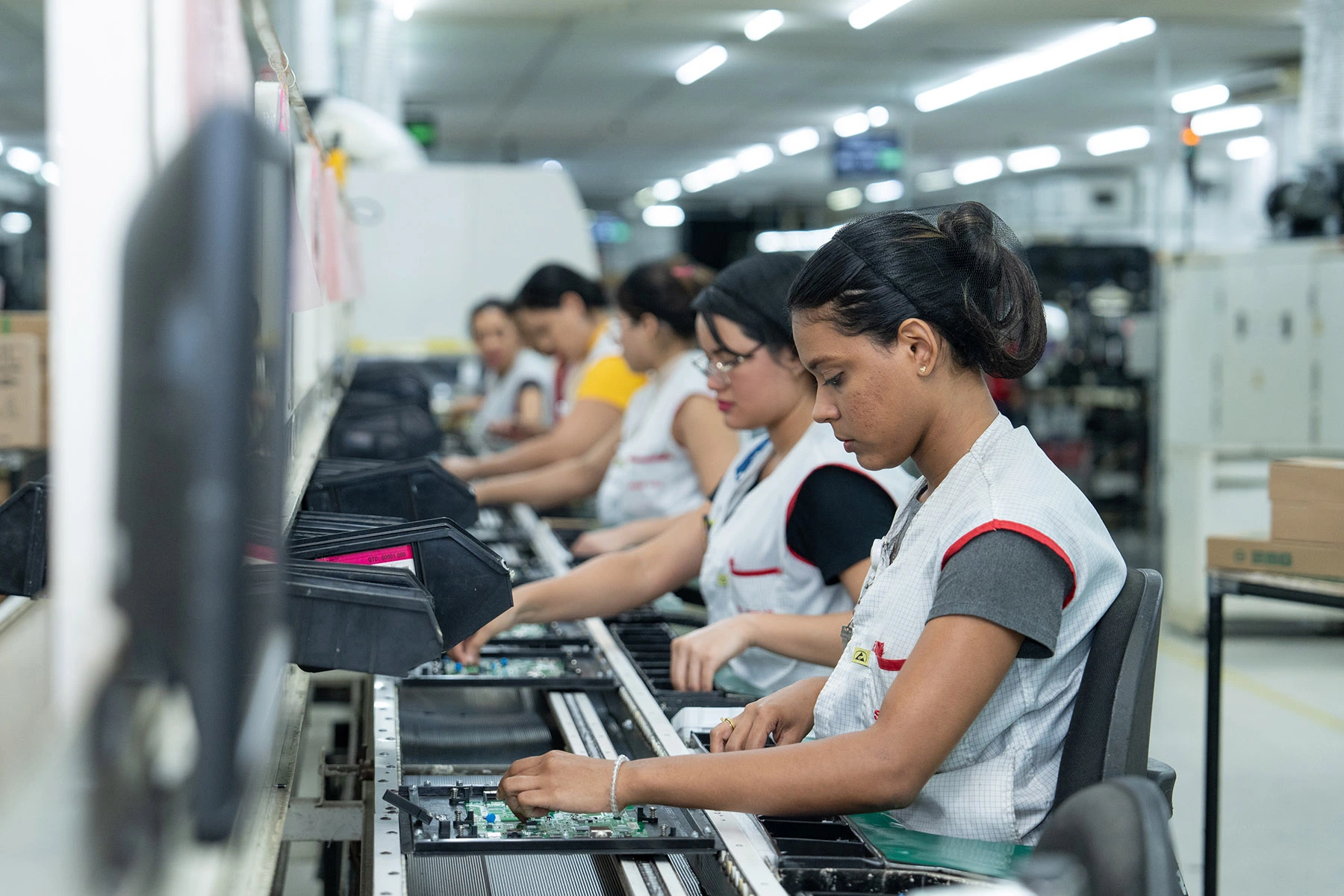
Brazil’s electronics market, once ruled by Samsung and Motorola, now pulses to a new rhythm as Chinese firms pour billions into factories, tariffs, and trade deals. Oppo churns out 20,000 smartphones daily in Manaus.
Hisense revives Toshiba TVs through Brazilian assembly lines. Midea builds $116 million refrigerator plants in Minas Gerais. Behind these moves lies a stark equation: Brazil slaps 35% tariffs on imported electronics, but Chinese firms sidestep costs by making devices locally—and cheaper.
The strategy works. Over half of Brazil’s durable goods imports now come from China, including 95% of its $4.54 billion semiconductor supply. Consumers gain access to Oppo’s AI-driven cameras and Hisense’s 100-inch TVs at prices 18% lower than 2023.
Yet risks loom: Brazil’s real plummeted 27% last year, squeezing importers. China’s $30 billion currency swap with Brasília buffers the blow, letting firms like BYD bypass dollars to fund electric vehicle plants.
Brazil’s tax overhaul adds complexity. A new dual VAT system phases in from 2025, replacing five levies but layering 20% import duties and 18% state taxes on gadgets.
Cross-border platforms like Shein now face 92% tax hikes on sub-$50 parcels. Still, Chinese brands adapt: Xiaomi claims 17% of Brazil’s smartphone market by flooding stores like Magazine Luiza with sub-$200 models.
The stakes transcend consumer tech. BYD plans 150 EV charging stations near São Paulo, targeting Brazil’s 84% electric vehicle sales surge. Meanwhile, Brasília’s R$30 billion semiconductor plan aims to cut foreign chip reliance by 2035—a direct challenge to China’s supply chain dominance.
For Brazilian households, this rivalry means affordable smart homes and 5G phones. For Beijing, it’s a proving ground: master Brazil’s maze of taxes and tastes, and the rest of Latin America’s $6.8 trillion economy follows.
As U.S.-China tech tensions simmer, factories in Manaus aren’t just assembly lines—they’re chess pieces in a battle for hemispheric influence.
More: Brazil news in English, every day from The Rio Times.
This article was produced by The Rio Times’ automated newsroom system. How we use AI · Report an error · Editorial responsibility: Matthias Camenzind, Editor-in-Chief