Chile’s Kast Defends Security Reform Amid ‘Illiberal’ Criticism
Chile · POLITICS
Key Facts
- —What happened Chile’s president rejected the ‘illiberal’ label and opened the door to changes.
- —How big a jump A Cadem poll shows 51% want the security reform withdrawn for new talks.
- —The real story The reform creates a new state of exception, criticized as too broad.
- —The catch The reform is only a proposal, not law, and 33% prefer modifying it over withdrawal.
- —Who it touches Anyone in Chile, since the reform would widen the power to restrict movement and gatherings.
- —What comes next The Senate debate continues; the government needs votes.
President Kast says the reform is not illiberal and open to changes, as a poll shows most Chileans want it withdrawn.
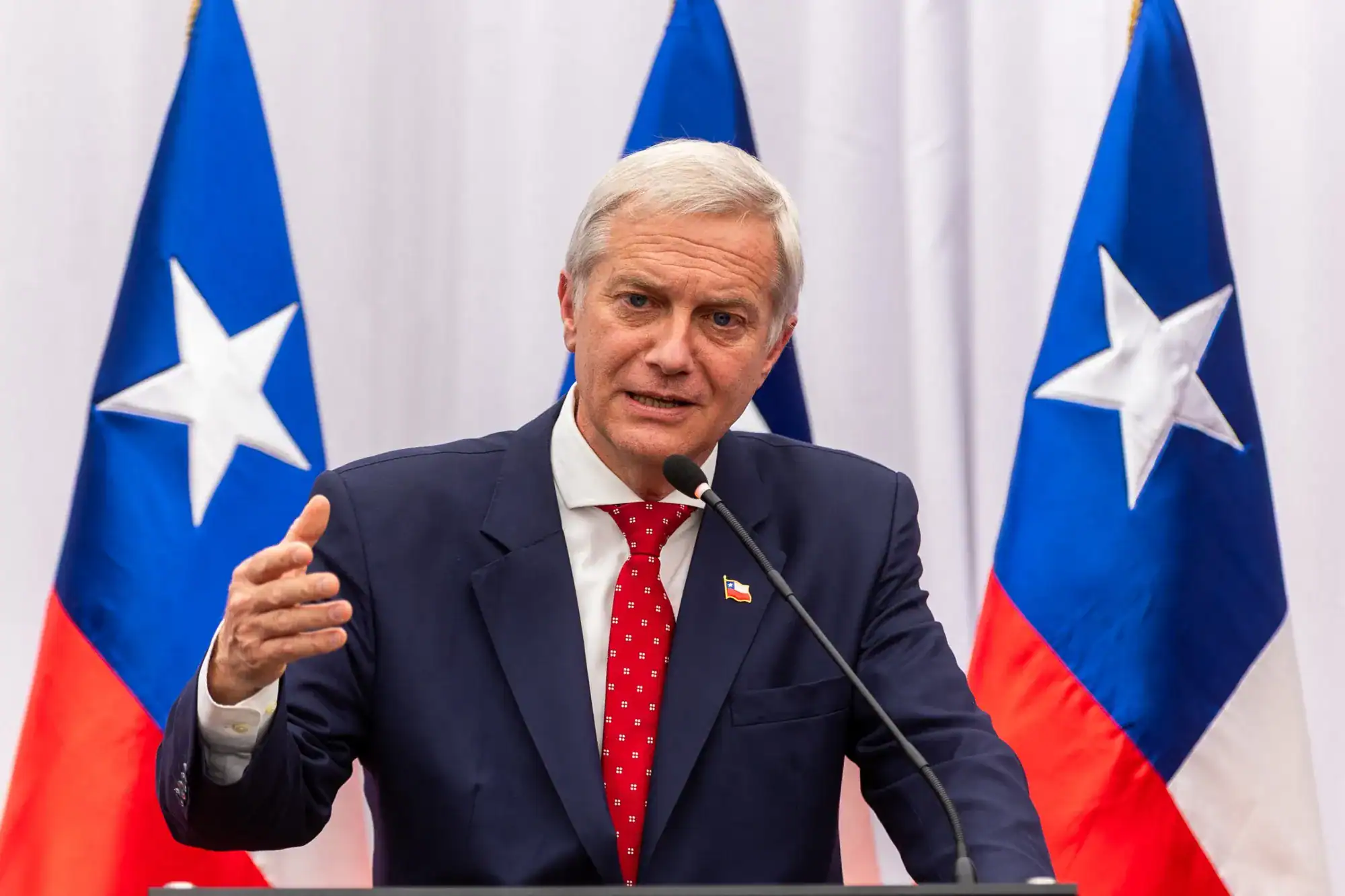
Chile’s President José Antonio Kast has rejected the ‘illiberal’ label put on his security reform. He told Radio Infinita he is open to changing the proposal.
Kast’s Response to ‘Illiberal’ Criticism
President José Antonio Kast said ‘Para nada’ when asked if he considers himself illiberal. He added, ‘I don’t see much drama’ about changes to the reform.
He affirmed his reform ‘is not illiberal’ but recognized the debate as ‘legitimate’. He stated that ‘every law can undergo changes’.
The criticism came from Luciano Cruz-Coke, president of Evópoli, a party in the ruling coalition. Cruz-Coke said the reform ‘borders on illiberal’ and is unnecessary for security.
Other critics include Álvaro Elizalde, who called it the ‘first explicitly illiberal reform’. Matías Walker, a senator, also asked for its withdrawal.
This security reform is intended to address rising crime rates in the country. Critics worry it could centralize power without proper checks.
The Proposed Chile Security Reform
The reform was sent to the Senate with extreme urgency. It includes eight constitutional changes focused on security and organized crime.
The most criticized article creates a new state of exception for public security. It could be declared without prior congressional approval for 120 days, extendable by another 120, totaling 240 days.
During this state, the government could restrict personal freedom, movement, assembly, and association. It could also intercept communications without judicial authorization.
The full official text of the reform is not publicly available. Critics say this makes it hard to evaluate the real scope.
Supporters argue that this security reform is necessary to combat drug trafficking. However, legal experts question its compatibility with the constitution.
The proposal creates a new constitutional state of exception that the president can declare. It runs for 120 days and can be extended twice, to a maximum of 240 further days.
Under it, the government could restrict personal movement and the freedom to gather. Those are powers Chile normally reserves for disasters and states of siege.
Cadem Poll: Most Want the Chile Security Reform Withdrawn
A Cadem Plaza Pública poll shows 51% believe the government should withdraw the reform. They prefer seeking agreements with other political forces.
Another 33% want to keep the initiative but with changes during parliamentary discussion. Only 10% support proceeding as is.
Cadem, a Chilean pollster, produced the study, which was cited by La Tercera. However, the full methodological details of the survey were not published in the reports.
The lack of technical details means the statistical strength of the 51% figure cannot be independently verified. The exact date of the poll’s fieldwork is also unclear.
The poll’s findings reflect a broad consensus against the current proposal. This public sentiment may pressure lawmakers to seek compromise.
Political Tensions Within the Governing Coalition
Chile Vamos, the governing coalition, is ‘on alert’ and working to contain the reform. It faces ‘friendly fire’ and lacks guaranteed Senate votes.
The criticism from Evópoli, part of the coalition, highlights internal divisions. President Kast’s open stance may be an attempt to ease tensions.
The reform’s fate in the Senate is uncertain. The government does not yet have assured support for its approval.
This political uncertainty may affect the legislative timeline and the reform’s final content. It could also lead to more modifications to the proposal.
The success of the reform depends on coalition unity. Without it, the government may struggle to pass the legislation.
The text reached the Senate with the highest urgency label the government can attach. That forces a fast vote, and it also removes the time a compromise usually needs.
What This Means for Foreigners and Investors in Chile
For investors and expats in Chile, this reform’s evolution matters because it could alter institutional stability. Chile is traditionally one of Latin America’s most stable countries.
A new state of exception with broad presidential powers could affect the business climate and risk perception. Political tensions within the coalition may signal uncertainty.
The outcome will depend on Senate negotiations and public opinion. A withdrawal or major modification could restore a sense of balance.
Foreign observers should monitor this legislative process closely, as it may shape Chile’s legal and political landscape. The reform could influence how the country addresses crime and governance.
Investors are watching this debate for signs of policy direction. A stable outcome could reassure markets, while prolonged debate might worry them.
Chile has long sold itself to foreign money as the region’s most predictable country. A fight over emergency powers touches exactly that reputation, which is why the debate travels.
What Comes Next for the Chile Security Reform
The Senate will continue debating the reform, but no official text is yet available. The government must secure votes or face possible changes.
The Cadem poll suggests strong public pressure to withdraw or modify the reform. President Kast’s openness to changes may be a strategic response.
Observers should expect further political negotiations and possible revisions. The final outcome remains uncertain.
This reform is a key issue for the government, and its resolution will be closely watched. The debate is likely to remain intense in the coming weeks.
More: Chile news in English, every day from The Rio Times.
Frequently Asked Questions
What is the ‘illiberal’ label about?
Critics, including some in the government coalition, say the reform gives the president too much power, resembling ‘illiberal’ measures. President Kast rejects this label. The Chile security reform is at the center of this debate.
What does the reform propose?
It creates a new state of exception for public security, allowing restrictions on personal freedoms and communications interception without judicial approval.
What do the polls say?
A Cadem poll shows 51% want the reform withdrawn, 33% prefer modifications, and 10% support it as is.
Has the reform been approved?
No, it is a proposal sent to the Senate with extreme urgency, but not yet approved. The full text is not publicly available.
How could this affect investors?
The reform could alter institutional stability and business climate in Chile, a traditionally stable country. Its outcome may influence risk perception.
Connected Coverage
Kast needs his own side to pass his security reform
Sources
- El País (Chile edition) — Kast interview and reform coverage
- Radio Infinita — Kast’s interview remarks
- La Tercera — Cadem poll and coalition tensions
- Cadem Plaza Pública — poll data
- Infobae, Cooperativa, The Clinic — reform details and criticism
More Latin America news: Argentina | Mexico | Colombia | Chile | Peru | Venezuela | Uruguay | Ecuador | Brazil
This article was produced by The Rio Times’ automated newsroom system. How we use AI · Report an error · Editorial responsibility: Matthias Camenzind, Editor-in-Chief