Chile Court Takes Fruit Road Crash Complaint
The court has only accepted the filing, but it puts the truck driver’s licence and the microbus seats at the centre of a case that is still open.

Society: Chile
A Chilean court has agreed to hear a private criminal complaint over the crash on the Fruit Road (Ruta de la Fruta), the highway linking central Chile’s farm valleys to the coast, that killed 11 people on 7 November, covered in our first report. The Juzgado de Garantía de San Antonio, a local court overseeing parties’ rights in criminal cases, admitted it, and the news emerged early on Saturday 28 November.
The complaint, known in Chile as a querella, is a private party’s formal accusation filed alongside the state prosecutor’s case. Admissibility means the court accepted the filing, not that any allegation is proven.
Key Facts
- Court. The San Antonio court admitted a complaint of negligent killing over the 7 November crash.
- Ask. Urgent seizure of the microbus and 16 investigative steps, including new examinations of the truck.
- Next. The court has not ruled on those requests, and no hearing date has been announced.
- Power Index. Chile ranks 3rd of 14 in The Rio Times Latin America Power Index, with 62.9 points (November 2026 edition).
- As of. 28 November 2026, 12:00 GMT.
The court has only accepted the filing, but it puts the truck driver’s licence and the microbus seats at the centre of a case that is still open.
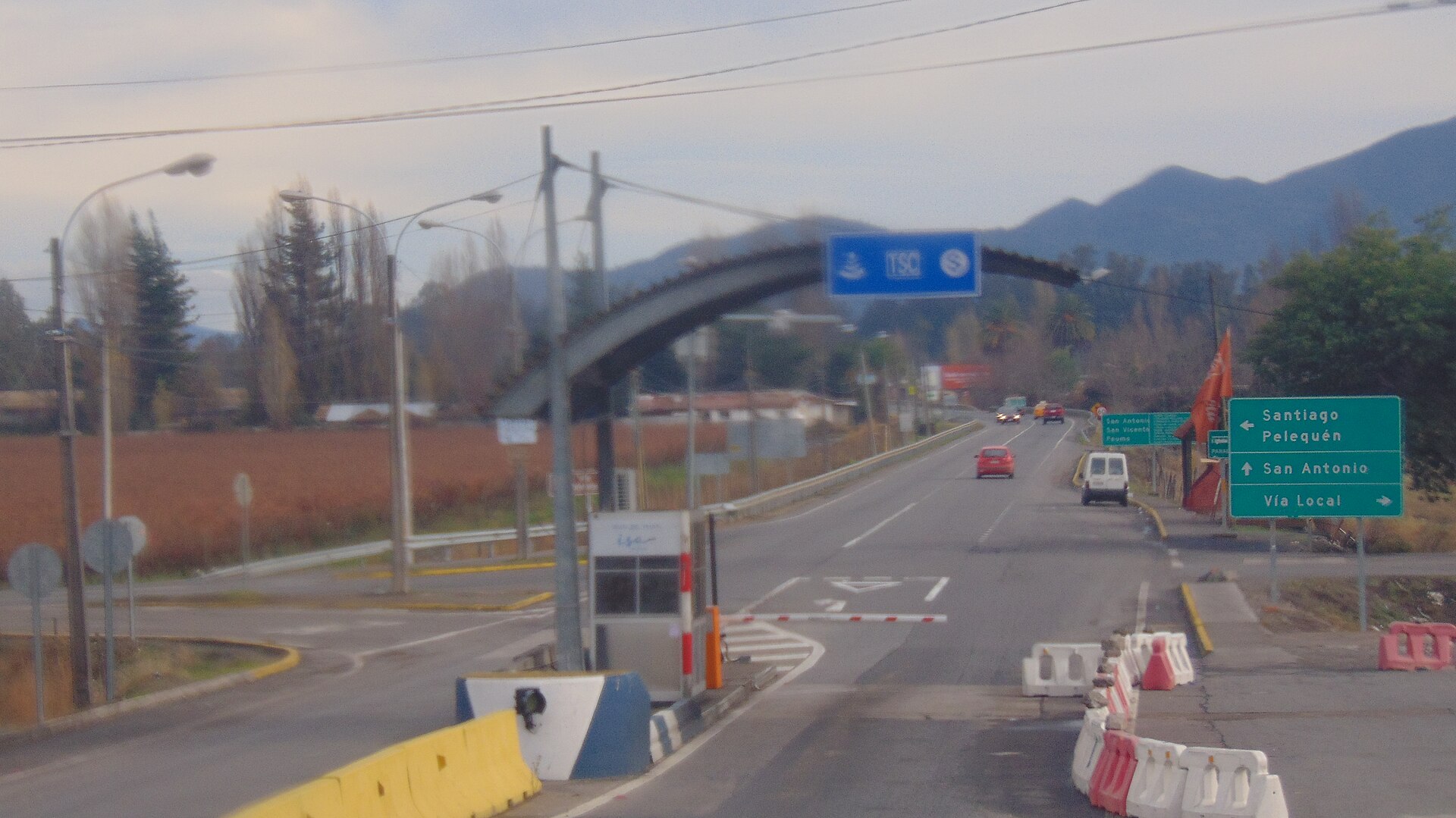
The crash happened at about 09:00 on Saturday 7 November at kilometre 119.8 of Route E-66, in the La Atalaya sector of Santo Domingo, in the Valparaíso region. A dump truck heading south crossed the double centre line and hit a microbus head-on, and a car travelling behind the microbus was also involved.
Eleven people died, after an early count of 12 was corrected, and 15 were hurt; the truck driver is among the dead. Prosecutor Claudia Cancino of San Antonio gave the probable cause on 8 November, saying the truck crossed the centre line.
The new complaint was filed for the widower of one of the people who died, and he is represented by Ramírez. It names Felipe Andrés Ortiz Matamala, owner of the dump truck, “and all who turn out to be responsible”, and no response from the owner has been published.
The main basis of the complaint is the driver’s licence. It says the driver held only a class B licence, the ordinary car licence, although driving a heavy truck of that type requires a professional one.
Ramírez asked how someone “who has no professional licence” could be allowed to drive “a vehicle of that tonnage” and “go out on the road without it”. He added that the driver would also not have taken the physical and psychotechnical tests required for the professional licence.
These are claims in the complaint, and the driver died in the crash, so he cannot answer them. No final finding from the state prosecutor’s own investigation had been reported at the time of writing.
The complaint also turns to the microbus. Injured passengers said several rows of seats came loose from their anchors on impact, so some occupants were thrown out of the vehicle.
Ramírez asked for the urgent seizure of the microbus, which is currently with its owner, so experts can examine its bodywork and safety. No response from Chile’s transport ministry or the national traffic-safety commission, Conaset, to the seat claim had been reported.
In all, the complaint asks for 16 investigative steps, including new mechanical examinations of the truck and seizure of the driver’s mobile phone. Labocar, the criminal laboratory of Carabineros (Chile’s national police), is asked to carry out the work.
The court has not said whether it will order the seizure or the other steps, and it is not known whether the state prosecutors will adopt them. The truck owner is presumed innocent until a court decides otherwise.
Santo Domingo’s mayor, Fernando Rodríguez, repeated his call to widen the road to four lanes. “In Santo Domingo the road crosses almost 20 km and the acceleration lanes are minimal; almost all of it is a single carriageway,” he said.
He said the road mixes heavy trucks, small vehicles and intercity transport on those standards, and called that inadequate. His call moves part of the debate from one driver to the road’s design.
The road carries farm produce and freight towards the port of San Antonio, so its safety matters for cargo and for drivers heading to the coast. For now nothing in the complaint has been tested by a judge, and no hearing date has been announced.
Frequently Asked Questions
What does it mean that the court admitted the complaint?
It means the court accepted the filing, so the private party can take part in the case alongside the prosecutor. It does not mean any allegation has been proven.
Is the truck owner accused of a crime?
The owner is named in the complaint, but he is presumed innocent and no response from him has been published. Only a court can decide responsibility.
What happens next in the case?
The court has yet to rule on the requested seizure and investigative steps. No hearing date has been announced.
Sources
Statements of the complainant’s lawyer Raúl Ramírez and Santo Domingo mayor Fernando Rodríguez, 28 November 2026 · Juzgado de Garantía de San Antonio, admissibility of the complaint (resolution not published online; confirmed 28 November 2026) · San Antonio prosecutor’s office, statement of 8 November 2026
More: Chile news
Related coverage: Chile Road Crash Kills 11 in Santo Domingo
This article was produced by The Rio Times’ automated AI newsroom. Editorial responsibility: Matthias Camenzind, Publisher and Editor-in-Chief. The Rio Times also runs Ask Rio Times, which answers from 100,000+ of our own articles, the daily Latin America Power Map, and prediction-market odds on elections and markets.. How we use AI · Report an error