Cape Town Unveils Plan to Replace Unfinished Highways

SOUTH AFRICA · INFRASTRUCTURE
Key Facts
- —The country Cape Town is South Africa’s second-largest city, a busy port wedged between Table Mountain and the Atlantic Ocean.
- —What happened On Friday 2 October 2026, Mayor Geordin Hill-Lewis unveiled a plan to replace the city’s unfinished highways.
- —Why it matters The 1970s stubs cut the city centre off from its harbour; the plan would free about 15 hectares for a new neighbourhood.
- —What starts first Only phase one, a new link bridge plus two extra inbound lanes, is pencilled in for the next council term.
- —The catch There is no cost estimate or published funding model, and the tunnel needs land owned by the state port authority.
- —What it means for you No tenders, land prices or housing targets have been published; the second phase is scheduled to run until 2040.
- —What comes next The City says public consultation starts with the release of the drawings; road-scheme and heritage processes follow.
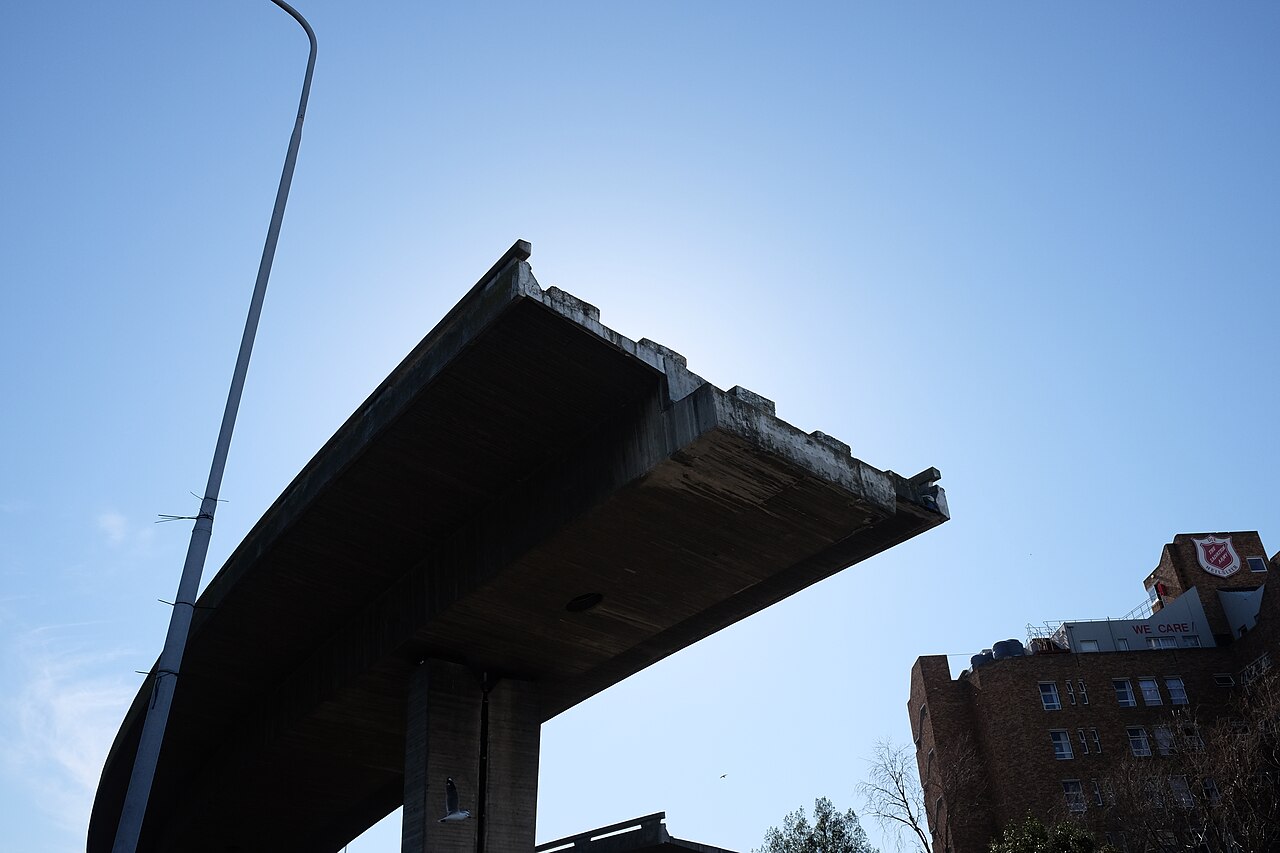
Cape Town has unveiled a plan to replace its unfinished highways, freeway ends left hanging in mid-air for about half a century. Mayor Geordin Hill-Lewis presented it on Friday 2 October 2026, standing on one of the unfinished bridges.
A new link bridge would come first, with a tunnel and a new neighbourhood on about 15 hectares to follow. The City has given no cost or funding model, and only the first phase has a target start date.
What the City Has Proposed for Phase One
The City of Cape Town wants to build in two halves so that traffic keeps flowing on the old freeways. Phase one would widen the inbound freeway by two lanes and add a new link bridge over Buitengracht Street.
That bridge would carry inbound traffic straight onto Helen Suzman Boulevard. Drivers heading for Green Point, Sea Point and the Atlantic Seaboard would bypass the central business district (CBD).
Phase one also adds bus lanes, a park beneath the bridge and a new canal joining the V&A Canal. That waterway leads to the V&A Waterfront harbour and shopping district.
Three plots would open up for housing, and the City wants this phase to start in the next council term.
Phase Two Brings a Tunnel and a New Neighbourhood
The larger second phase would only begin once phase one is finished. A new outbound bridge would lead into a tunnel near the port, running beside Duncan Road to two national highways.
The existing outbound viaduct would then be demolished to make room for a harbour promenade, parks and more building plots. The City says this phase would run until 2040.
The City is in talks with Transnet, the state-owned freight and ports company, over port land the tunnel needs.
Why the Bridges Were Never Finished
Work on the freeway began in the early 1970s and stopped in 1977. A shortage of money is among the reasons cited.
Capetonians call the unfinished highways “Solly’s Folly”, after Solly Morris, the city engineer of that era.
Who Pays, and Why the Timing Is Political
Hill-Lewis would not give a cost estimate. “It will obviously be a very large project, many billions of rands,” he said, according to the Cape Argus.
According to Eyewitness News, the mayor said the City would fund the first phase. He said national government and Transnet were expected to help with the second, but no funding agreement has been announced.
At the launch, Transnet chief executive Michelle Phillips said: “We are always going to be supportive of the cities in which we operate.” No deal on the port land has been made public.
Hill-Lewis’s Democratic Alliance (DA), which runs the city, faces municipal elections on Wednesday 4 November 2026. Brett Herron, mayoral candidate for the opposition GOOD party, called the announcement “hollow election-linked puffery” without figures on cost, funding and housing.
What It Means for US Readers
For travellers, the Foreshore is where major routes enter and leave Cape Town, between the city centre and the V&A Waterfront. Nothing changes on the road for now, but the mayor expects several years of construction once work begins.
For investors, the unfinished highways are a long-dated story about scarce city-centre land, not a deal on offer today. No tenders, land prices or housing targets have been published.
For policy readers, Herron cited Boston’s Big Dig, where costs rose from an initial estimate of about US$2.8 billion to US$14.8 billion. Housing pressure is already shaping city politics, as in Cape Town Moves to Charge Airbnb Hosts Hotel Rates.
What Is Not Known
The total cost is unknown, and the mayor says an accurate figure will only come after detailed design and procurement. It is also unclear how the second phase would be shared between the City, national government and Transnet.
The City says the plan includes affordable housing but has not said how many homes. Nor is it clear whether Transnet will release the port land, or how much the drawings will change.
What Comes Next
The City says the public-facing phase began on 2 October, when it released the drawings to start public consultation, with updates on the project website, foreshore.capetown. Public participation will include road-scheme amendments and heritage impact assessments, both statutory steps.
Only then come detailed engineering and procurement. Work on the unfinished highways is not imminent, and the existing outbound viaduct is due to be torn down rather than finished.
More: South Africa news in English, every day from The Rio Times.
What is Cape Town’s Foreshore Precinct Project?
It is the City of Cape Town’s plan to replace the unfinished highways with a new link bridge and a tunnel. It would also free about 15 hectares of city-centre land for homes, offices and parks.
When will construction start on Cape Town’s unfinished highways?
Only phase one has a target start, during the next city council term after the November 2026 elections. The City says the second phase, including the tunnel, would run until 2040.
How much will the Foreshore project cost, and who pays?
No cost has been published; the mayor would only say it will run to many billions of rands. He said the City would fund phase one, and that national government and Transnet were expected to help with phase two.
Why were Cape Town’s highways never finished?
Work began in the early 1970s and stopped in 1977, with a lack of money among the reasons cited. The concrete ends have stood in mid-air ever since.
Sources: City of Cape Town, media release, 2 October 2026; City of Cape Town, Mayor’s speech, 2 October 2026; Cape Argus (IOL), 4 October 2026; Eyewitness News, 3 October 2026; Daily Maverick, 4 October 2026; Cape Times (IOL), 4 October 2026; SAnews, election date, 7 August 2026; BusinessTech, 2 October 2026; Atlantic Sun (Sentinel News), 5 October 2026.
This article was produced by The Rio Times’ automated newsroom system. How we use AI · Report an error · Editorial responsibility: Matthias Camenzind, Editor-in-Chief