Cameroon Paid for Roads That Are Still Unfinished
Central Africa · Infrastructure
Key Facts
—The exposure: Three state road projects worth a combined 75.3 billion CFA francs, about US$134 million, are behind schedule.
—The flagship: The 81.5 kilometre Boucle de la Lekie was 57.03% complete in July 2026, nineteen months past its December 2024 deadline.
—The contractor: Arab Contractors Cameroon, the local subsidiary of Egypt’s Arab Contractors, founded in 1955.
—Who is blamed: The public works ministry cites poor organisation and weak mobilisation of teams and equipment, rather than non-payment.
—The payments: The state released 4.2 billion CFA francs (about US$7.5 million) between January and April, and says unpaid invoices are down to 519.4 million (about US$920,000).
—The worst case: The Yaounde northern penetrating road is at a standstill at 16.20% progress, with 81.75% of its contract time used.
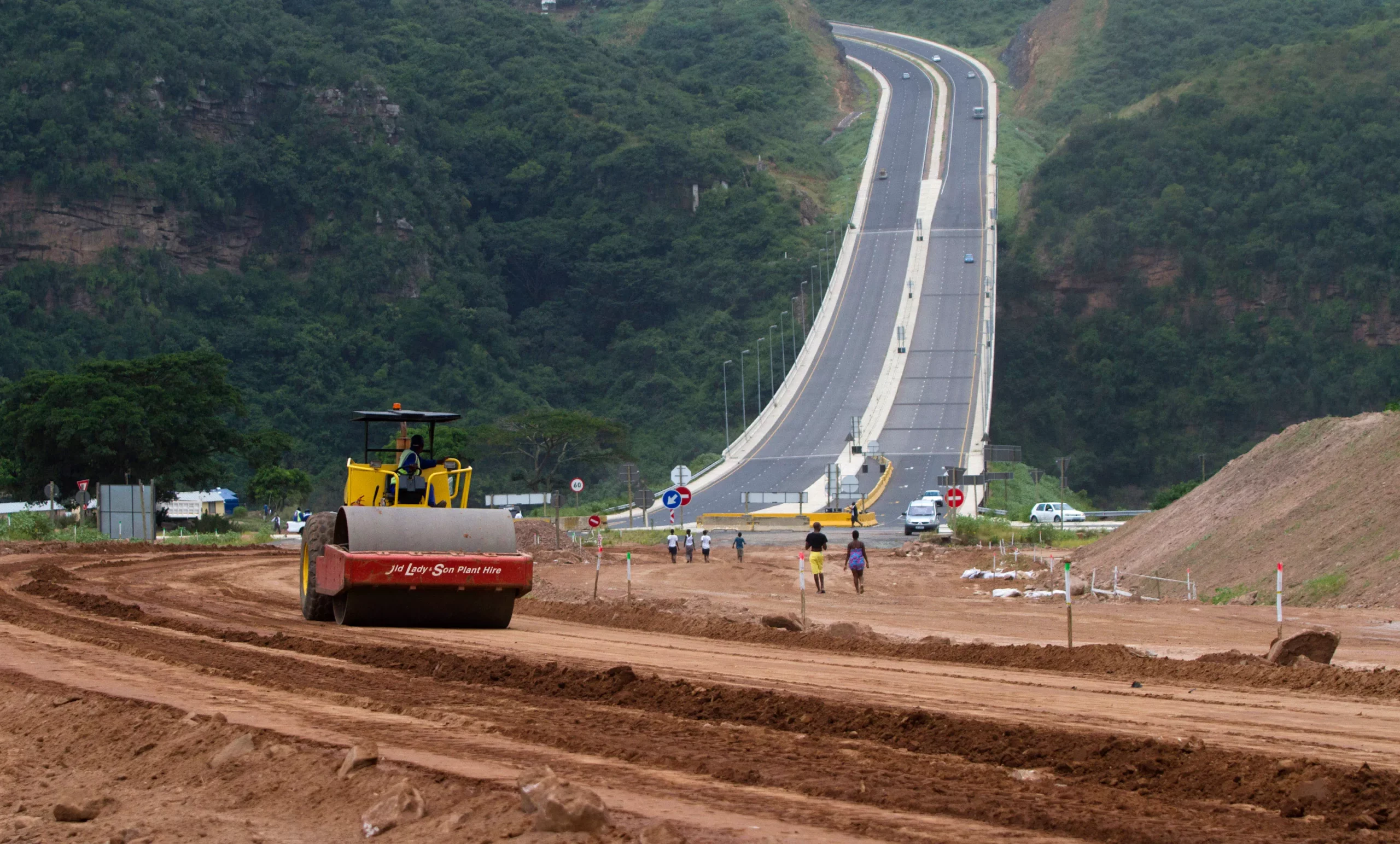
Cameroon road delays have left three state projects worth about US$134 million badly behind schedule, and the public works ministry says the reason is not money. It blames the contractor, the Cameroonian subsidiary of one of the largest construction groups in Egypt and the Middle East.
The flagship job behind the Cameroon road delays
The Boucle de la Lekie is an 81.5 kilometre rehabilitation in Cameroon’s Centre region, running from the Nkolbisson interchange out through Zamengoue toward Monatele. It was awarded in December 2022 with a 24-month delivery period.
That put completion in December 2024. In July 2026 it stood at 57.03%.
The contract was worth 31 billion CFA francs, about US$55 million, and was state-financed. Cameroon uses the Central African CFA franc, which is hard-pegged to the euro, so it tracks the euro against the dollar. Ministry services now say the cost could rise by a further 11 billion CFA francs to 42 billion, roughly US$75 million.
It was awarded by single-source contract, agreed by President Paul Biya on 6 June 2022. That procurement route is the part an auditor would circle first.
The ministry says it is not about money
This is the unusual feature of the case. The Ministry of Public Works attributes the delay to poor organisation of the company and weak mobilisation of its teams and equipment.
It backs that with payment figures. The state released 4.2 billion CFA francs between January and April 2026, about US$7.5 million, and says unpaid invoices are now down to 519.4 million, under a million dollars.
Across all three projects the ministry says it has paid 41.31 billion CFA francs of the 54.36 billion in invoices it has received, roughly US$74 million of US$97 million.
The position was different in October 2023, when 6.219 billion CFA francs (about US$11 million) of invoices were outstanding and the works stood at 10.50%. Payment has caught up; delivery has not.
Two more sites, one of them stopped
The Yaounde northern penetrating road is the worst of the three. Worth 23 billion CFA francs, about US$41 million, it is at a standstill at 16.20% physical progress, with 81.75% of its contract time already consumed.
That is a capital-city artery that is simply not being built. Anyone who has sat in the traffic on Yaounde’s main routes understands what that means in practice.
The third job, a section between Mbalmayo and Sangmelima, is worth 21.3 billion CFA francs, about US$38 million.
Minister of Public Works Emmanuel Nganou Djoumessi has issued a technical service order with mandated targets and granted a three-month extension on the Lekie loop, and the ministry has now set a delivery date of November 2026. The deadline had already slipped once, to December 2025. A service order with mandated targets is the standard escalation before a contract is terminated.
Why the contractor’s name matters
Arab Contractors is not a marginal firm. Founded in 1955 by the Egyptian engineer Osman Ahmed Osman, it is one of the largest construction groups in Egypt and the Middle East and one of the country’s most visible instruments of influence across Africa.
Its portfolio includes the Rod El Farag axis and the Sharm El Sheikh airport modernisation in Egypt, an 84 kilometre road near N’Djamena and an east-west axis in Abuja. We reported this month that it built Tanzania’s Julius Nyerere hydropower plant, the largest dam in the country.
Cairo has spent a decade selling Egyptian engineering capacity as a pan-African export, alongside Elsewedy Electric. The Cameroonian file is the other side of that ledger.
It should be said clearly that this account comes from the client. Neither Arab Contractors nor its Cameroonian subsidiary has commented publicly, and the ministry has an obvious interest in where blame lands.
What it tells an investor
The broader point is about delivery risk in Central African public works, not about one Egyptian firm. A single-source award, a doubling of the timeline and a proposed 35% cost increase is a familiar sequence.
For development finance institutions and bondholders looking at Cameroon’s capital budget, execution rates matter as much as allocations. Money appropriated and paid has not become road.
There is a knock-on too. The Lekie corridor may be needed to carry equipment for the Kikot hydropower project, which would add 500 megawatts to the grid, though that connection is the trade press’s inference rather than a government statement.
One inconsistency worth flagging: the two Cameroonian outlets reporting the ministry’s figures name the middle sections differently — one has Zamengoué–Ekekam–Monatélé, the other Zamengoué–Ekékam–Evodoula — which is a reminder to treat sub-project detail with care. The lengths themselves add up: 9.05 plus 43.95 plus 28.5 kilometres.
Frequently Asked Questions
What are the Cameroon road delays?
Three state road projects worth a combined 75.3 billion CFA francs, about US$134 million, are behind schedule, with the public works ministry blaming the contractor’s organisation rather than payment.
Which contractor is involved?
Arab Contractors Cameroon, the local subsidiary of Egypt’s Arab Contractors, the country’s largest construction group, founded in 1955.
How late is the main project?
The 81.5 kilometre Boucle de la Lekie was 57.03% complete in July 2026, nineteen months past its December 2024 deadline.
Has the government paid?
The ministry says it has paid 41.31 billion CFA francs (about US$73 million) of 54.36 billion (about US$97 million) in invoices received across the three projects, with unpaid invoices down to 519.4 million.
Has the company responded?
Neither Arab Contractors nor its Cameroonian subsidiary has commented publicly on the ministry’s account.
Connected Coverage
Our Central Africa coverage includes Congo-Brazzaville’s power turnaround, the Egyptian-built dam in Tanzania, and more from our Central Africa hub.
This article was produced by The Rio Times’ automated newsroom system. How we use AI · Report an error · Editorial responsibility: Matthias Camenzind, Editor-in-Chief
LatAm Markets: Live Signals → — real-time movers, turnover leaders and FX across Latin America.