Brazilian Supreme Court Justice Faces International Backlash
In a surprising turn of events, the world has begun to react to alleged censorship in Brazil. U.S. Representative María Elvira Salazar has introduced a bill that could bar entry for those accused of violating free speech.
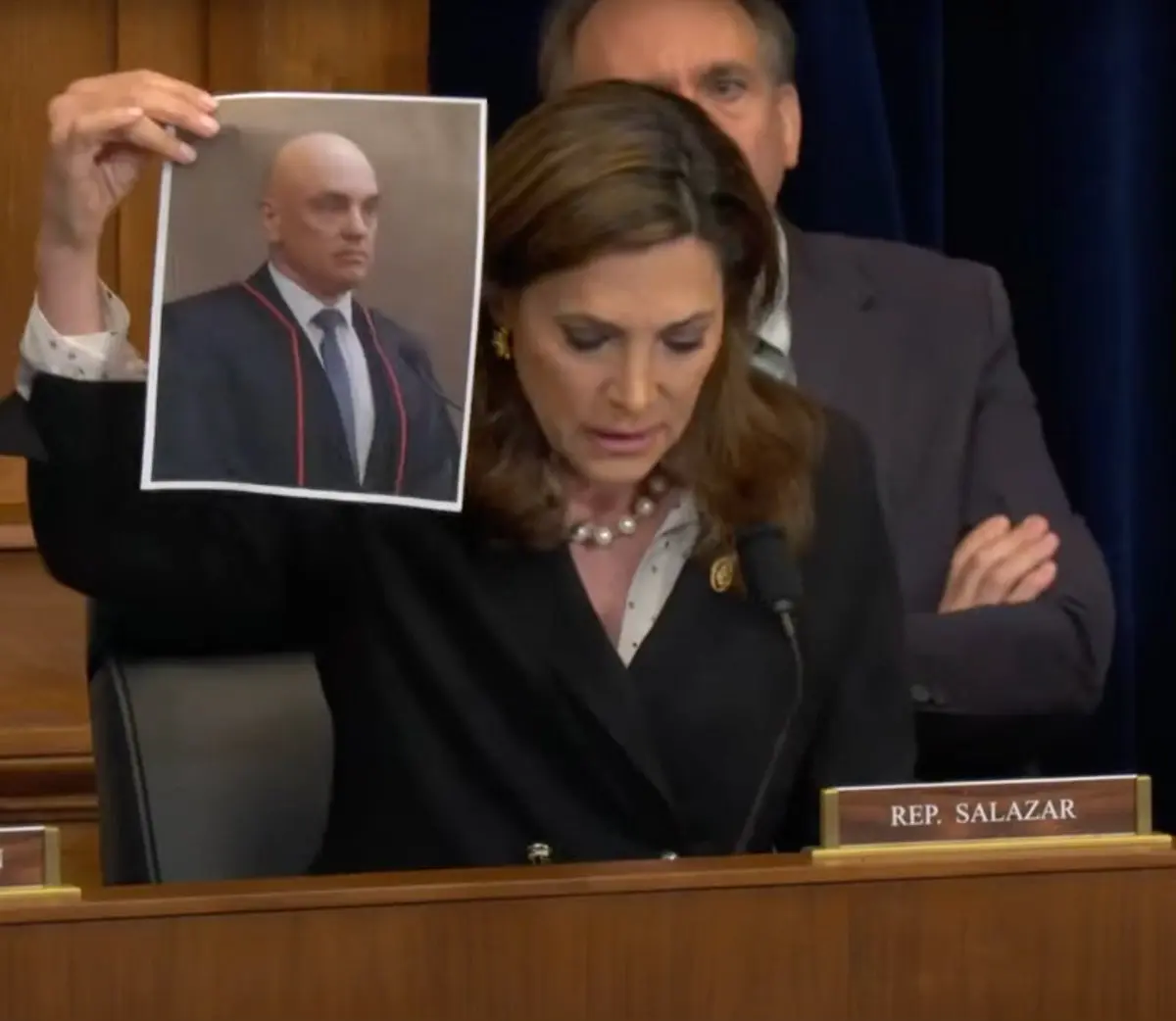
The Florida Republican presented the “No Censors on Our Shores Act” to Congress on Tuesday. This controversial legislation aims to amend U.S. immigration law, potentially affecting foreign officials, including Brazilian Supreme Court justices.
If passed, the bill would allow for the deportation of foreign officials accused of violating Americans’ First Amendment rights. Salazar specifically mentioned Brazilian Supreme Court Justice Alexandre de Moraes as a possible target of this measure.
During her presentation, Salazar declared, “Justice Alexandre de Moraes leads an international attack on free speech against U.S. citizens like Elon Musk.” She added that censors are unwelcome in the United States, the land of the free.
The proposal comes amid recent controversy involving Moraes, entrepreneur Elon Musk, and the social network X (formerly Twitter). This dispute has gained international attention and sparked debates about free speech online.
If approved, the bill could significantly impact diplomatic relations between Brazil and the United States. It may affect visits by Brazilian judicial authorities, police agents, and political leaders to the North American country.
International Reactions and Global Impact
The White House has also weighed in on the matter through its spokesperson, Karine Jean-Pierre. She stated that freedom of expression includes unrestricted access to social media platforms for all individuals.
As the world watches Brazil closely, international media outlets are increasingly covering the situation. A German journalist plans to create a documentary about the alleged abuses by Justice Moraes and his supporters.
The growing global attention may increase pressure on Brazilian authorities. Some observers speculate that Brazil could face economic sanctions if the situation persists, potentially isolating the country on the world stage.
As these events unfold, the international community continues to monitor developments in Brazil with keen interest. The coming months may prove crucial in determining the future of free speech and censorship policies in the country.
More: Brazil news in English, every day from The Rio Times.
This article was produced by The Rio Times’ automated newsroom system. How we use AI · Report an error
Read More from The Rio Times