Brazilian meat industry defends itself from environmental criticism after the recall of products in Europe
RIO DE JANEIRO, BRAZIL – Large Brazilian meat processing companies defended themselves on Thursday, December 16th, against accusations of contributing to deforestation, after several supermarket chains in Europe committed to withdrawing products suspected of being linked to this problem.
The decisions, including the French giant Carrefour, were announced by the US NGO Mighty Earth, which collaborated with an investigation led by the Brazilian NGO Repórter Brasil, founded by journalists.
The meat industry giants JBS, Marfrig, and Minerva were accused of allegedly contributing to deforestation in some regions of Brazil, such as the Amazon, considered the planet’s lungs.

According to Mighty Earth, some products obtained thanks to deforestation are found in European supermarkets in the form of jerky, corned beef, or fresh meat.
“The fact that Mighty Earth shared the results of the investigation before publication with the companies directly involved led to today’s statements” from the distributors, the US organization said.
Brazilian meatpackers responded by citing their commitment to the environment and supplier controls.
JBS, the world’s number one meat producer, assured that it practices a zero-tolerance policy with “illegal deforestation, forced labor, and the improper use of indigenous territories or protected areas”.
Ten years ago, JBS said, it established “a geospatial monitoring system that uses satellite images to monitor its suppliers”.
Although he indicated that it is not possible at the moment to “control in the same way” the suppliers of its own suppliers, who are protected by confidentiality, the company said that it had invested in a new platform to obtain by 2025 “a supply chain without the slightest trace of illegal deforestation“.
For its part, Marfrig indicated in a statement sent to AFP that it “maintains a rigid protocol and purchase of animals, based on social and environmental criteria that its direct suppliers must comply with”, and that it has also been carrying out satellite monitoring in the Amazon region for more than a decade.
Minerva Foods also highlighted its “initiatives to combat illegal deforestation” and climate change in a note to AFP.
IMPORTED DEFORESTATION
Following Mighty Earth’s complaint, the French group Carrefour withdrew from its stores in Belgium a reference of the Jack Link’s brand, which manufactures part of its jerky in Brazil with JBS.
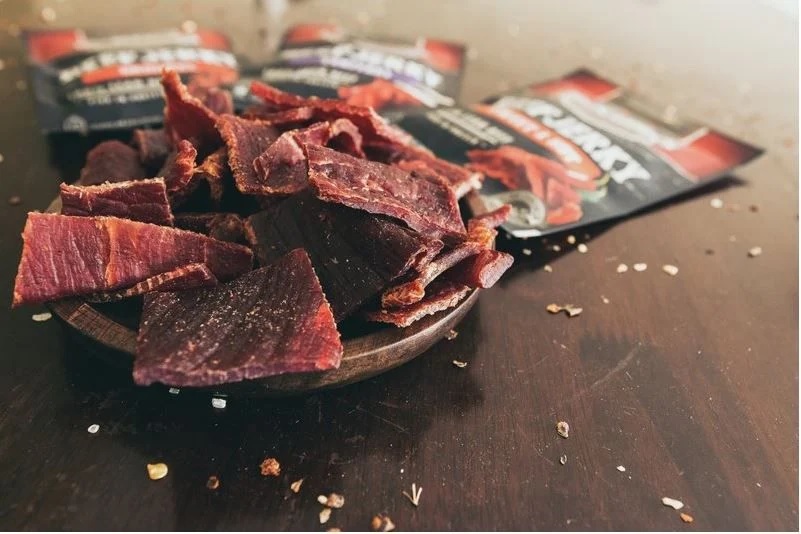
“We are studying the origin of the products we would have in other countries – if we find them – to take a similar decision if the case arises,” Carrefour’s Agathe Grossmith confirmed to AFP.
For its part, Auchan said it initiated a procedure to recall a Jack Link product in France and was investigating its origin. It also stated that it does not source Brazilian beef for its brands.
According to Mighty Earth, Belgian supermarket chain Delhaize also pledged to “remove all Jack Link products from its shelves.”
The NGO also points to initiatives by other supermarket chains, such as Lidl and Albert Heijn in the Netherlands and Sainsbury’s and Princes in the UK, to avoid selling Brazilian beef whose producers are allegedly linked to deforestation.
“These trade measures, together with new EU legislation to combat imported deforestation, show that the siege is closing in on forest destroyers,” said Nico Muzi, Director of Mighty Earth Europe.
Large Brazilian groups were recently accused of “cattle laundering,” which involves transferring animals from one farm whose meat cannot be exported because of illegal deforestation on their land to another authorized farm.
Since the arrival to power in January 2019 of the conservative Jair Bolsonaro, deforestation skyrocketed in Brazil, favorable to mining and agricultural exploitation in protected areas. Between 2020-2021, logging set a record since 2006, with an increase of 22%, according to official figures.
More: Brazil news in English, every day from The Rio Times.
This article was produced by The Rio Times’ automated newsroom system. How we use AI · Report an error · Editorial responsibility: Matthias Camenzind, Editor-in-Chief