Mercosur foreign ministers’ summit: Argentina and Brazil called for strengthening the regional bloc
RIO DE JANEIRO, BRAZIL – While Argentina and Brazil insisted on the need to strengthen Mercosur by betting on consensus and unity, Uruguay stated that there is a “deep and historic vocation for regional integration which we will never renounce, just as we will never renounce a historic vocation for openness and broad insertion at the international level”.
This was a clear demonstration of Uruguay’s intention to enter into extra-zone agreements, especially with China, without the need for the backing of its trading partners. This Friday, the Summit of Presidents of the regional bloc started at 10 AM.
The Argentine Foreign Minister, Santiago Cafiero, participated in the LIX Meeting of the Common Market Council (CMC) of the Mercosur Member States and Bolivia, together with his peers from the region – from Paraguay, Euclides Acevedo; from Uruguay, Francisco Bustillo; from Brazil, Carlos França, chairing the meeting from Brasilia – and with the Vice Minister of Foreign Trade and Integration of Bolivia, Benjamín Blanco, as a guest.

Cafiero stated: “The bloc that we must consolidate in the future will be built based on a clear synergy between internal issues and the bloc’s external agenda. The improvement of the regional integration project is the result of consensus and must contemplate a common trade policy that will adequately insert our countries in the world”.
Regarding one of the most controversial issues raised in the last Mercosur meetings, the reduction of the Common External Tariff (CET), the head of Palacio San Martín stated: “It is a constitutive element of our integration process. It means that, when we proposed to modify it, we undertook a dialogue focused on the very essence of the integration process. We are now in the middle of this negotiation, and all the partners have made a great effort to reach an agreement. The conditions are in place to have a CET that is more appropriate to our current reality and to consolidate the customs union”.
The discussion on reducing or eliminating the CET has been a recurring issue for several months. Argentina and Brazil agreed in November to a 10% reduction on a series of products that do not affect mainly the industrial sectors. Still, Uruguay has not yet signed this agreement and is asking to deepen it.
The head of Argentine diplomacy was accompanied in his presentation by the Ministers of Economy, Martín Guzmán, and of Productive Development, Matías Kulfas; the Secretary of International Economic Relations of the Ministry of Foreign Affairs, Cecilia Todesca Bocco; and the Undersecretary of Mercosur and International Economic Negotiations, Rossana Surballe.
França, for his part, highlighted the position of the government of Jair Bolsonaro with support to the joint task of the regional common market: “We must face as a bloc the loss of dynamism and trade exchanges that have occurred. This highlights the relevance and importance of the bloc in the productive sectors and the need that we must transmit to the peoples we represent, this idea that the bloc is that it can bring very concrete social and economic benefits”.
In addition, the Brazilian Foreign Minister highlighted the 30 years of the most strategic integration of Latin America, Mercosur, urged to “continue working” and announced that the agreements reached by the bloc with the Dominican Republic and Indonesia would be approved.
Paraguay, which will assume the pro-tempore presidency of Mercosur for the next six months, pledged to focus its efforts on achieving “more and better Mercosur” and try to build “a frank and constructive dialogue” among the member countries.
“It is important that this plan contemplates the export interests of all partners and our productive sectors. For our countries, export growth is fundamental for strengthening economies, employment, and the productive and social fabric. That is why we are awaiting the conclusion of the current negotiations (European Union and EFTA), but we continue to look strategically at new scenarios”, he emphasized.
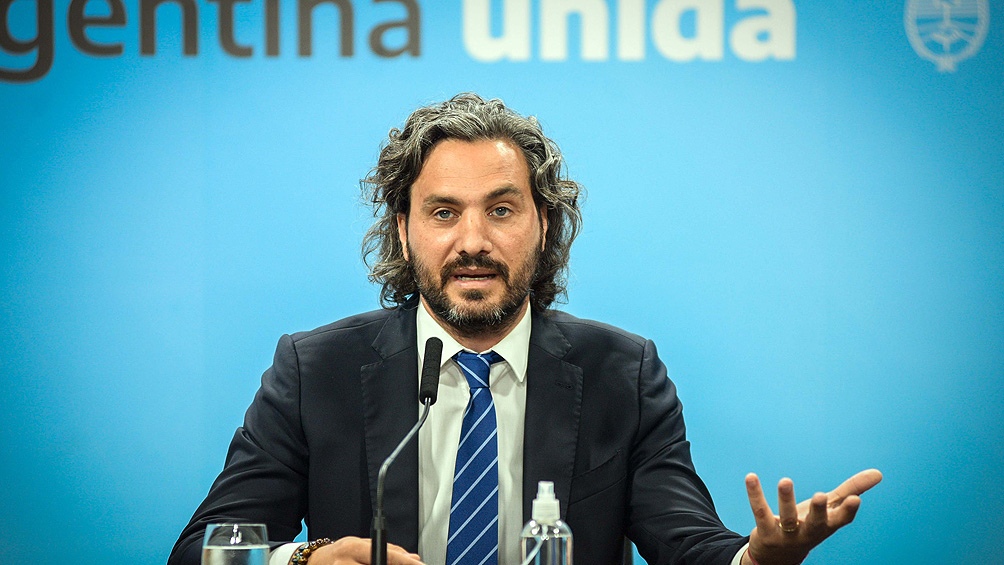
Cafiero made a balance of the achievements and challenges of the bloc and highlighted that “for Argentina, Mercosur is the main instrument of international economic insertion and constitutes a valid State policy. It is the path chosen by our country to relate with the world, and it is one of the most successful integration processes in Latin America, which will be 30 years old in 2021. Regional integration is a process that transcends the times of a government”.
Then, he highlighted Brazil’s work in the last six months: “It was successful, and allowed us to continue advancing in the integration agenda to give continuity to our internal and external commitments”. He also pointed out: “The bulk of trade between the bloc members is in industrialized products. This has been possible thanks to the economies of scale and specialization achieved by expanding the market to which our companies have access. This is one of the great achievements of Mercosur and the free trade agreements with almost all the countries in the region. The bloc also leads regional exports of Knowledge-Based Services.”
“It is important that this agenda contemplates the export interests of all partners and our productive sectors. For our countries, export growth is fundamental for strengthening economies, employment, and the productive and social fabric. That is why we are awaiting the conclusion of the current negotiations (European Union and EFTA), but we continue to look strategically at new scenarios,” he emphasized.
“We have spoken with our productive sectors to explain our proposals and take their suggestions into account. We have an agreement on the modifications we want, reducing tariffs on raw materials and inputs we need to produce and meeting the requirements of all partners. Delays and procrastination entail the risk of derailing a negotiation that took us several years, which would have unpredictable consequences for an issue of such importance,” he concluded.
More: Brazil news in English, every day from The Rio Times.
This article was produced by The Rio Times’ automated newsroom system. How we use AI · Report an error · Editorial responsibility: Matthias Camenzind, Editor-in-Chief