Brazilian Finance Minister: spending will rise less than 50% of the increase in revenue in 2024
The Minister of Finance, Fernando Haddad, denied that the changes made in the new fiscal framework report will increase expenses by R$82 billion in 2024.
“There’s no way this could happen,” he said.
According to him, in the “worst case scenario”, the growth will be 50% of the increase in revenue, but he did not mention the spending increase values for next year.
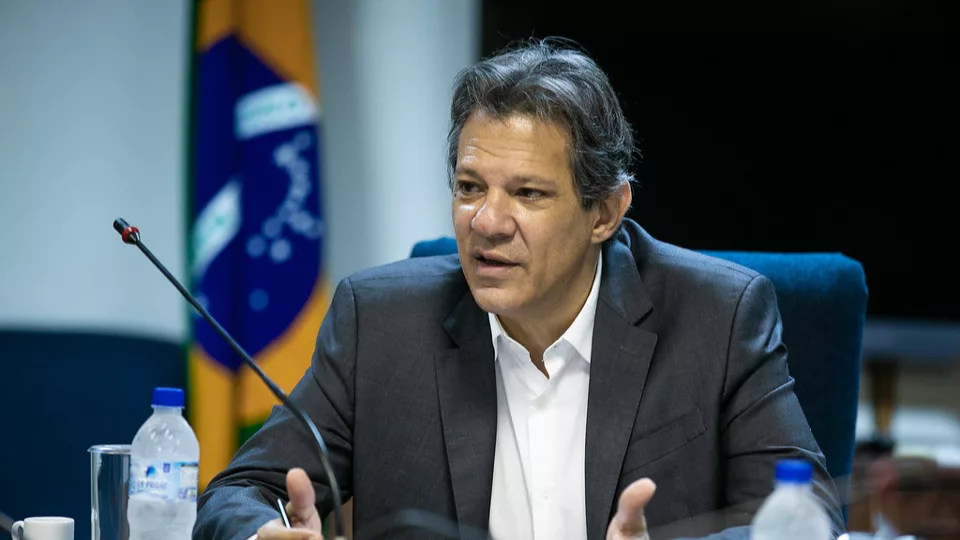
“The cornerstone of this fiscal rule is that the expenditure [of the following year] does not grow more than between 50% and 70% of revenue,” he said.”
“The answer from the National Treasury and the Internal Revenue Service: it will grow by less than 50% in 2024.”
Market specialists had suggested an increase in expenses.
He thanked the House of Representatives on Thursday (18) for approving the urgency regime of the fiscal framework.
He said that the rapporteur, Representative Claudio Cajado (PP-BA), was a “very skillful” person in building the “expressive vote” in the House.
According to him, the government is working to have a vote with “the quorum of a PEC”.
It wants 308 votes in the House and 49 to 50 in the Senate.
Haddad is in São Paulo and talked to journalists at the São Paulo Finance Ministry.
According to calculations by economist Jeferson Bittencourt, from Asa Investments, who was National Treasury Secretary from May to October 2021, the changes made by the rapporteur of the fiscal framework allow the government to increase spending by R$82 billion in 2024.
The information was published by the newspaper Folha de S. Paulo.
UNDERSTAND
The government has proposed parameters that will be the “new spending cap”.
Expenses for one year should be 70% of the variation in government revenue between the 12 accumulated months until June of the previous year – minus inflation.
In other words, the spending cap for 2024 would be the variation in revenue from July 2022 to June 2024.
There will be a floor and a limit for this increase in spending: it cannot be less than 0.6% or more than 2.5%.
For 2024, however, the rapporteur has fixed the expenses growth at 2.5% – regardless of the variation in revenue.
The economist said that expenses should increase by 2.3% in 2024.
This difference of 0.2 percentage points will cost R$40 billion.
The minister said the fiscal rule has a “strategy of recomposition” of the primary result.
Expenditure will only rise by 70% of revenue if the fiscal targets are met.
If they “leave something to be desired,” as the minister says, the growth in spending will be based on 50% of the variation in revenue.
Haddad declared, however, that 2024 will be a more difficult year in the calculation.
“Expenses will have an increase of less than half the increase in revenue,” he said.
CHANGE IN THE IPCA
Another change made by Cajado alters the reference of the inflation calculation.
It changed from January to December of the previous year to the 12 months ending in June.
This model avoids the Budget being made based on projections.
The previous year’s IPCA (National Wide Consumer Price Index) was only published in January of the following year when the Budget had already been voted on and approved.
By limiting expenses growth from July to June, the government will have the limit established earlier.
The annualized inflation estimated by Bittencourt for June is 3.7%. For the end of 2023, 5.8%.
Haddad said that inflation would surprise for “less”.
The Finance Ministry’s projection is close to 5.5%, while the market projects 6.03%.
With information from Poder360
News Brazil, English news Brazil, Brazilian economy
More: Brazil news in English, every day from The Rio Times.
Editorial responsibility: Matthias Camenzind, Editor-in-Chief · Editorial standards · Report an error