EU leader is optimistic that the Mercosur agreement will be approved
By Marcelo Osakabe
Although the new European requirements to ratify the agreement between the European Union and Mercosur have frightened Brazil and its neighbors, there is optimism that the agreement will be finalized this year.
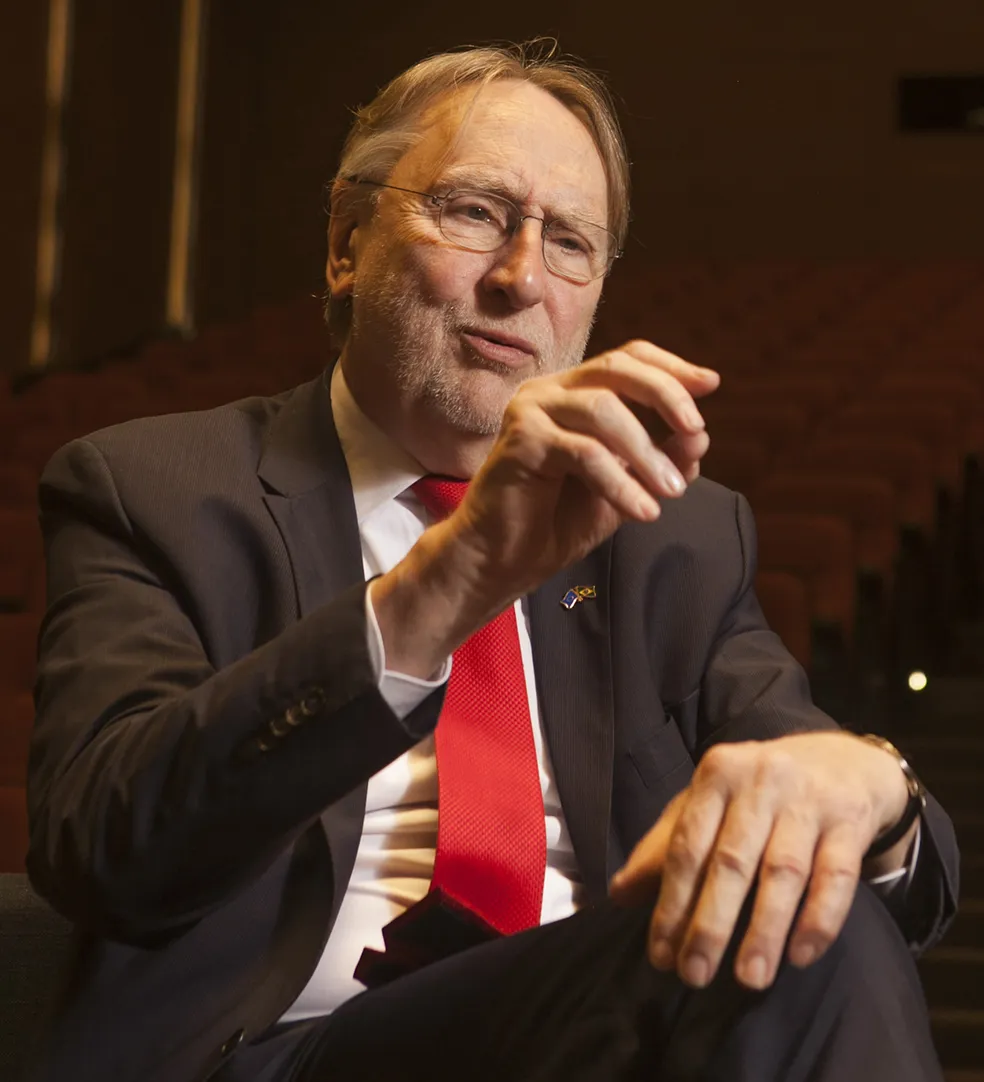
The assessment comes from German MEP Bernd Lange, president of the International Trade Committee of the European Parliament.
In his assessment, the environmental setbacks of President Jair Bolsonaro’s administration prevented an agreement from being signed earlier.
However, he says other things have changed in the global context since 2019 and also need to be considered, citing the war in Ukraine and the retreat from global trade openness.
In a more fragmented world, the German politician says, there is a need for closer ties of trust with its partners, which is an additional motivation for finalizing the agreement.
Lange also noted that the additional protocol “is not an EU imposition” but something that will be built jointly.
He also hinted at some flexibilization on the part of the Europeans on topics such as government procurement, an area of the agreement that the Brazilian government has shown interest in changing.
As the chair of the European Parliament’s International Trade Committee (INTA) since 2014, Lange is an expert in negotiations between the European and South American blocs.
In Brazil since Monday, the German met with the acting president and Minister of Development, Industry and Trade and Services (Mdic), Geraldo Alckmin, the Minister of Environment, Marina Silva, and the Minister of Labor, Luiz Marinho.
While in São Paulo before heading to Uruguay, he met with the São Paulo government’s Secretary for International Business, Lucas Ferraz, and had lunch at Fiesp.
Below are the main parts of the interview:
Valor: What is your impression of the new government?
The new government has quite a different approach than the previous one, especially concerning social justice and fighting poverty and hunger.
Regarding the environment and climate change, Brazil will play an important role with the Amazon and the zero deforestation targets.
So, when it comes to content and commitment, the evaluation is quite positive.
But we still need to see this transformed into concrete actions.
After Lula’s victory, there were statements from both sides about speeding up the process of ratification of the agreement. However, the new European demands surprised Brazil and other Mercosul countries. Was the change of government not positive enough?
First, I believe that it was correct for the EU not to ratify the agreement with the previous government because it was clear that foreseen obligations were being broken, such as sustainable management of forests and the labor reform in Brazil, which clearly violates Convention 98 of the International Labor Organization (ILO) [which guarantees the right to unionization and collective bargaining].
There was no chance of ratification.
Since Lula’s election, we have looked at the document again, and it should be noted that things have changed in these four years.
There was Russia’s war against Ukraine, the pandemic, and a little clearer understanding of what the Europeans want concerning sovereignty and national security.
These are issues that influence the opening of trade.
In addition, within the EU, we are strongly committed to implementing sustainability within our trade agreements. This is what led us to propose an additional protocol.
We see it as a kind of fine-tuning, especially dedicated to implementation.
We have already done protocols of this type with other trade partners, so the message is that this will be built in partnership; it is not a “take it or leave it” situation.
Is it possible to sign the agreement still this year?
In the current geopolitical situation of fragmented globalization, it is important that partners strengthen their links.
There is some pressure [for the agreement] when you look at this scenario. At the same time, this additional protocol was discussed only in March, as the new government needed time to organize.
In June, we will have a new round of negotiations open to discuss this issue.
I believe it should be finalized this year to give us a clearer perspective on the ratification process.
Again, these protocols are not the EU pointing the finger at Brazil or its neighbors.
In my conversations here, I have gotten the impression that there is some noise on this issue.
We will discuss these issues, but the idea is to close this year.
You talked about joint construction. President Lula also expressed his desire to change the chapter on government procurement. Do you believe this issue can be reviewed?
We have to look at the different interests on both sides.
Based on our experience in the last few years, one lesson is that the illusion of global free trade no longer exists.
The liberal thinking that opening markets and lowering tariffs would automatically result in meeting sustainable development goals is over.
During the pandemic alone, we saw many protectionist actions being challenged by the World Trade Organization (WTO); more than 150 were notified and put under investigation.
It is a sign of this more fragmented globalization.
It is a legitimate interest to look for elements to ensure the population’s needs.
Regarding the supply of medicines and medical devices, for example, it may be useful to have a specific implementation mechanism for these items in government procurement.
In Europe, we also discuss which goods can be considered strategic for the region’s autonomy.
We don’t want to become dependent, in sensitive areas, on just one country in the world.
These are issues that may appear in this scope.
It does not mean that we will open the discussion of principles, but we can make some compromises on procedures and specific products.
The recent statements of Lula about the conflict between Russia and Ukraine have been the target of much criticism. Do you think they can harden the opposition to the agreement between Europeans?
No. Let’s remember that this agreement is not only about trade but also about sustainability.
It has to be beneficial for the population as a whole.
I do not believe that slightly different opinions about the Russian aggression against Ukraine will harm the process.
Besides the trade agreement, what else was on the agenda with Brazilian authorities?
The situation in global geopolitics, including the war in Ukraine.
We also discussed global trade, which brings us to the relationship between China and Brazil.
The EU’s share of trade has fallen from 24% to 15% in recent years, while China’s has gone from 2.5% to 20%.
There is logically a clear link between commodities and issues related to the formation of the BRICS.
China is a partner in certain areas and a competitor in others, with controversial stances on some of its policies.
Compared to China, the EU is a reliable ally and treats its partners more equally.
Is the exchange of relative importance between China and the European Union considered when negotiating this agreement?
I will answer by looking at it from another angle.
The EU highly depends on exports – about a third of our GDP.
When we look at this more fragmented globalization, what are the consequences?
Some people think bringing European companies back to the continent is possible.
I think this is an illusion because it would raise our costs and our inflation, and we are dependent on exports.
Even in areas that are sensitive from a national security point of view, I’m not completely convinced.
I believe that the goal must be to make our supply chains more resilient, which demands reliable partners.
At the moment, we have 45 trade agreements around the world that allow us to do this kind of negotiation, and this is also an extra motivation to finalize the agreement with Mercosur.
What opportunities do Europeans see or want to see in Brazil?
With the signing of the agreement, there will certainly be more investments here.
There are estimates that European investment in Brazil could grow ten percentage points after the agreement comes into force.
This would certainly help modernize the Brazilian industrial park, which has many competitiveness asymmetries with the European one and is also shrinking.
We have been working on specific obligations with our partners regarding the green transition.
In the case of green hydrogen, for example, our agreement with Chile foresees access to lithium production and investments in processing the mineral in the country itself.
With information from Valor
News Brazil, English news Brazil, Mercosur, European Union
For the full picture, see our Mercosur EU Trade Deal: Complete Guide.
More: Brazil news in English, every day from The Rio Times.
Read More from The Rio Times