Brazil will be the first country in the world to give free cannabis
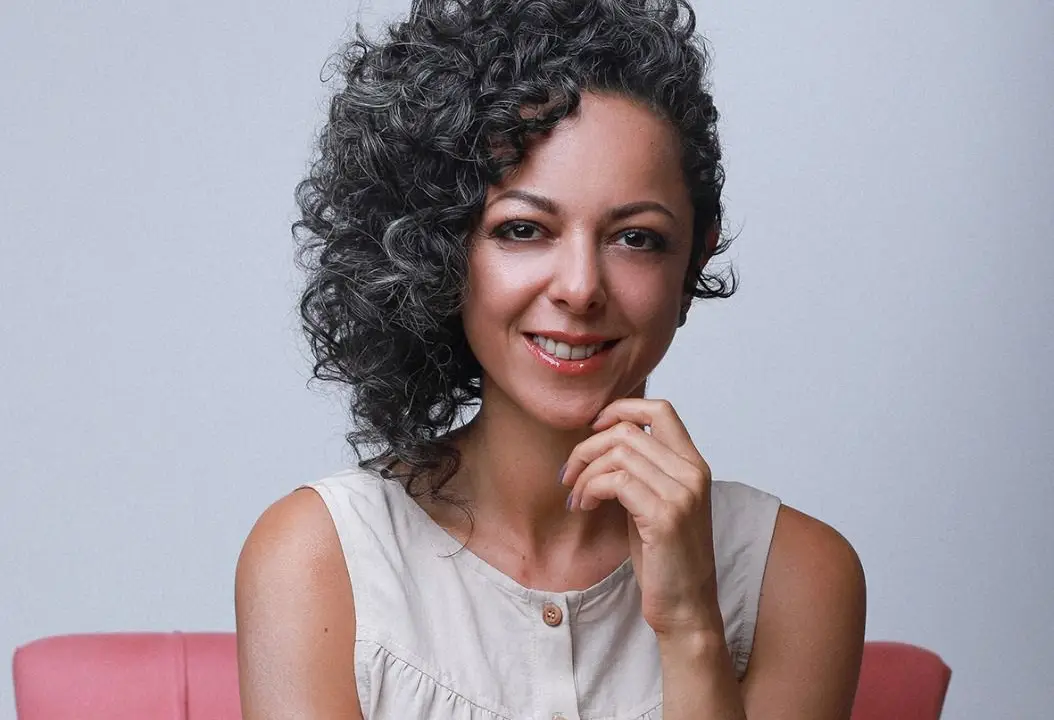
Carolina Nocetti is the first doctor with international experience in technical consulting and clinical applications of cannabis in Brazil.
Her fight is for the democratization of humanized and integrative medicine.
She celebrates that in his first month as governor of São Paulo, Tarcísio de Freitas (Republicans) has already sanctioned the law for access to medical cannabis.
According to the Brazilian Society for the Study of Pain (SBED), at least 37% of the Brazilian population, about 60 million people, report chronic pain – one of the indications for the use of cannabis.
For Nocetti, these and other patients could have access to therapy with the plant.
What are the practical benefits of cannabis in medicinal use?
In the treatment of multiple sclerosis, nausea and vomiting, and epilepsy.
But we also see positive responses in treating anxiety, insomnia, Alzheimer’s, Parkinson’s, depression, chemical dependency, and autoimmune diseases like psoriasis.
How can cannabis help in the combat against chemical dependency?
Unexpected, right?
The oil rich in Cannabidiol, with a bit of THC, generally diminishes craving; it can be food craving…
That’s why many people lose weight using it.
It can also be crack or cocaine addiction—even addiction to cannabis in smoked form.
With so many pros, what explains why many people are against its medicinal use?
That is the million-dollar question. It is ignorance!
Unfortunately, it is not discussed, so it is a communication challenge, not a science challenge.
And the ones that will turn that dial are the communicators, translating from scientific content to lay content.
But within the medical community, there is also a certain conservatism.
A lot, actually, but it is getting better.
A recent example happened in 2019 with me and Congressman Caio França (PSB).
We held public hearings, and now the governor Tarcísio de Freitas (Republicans), sanctioned the law approved in ALESP, regulating the free distribution of cannabis by SUS.
It took us three years to conclude the project.
But it is a revolution; no country gives free cannabis to anyone, and Brazil will be the first.
People will have less prejudice.
What is missing from the democratization of access to the medicinal use of cannabis in Brazil?
We have a list from the Federal Council of Medicine with conclusive evidence.
But I’m not saying they are recommending it.
So, indeed, an increase in this list by the CFM would be significant to expand its use beyond epilepsy.
Independently of this list, by the medical act, we can prescribe whatever we want to the patient.
Does the agenda raised by artists in songs, like Ludmilla and Anitta, help or hinder the debate?
Look, everything that mixes medicinal with adult use can hinder the process.
As a doctor, I speak only and exclusively about medicinal use.
Whenever I mention something that is not medicinal, I am criticized.
So we have to separate things.
As a physician, I don’t have the knowledge to talk about adult use.
I know about the plant, but my area is medicinal.
Do you disapprove of the recreational use of cannabis?
Anything that is within a harm reduction policy, I approve.
It’s better for the patient to use cannabis than crack; that is obvious.
Even the use of alcohol because alcohol kills.
Cannabis has killed zero people until today in its natural form.
We must consider this possibility if it is within a harm reduction policy.
Because you are one of the pioneers in this treatment in the country, do you receive a lot of attacks?
A lot, via social networks, from people think that I am on one side of the political spectrum.
I have to be in my patient’s position.
To mix politics with medicine is a business that doesn’t work.
Is Brazil prepared for the legalization of cannabis?
Yes, it is ready to make a more comprehensive regulation because it is not illegal to use cannabis for medicinal purposes.
The democratization of access depends on more comprehensive regulation at the federal level.
With information from Veja
More: Brazil news in English, every day from The Rio Times.
Editorial responsibility: Matthias Camenzind, Editor-in-Chief · Editorial standards · Report an error