Brazil Senator-Elect Accounts Face Rejection
A rejection would not by itself cost Derrite his seat, but it casts a shadow over a campaign that won more votes than any other Senate candidate in São Paulo state.
Politics: Brazil
A prosecutor has sided with court staff who say the 2026 campaign accounts of Guilherme Derrite, one of São Paulo’s two new senators-elect, should be rejected. Regional Electoral Prosecutor Paulo Taubemblatt of the Public Prosecution Service, the body that represents the public interest in court, signed that opinion on Friday 27 November.
The decision is not final, because the judges of the São Paulo Regional Electoral Court (TRE-SP) have yet to rule. Derrite, a former state security secretary, won his seat on Sunday 4 October.
Key Facts
- Who. Guilherme Derrite, São Paulo senator-elect for Progressistas (PP), a centre-right party.
- What. The electoral prosecutor backs rejecting his campaign accounts, as court technical staff recommended.
- When. Prosecutor’s opinion signed Friday 27 November 2026; the full TRE-SP court decides, with no date set.
- Power Index. Brazil ranks 1st of 14 in The Rio Times Latin America Power Index, with 74.2 points (November 2026 edition).
- As of. 28 November 2026, 05:00 GMT
A rejection would not by itself cost Derrite his seat, but it casts a shadow over a campaign that won more votes than any other Senate candidate in São Paulo state.
Derrite took about 13.3 million votes on 4 October, or 30.59% of valid votes (blank and spoiled ballots excluded), the most of any Senate candidate in São Paulo. The second Senate seat went to André do Prado of the Liberal Party (PL), a conservative party, with 29.28%.
Our September report on the São Paulo Senate race described conservative parties uniting behind joint candidates. Both winners on 4 October, Derrite and Prado, came from that conservative field.
Derrite is a federal deputy, a former state public security secretary and a former military police officer who served in Rota, the São Paulo military police special unit. In August 2026 the TRE-SP fined him R$5,000 (about US$900, at the 27 November rate of R$5.56 per US$1) for early campaign propaganda on social networks.
Campaign accounts are the itemised record of every real a candidate raises and spends, and they must be filed with Brazil’s electoral courts. Those courts, which supervise elections, can approve the accounts, approve them with reservations or reject them.
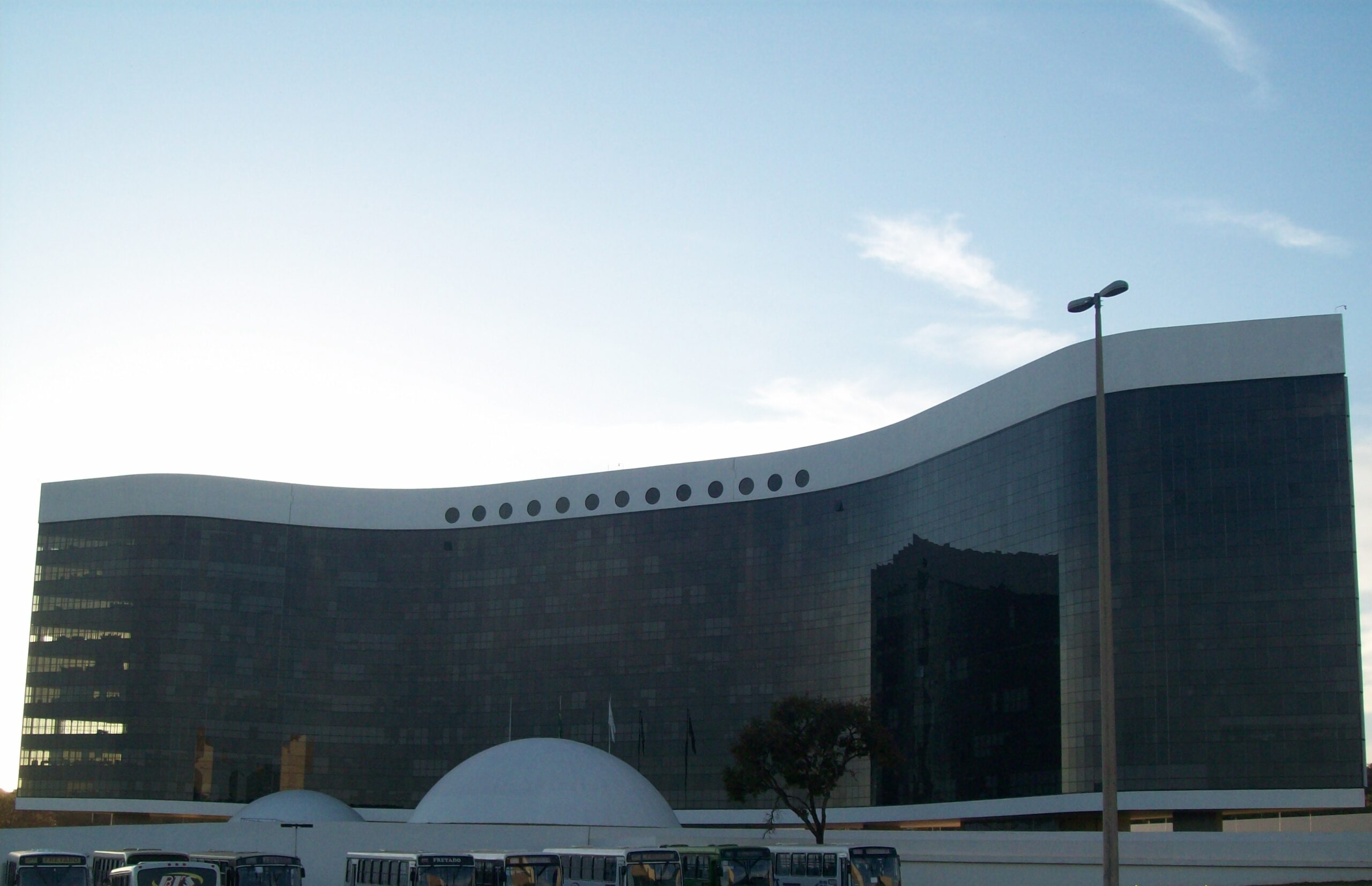
The technical staff of the TRE-SP, its Electoral and Party Accounts Coordination unit, concluded in an opinion reported as dated Thursday 26 November that the failures it found “compromise the regularity of the accounts submitted” (translated from Portuguese). On Friday 27 November Taubemblatt followed it, and his opinion endorses the recommendation to reject the accounts.
The accounts show total revenue of R$7,702,090.01 (about US$1.4 million). The case names Derrite and his two alternates, who step in if a senator leaves: José Vicente Santini of Republicanos, a conservative party, and Julio Serson of Progressistas.
The biggest finding is a R$2 million (about US$360,000) donation from the national leadership of Progressistas on Wednesday 9 September, equal to 25.97% of campaign revenue. Electoral law gives 72 hours to report such a donation to the courts, and the technical unit found the financial report reached them on 13 September, one day late.
The campaign’s defence filing calls the delay “strictly formal” (translated), denies any intent to hide funds and says the money was party money of lawful origin that harmed no oversight. The technical unit rejected that argument and held that the report remained late.
A second finding involved R$25,000 (about US$4,500) given on 21 September by Luiz Rodrigo Lemmi, who holds a notary office (cartório) in Marília, in São Paulo state. The technical unit asked whether notaries count as public-service concessionaires, whose donations are banned, and the defence says they do not.
Taubemblatt accepted the defence and rejected ordering a refund. He wrote that “a donation made by a notary is regular” (translated from Portuguese).
The third finding is an invoice dated 31 August from the security firm Renaseb Empresa de Segurança e Vigilância Ltda for R$39,176.70 (about US$7,000). The accounts show a bank payment of only R$32,536.25 (about US$5,900), leaving a gap of R$6,640.45 (about US$1,200).
The campaign called the gap a technical bookkeeping error, and paid R$6,640.42 (about US$1,200) to the National Treasury on 19 November. The technical unit said that payment did not cure the problem, and the discrepancy remained.
Scrutiny of this kind reaches the top of the ballot too, as the TSE gave the re-election ticket of President Luiz Inácio Lula da Silva three days to explain its campaign accounts on 13 November. More Brazil news follows the same electoral calendar.
A rejection does not by itself remove a mandate, which would need a separate legal action, and the published reports mention no sanction. The full court, with judge (desembargador) Mairan Maia Júnior as rapporteur, the judge who prepares the case, is not bound by the technical opinion, and no judgement date has been set.
Derrite and his lawyers could not be reached for comment, so his side appears here only through the campaign’s defence filing. The court case file could not be opened online, so the figures come from the reported text of the opinions.
Frequently Asked Questions
Does this mean Derrite loses his Senate seat?
Not on this basis alone, because rejected accounts do not by themselves end a mandate. Removing one would need a separate legal action.
Who makes the final decision?
The full TRE-SP court decides. It can follow or depart from the technical staff and the prosecutor.
Why does a one-day delay count?
The technical unit treated the late report as a failure. The campaign calls it a formality that harmed no oversight.
Sources
- São Paulo Regional Electoral Court (TRE-SP), tre-sp.jus.br
- Regional Electoral Prosecutor’s Office, Public Prosecution Service (Ministério Público Federal)
- Superior Electoral Court (TSE), tse.jus.br
This article was produced by The Rio Times’ automated AI newsroom. Editorial responsibility: Matthias Camenzind, Publisher and Editor-in-Chief. The Rio Times also runs Ask Rio Times, which answers from 100,000+ of our own articles, the daily Latin America Power Map, and prediction-market odds on elections and markets.. How we use AI · Report an error
In depth
Brazil runoff, Sunday, October 25: When is the Brazil runoff election. Latest: Brazil runoff polls, Flávio 51%, Lula 49%.