Brazil Senate Opens Debate on Ending 6-Day Work Week

BRAZIL · LABOUR
Key Facts
- —The country Brazil, where the Constitution caps the normal work week at 44 hours and many shop staff work 6 days for 1 day off.
- —What happened On Tuesday 6 October, the Senate opened the first of five required floor debates on an amendment to end the 6-day work week.
- —The proposal The weekly cap would fall to 42 hours two months after publication and to 40 hours a year later, with no pay cut.
- —The vote needed Each of two rounds needs 49 of 81 senators; deputies passed the text 472 to 22 and 461 to 19 on 27 May.
- —Who opposes it Industry groups and Flávio Bolsonaro’s conservative Liberal Party (PL), set to hold 28 of 81 Senate seats from February 2027.
- —Next step Debates 2 and 3 are set for 7 and 8 October; Senate President Davi Alcolumbre expects a first-round vote the week after.
- —Still open Opposition senators aim to deny a quorum, and it is unclear whether supporters can find 49 votes before the 25 October runoff.
Brazil’s Senate opened its first debate on Tuesday 6 October on a constitutional amendment to end the 6-day work week. For US companies with Brazilian payrolls, its 40-hour cap and two paid rest days go further than US federal overtime rules.
Senate President Davi Alcolumbre said a first-round vote could come the following week, once five debates are held. Many opposition senators stayed away to deny a quorum, the Globo news site g1 reported.
What Happened in the Senate on 6 October
Tuesday’s Senate agenda had a single item: the first debate session, in the first round, on the amendment known as PEC 221/2019. A PEC is a proposed change to Brazil’s Constitution.
This one was filed in 2019 by Reginaldo Lopes, a deputy for the left-wing Workers’ Party (PT) of President Luiz Inácio Lula da Silva. The Chamber of Deputies, Congress’s lower house, passed it on 27 May.
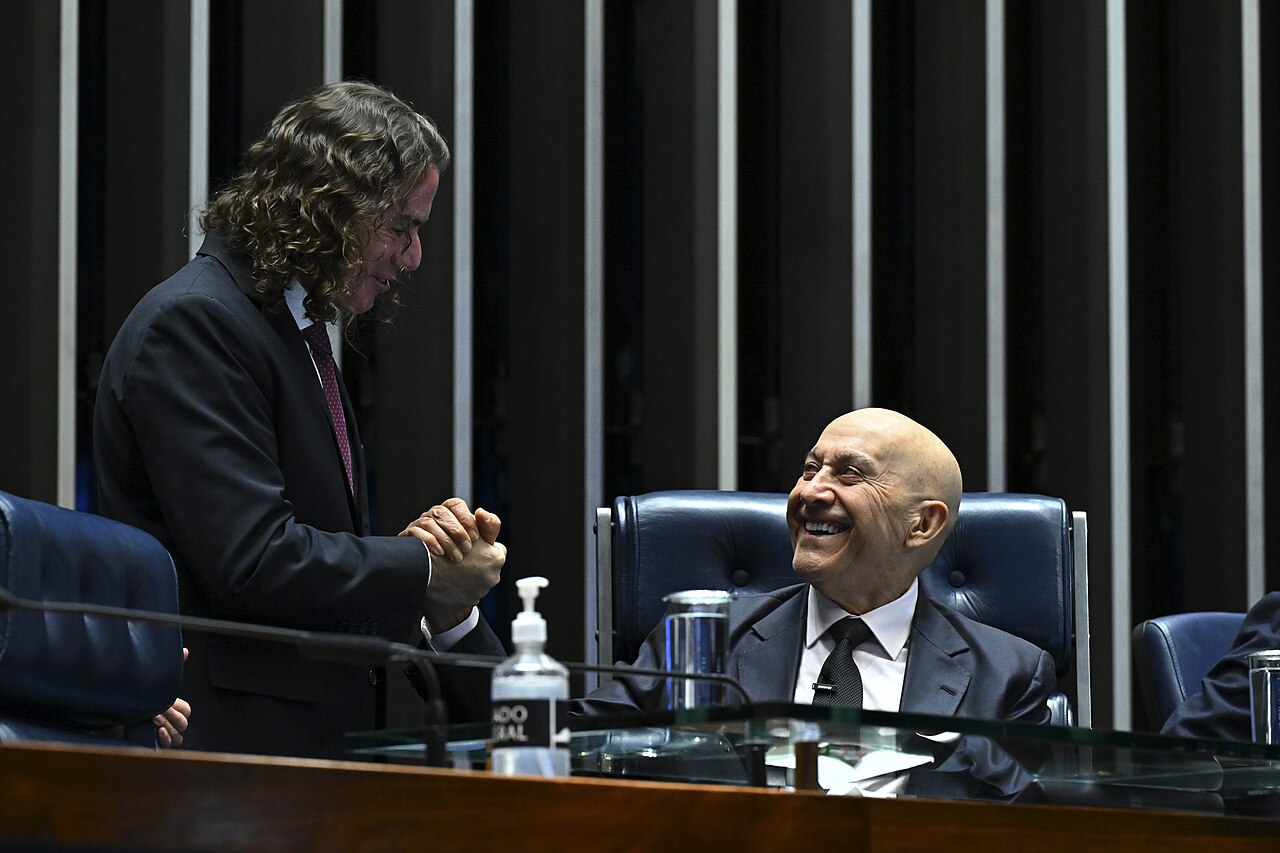
Senator Confúcio Moura of the centrist Brazilian Democratic Movement (MDB) opened the hybrid session at 2 p.m. Brasília time (1 p.m. ET), Senate records show. It was suspended in mid-afternoon after a few speeches, g1 reported.
Only 30 senators had registered attendance 34 minutes before the session began, and most absentees were from the opposition, g1 reported. Alcolumbre, of the centre-right União Brasil party, later reopened the session.
Debate on the amendment began at about 4:40 p.m. Brasília time (3:40 p.m. ET), Senate records show. Paulo Paim, a PT senator for Rio Grande do Sul, spoke first, followed by Veneziano Vital do Rêgo of the MDB.
Arriving at the Senate, Alcolumbre said he would “fully comply with the constitutional rite”, the Senate’s news agency, Agência Senado, reported. That means five debates before a first-round vote, which could come the following week.
He said each senator is free to vote “with their heart” on cutting hours for nearly 40 million Brazilians on six-day schedules. He promised no rush, “without speeding anything up”, the Brasília daily Correio Braziliense reported.
Two more debate sessions are set for Wednesday 7 and Thursday 8 October, each at 2 p.m., the Senate agenda shows. Senate rules require five debate sessions before a first-round vote, then three more before the second.
Each round needs at least 49 of the 81 senators, or three fifths of the house. The scheduling of these sessions was announced on Friday 2 October.
What the Amendment Would Change
The text rewrites Article 7 of the Constitution to end the 6-day work week, capping normal hours at 8 a day and 40 a week. It guarantees 2 paid rest days a week, one preferably on Sunday.
Two months after publication, the weekly cap would drop to 42 hours. A year after that, it would reach 40 hours, under the text sent by the Chamber.
The change applies to existing contracts and may not cut wages in any form. Collective agreements may average the two rest days over a month, with at least one day off each week.
University graduates earning at least 2.5 times the ceiling on public pension benefits are exempt from hour controls, unless a collective agreement says otherwise. Government contracts must be adjusted within a year to keep their financial balance.
Who Backs the Plan and Who Fights It
Lula has backed ending the 6-day work week since before his re-election campaign, the Curitiba daily Gazeta do Povo notes. He faces Flávio Bolsonaro in the 25 October runoff.
Flávio, a Rio de Janeiro senator for the PL, called Lula’s push “opportunistic” on Tuesday, the daily O Globo reported. He offers a flexible-hours plan instead, with pay following the hours worked.
Institutional Relations Minister José Guimarães, the government’s link to Congress, said on Tuesday that Alcolumbre is “determined” to bring the amendment to a vote. “We will vote on it before the second round,” he told reporters, Correio Braziliense reported.
Supporters argue the 6-day work week harms workers’ quality of life, Gazeta do Povo notes. Paim argued on the Senate floor on Tuesday that shorter hours mean more jobs, not fewer, Agência Senado reported.
Rogério Marinho, a PL senator for Rio Grande do Norte, leads the opposition in the Senate and coordinates Flávio’s campaign, O Globo reports. He filed six amendments in committee and voted against the text there, Senate records show.
Marinho argues that shorter hours at the same pay would raise costs and push up prices, Correio Braziliense reported. He backs letting workers choose a flexible regime with pay in proportion to hours.
The Senate’s Constitution and Justice Committee (CCJ) approved the text on 2 September. The rapporteur, Omar Aziz of the centre-right Social Democratic Party (PSD), rejected all 36 proposed amendments.
The committee also approved a request for a special calendar to shorten the timetable, Senate records show. The full Senate would have to approve it.
The National Confederation of Industry (CNI), the main lobby for Brazilian manufacturers led by Ricardo Alban, opposes the change. In February it put the extra cost of a 40-hour week for companies at up to R$267.2 billion (about US$53 billion) a year.
That is up to 7% of payroll, the CNI said, with construction and small manufacturers hit hardest.
Business groups such as the CNC, which speaks for retailers and services, are working to deny a quorum, Gazeta do Povo reported. Their slogan is “Not now”.
Why Sunday’s Election Changed the Math
Sunday’s vote moved the Senate to the right. The PL elected 19 senators and is set to hold 28 of 81 seats from February 2027, Agência Senado projects.
That would be the largest party bench at the start of a Senate term since 1988. The PT would follow with 9 seats and the centrist MDB with 8.
Government leaders now see slim chances of a vote on the 6-day work week, g1 reports. Opposition leaders are working to keep senators from registering attendance, so that without a quorum the amendment cannot be voted.
Allied senators admit the outlook is difficult, g1 reported. “We will try,” said Teresa Leitão of the PT, the government’s leader in the Senate.
Carlos Portinho, the PL’s Senate leader, re-elected on Sunday, said the government will struggle to gather senators, the weekly CartaCapital reported. Opponents also plan to argue that Aziz is busy campaigning, Correio Braziliense reported.
Aziz is in the 25 October runoff for governor of Amazonas state, according to Agência Senado.
How Brazil’s Plan Compares With US Work Rules
In the United States, the Fair Labor Standards Act sets no limit on weekly hours for workers aged 16 and older. Covered workers must get time and a half for hours over 40 in a workweek, the US Department of Labor says.
US federal law also does not require extra pay for work on Saturdays, Sundays or regular rest days, unless the hours count as overtime. Brazil’s amendment would go further, writing a 40-hour cap and two paid rest days into the Constitution.
What It Means for You
Nothing changes yet for US companies with Brazilian staff, but rosters built on a 6-day work week would need redesign if the amendment passes. The 42-hour cap would apply two months after publication.
For investors, the CNI estimate points to higher labour costs in construction, manufacturing and small firms. Studies by Ipea, a government economic research institute, and the University of Campinas find smaller effects, Gazeta do Povo reports.
For travellers and expats, shops and services keep their usual hours for now. A constitutional amendment is promulgated by Congress itself, so the president cannot veto it.
What Is Not Known
Alcolumbre has not set dates for the fourth and fifth debates or for either vote. It is unclear whether the government can gather 49 votes to end the 6-day work week before the 25 October runoff.
Any change by senators would send the text back to the Chamber of Deputies. Opposition senators say it makes no sense to rush a proposal that became harder to pass after the election, CartaCapital reports.
More: Brazil news in English, every day from The Rio Times.
Frequently Asked Questions
What is the 6×1 work schedule in Brazil?
It is a 6-day work week with one day off, allowed under the current 44-hour constitutional cap. The amendment would require two paid rest days a week and cap normal work at 40 hours.
When would the 6-day work week end if the Senate approves?
The weekly cap would fall to 42 hours two months after the amendment is published, then to 40 hours a year later. Wages may not be cut.
Does Brazil’s president have to sign the amendment?
No. Constitutional amendments are promulgated by Congress itself, with no presidential sanction or veto. The Senate must approve the same text the Chamber passed, or it returns to the Chamber.
How does the plan compare with US rules?
US federal law sets no cap on weekly hours for adults and requires time-and-a-half pay above 40 hours. Brazil’s plan would set a 40-hour constitutional cap and two paid rest days a week.
Sources: Senado Federal, plenary agenda for 6 October 2026, 6 October 2026; Senado Federal, record of the 128th session (6 October 2026), 6 October 2026; Agência Senado, Alcolumbre on the vote timetable, 6 October 2026; Senado Federal, plenary agenda for 7 October 2026, 6 October 2026; Agência Senado, Paulo Paim speech, 6 October 2026; g1, government and opposition strategies, 6 October 2026; Correio Braziliense, Guimarães on Alcolumbre, 6 October 2026; Correio Braziliense, Alcolumbre on the rite, 6 October 2026; Senado Federal, PEC 221/2019 process record (CCJ vote, amendments), 6 October 2026; Senado Federal, PEC 221/2019 page, 6 October 2026; Câmara dos Deputados, PEC 221/2019 text sent to the Senate (autógrafo), 28 May 2026; Câmara dos Deputados, PEC 221/2019 plenary votes, 27 May 2026; Agência Senado, PL bench projection, 4 October 2026; Agência Senado, new Senate composition, 5 October 2026; CNI, cost study on a 40-hour week, 23 February 2026; US Department of Labor, overtime pay, 6 October 2026; g1, live coverage of the Senate session, 6 October 2026; O Globo, 6 October 2026; CartaCapital, 6 October 2026; Correio Braziliense, 6 October 2026; Correio Braziliense, Marinho on costs, 6 October 2026; Gazeta do Povo, 6 October 2026; Gazeta do Povo, business campaign, 6 October 2026.
This article was produced by The Rio Times’ automated newsroom system. How we use AI · Report an error · Editorial responsibility: Matthias Camenzind, Editor-in-Chief