Argentina prepares a big leap with lithium: Experts assure that it will pull the rug from under Chile’s feet
RIO DE JANEIRO, BRAZIL – Argentina is -with only two projects in production- the fourth largest global producer of lithium, but it is preparing to take a “massive leap” thanks to the steady progress of other projects in the pipeline and the investment “boom” that the sector is going through.
According to official data, between 2020 and 2021 investment announcements in lithium mining in Argentina rose to US$3.3825 billion.
Read also: Check out our coverage on Argentina
And although Chile has one of the largest lithium reserves in the world, above its neighboring country, according to experts, the Argentines could fight for the market due to the projects and investments that it is promoting.

As it happens, in the last hours the Spanish president, Pedro Sánchez, and that of Argentina, Alberto Fernández, agreed to promote the Strategic Association Plan agreed upon last year between the two: they were willing to strengthen energy cooperation in the gas and lithium sectors.
The effervescence in the enormous salt flats of northwestern Argentina does not stop: since the beginning of 2022, two to three weekly announcements have been made by different companies -mostly American, Australian, Canadian and Chinese- about new exploration campaigns, project expansion, acquisitions and more investments, including one for 380 million from China’s Zijin Mining for the construction of a lithium carbonate plant in the Tres Quebradas project.
“Argentina has gone through a stage of strong investment in exploration in the last ten years, in which a very important portfolio of projects was developed,” said the president of the Argentine Chamber of Mining Entrepreneurs, Franco Mignacco.
ARGENTINE LITHIUM MAP
According to the most recent data from the United States Geological Survey, Argentina is currently the world’s fourth largest producer of lithium (behind Australia, Chile and China), the third in reserves (behind Chile and Australia) and the second in resources (behind Bolivia).
Argentina has 38 lithium projects concentrated in three northwestern provinces (Jujuy, Salta and Catamarca), of which two are in production, six under construction, two in the feasibility stage, three in pre-feasibility, five in preliminary economic evaluation and twenty in advanced exploration stage.
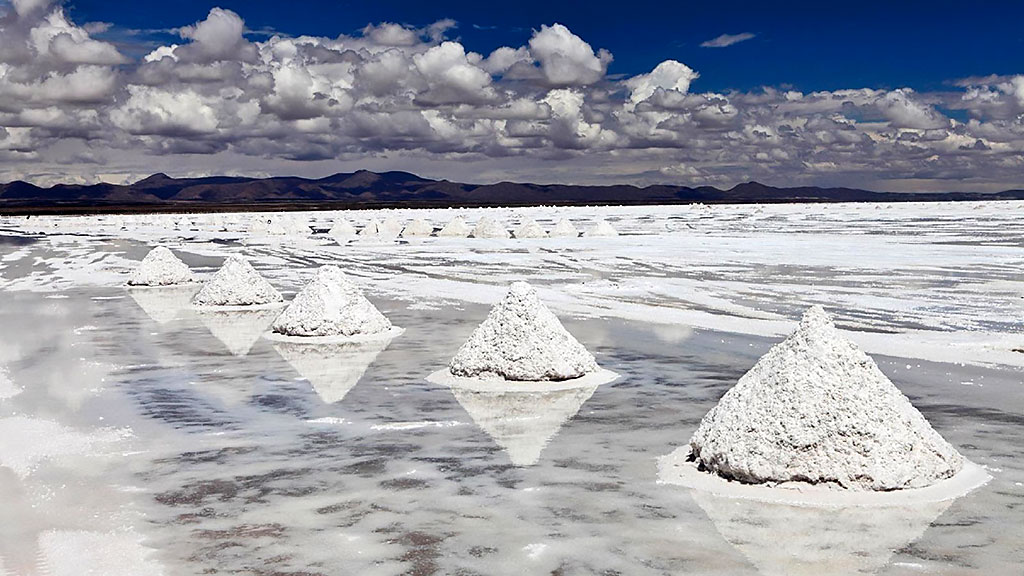
The two projects in production -Fénix, owned by the US company Livent, and Olaroz, in which the Australian Allkem, the Japanese Toyota Tsusho and the Argentine state-owned company Jemse are associated- jointly produce some 40,000 tons of lithium carbonate per year, but they have plans are underway to double its production capacity.
In addition, the Cauchari-Olaroz project, owned by Minera Exar (in which Canada’s Lithium Americas, China’s Ganfeng Lithium and Jemse participate), is expected to go into production in the second half of the year, with a projected production of 40,000 tons per year.
Thus, Argentina could reach a production of 120,000 tons by 2023-2024.
“With only these three projects Argentina would be in third place worldwide and we would be very close to being able to fight Chile for the second place,” said Mignacco, president of Exar.
According to official calculations, the current portfolio of projects in Argentina has a production potential of 328,500 tons of lithium carbonate per year.
DEMAND FOR LITHIUM
With a limited world supply of lithium, the growing demand for “white gold” for the manufacture of batteries for electric cars and other electronic devices continues to drive international prices, which went from US$9,000 per ton of lithium carbonate equivalent one year ago, to currently over around US$75,000.
At these values, many projects in Argentina increase their economic viability.
“We are seeing very promising forward demand. It is estimated that by 2040 the current demand will triple, which greatly accelerates all projects in the pipeline worldwide, not only in Argentina,” Mignacco said.
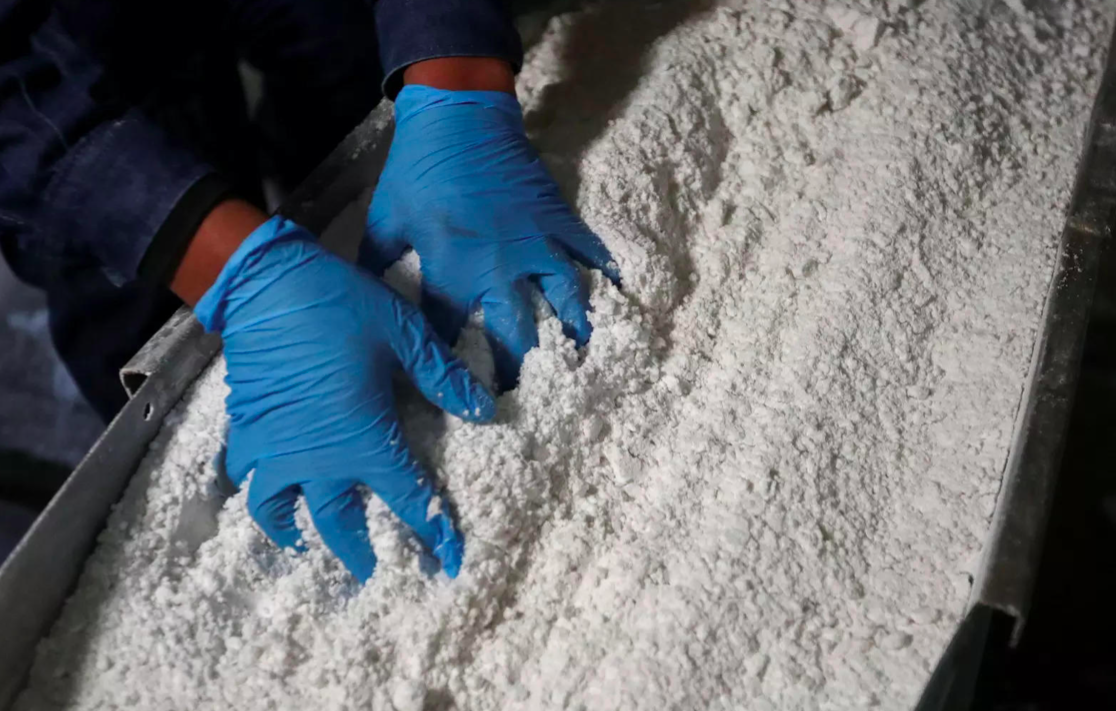
According to Jorge González, director of Promotion and Mining Economy of the Government of Argentina, the South American country is more “competitive” than others because its salt flats allow lower operating costs than those of lithium extraction from pegmatites – form of production led by Australia.
“In this positive context for the sector, the national government has taken various steps to enhance this effect,” said González, who highlighted the legal framework of incentives for mining in Argentina and other actions to promote investment.
For Mignacco, Argentina also has comparative advantages over Chile and Bolivia, the other two vertices of the so-called South American “triángulo del lítio” (lithium triangle).
In Bolivia, lithium extraction is in the hands of the State, while in Chile, which declared lithium a resource of strategic value, the State has the power to require mining companies that part of the process of adding value to the extracted raw material is done in Chile.
“Argentina, not having taken any definition of nationalizing the resource or declaring it strategic, today has an investment flow of US$4.5 to US$5 billion dollars in a project portfolio that other countries do not have,” Mignacco pointed out.
More: Argentina news in English, every day from The Rio Times.
In depth
Editorial responsibility: Matthias Camenzind, Editor-in-Chief · Editorial standards · Report an error