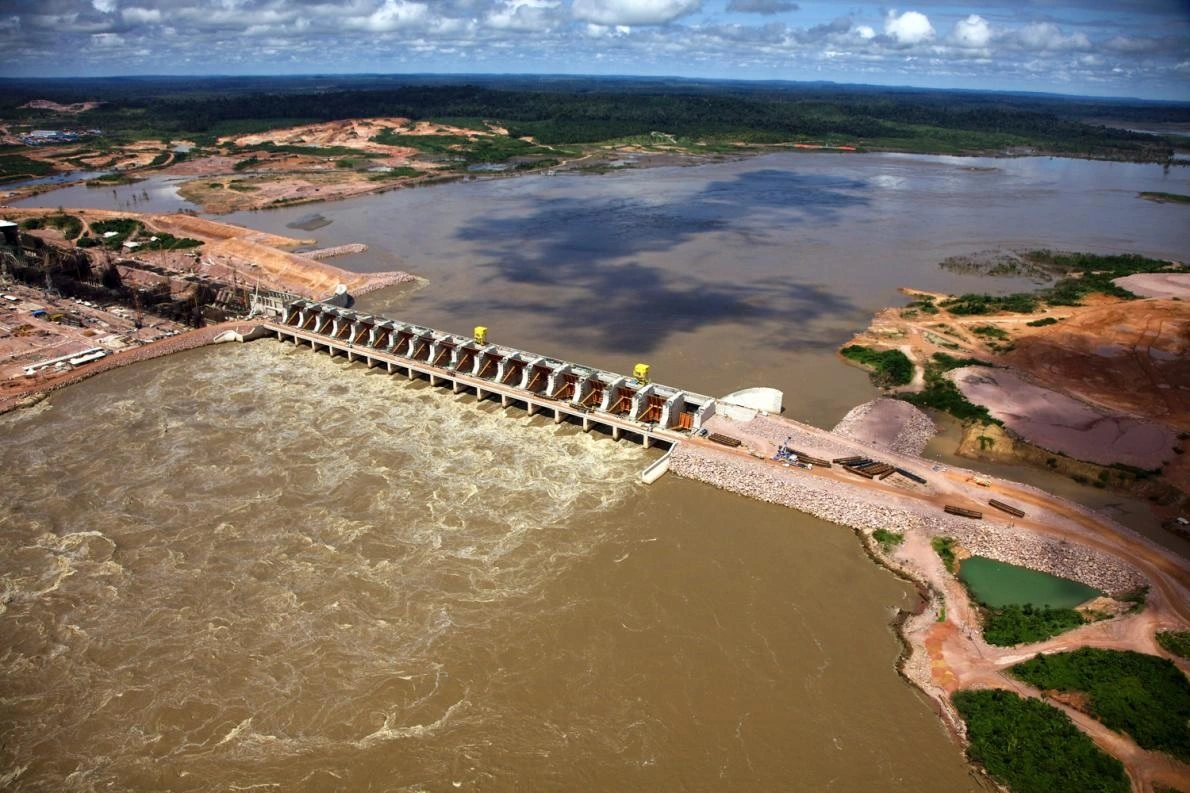
Santo Antônio, Brazil’s fourth-largest hydro plant, halted operations today due to lower Madeira River levels caused by a severe Amazon drought.
Santo Antônio Energia, the responsible consortium, issued a statement. The goal is to protect the plant’s 50 turbines.
This action marks a first: shutting down due to Amazon water scarcity. Importantly, regulators approved this temporary closure.
No one knows when the plant will restart. It contributes to roughly 4% of Brazil’s power generation.
Civil Defense noted a record low water level of 1.43 meters in Porto Velho. However, energy regulatory agencies believe Brazil’s energy supply is secure.
They point to stable water levels in other hydroelectric regions.
State experts predict the Amazon drought could last until January. Additionally, this drought might be severe due to stronger El Niño effects this year.
Lower river levels affect navigation, fishing, agriculture, and the environment. Furthermore, they disrupt the water, food, and fuel supply in various cities.
A recent mass fish die-off also included 120 endangered river dolphins. Experts link this to the drought and high temperatures.
Background Hydro Plant
This shutdown highlights Brazil’s dependency on hydroelectric power. The event shows the risk of relying on water for energy.
It serves as a wake-up call for Brazil to diversify its energy sources. The stronger impact of El Niño this year demonstrates climate change’s local effects.
Consequently, authorities may need to rethink water management and energy policies. The Amazon is a global freshwater reserve, increasing its worldwide importance.
The mass death of fish, including endangered species, indicates a looming environmental crisis.
Therefore, Brazil faces a conflict: energy production versus environmental conservation.
This article was produced by The Rio Times’ automated newsroom system. How we use AI · Report an error
Read More from The Rio Times