Africa Intelligence Brief — Friday, September 18, 2026
Executive Summary
Africa Intelligence Brief, 18 September 2026: a US visa restriction aimed at South African law, Nigerian inflation at 15.39%, and the Yemen crossings.
Africa Intelligence Brief — Friday, September 18, 2026
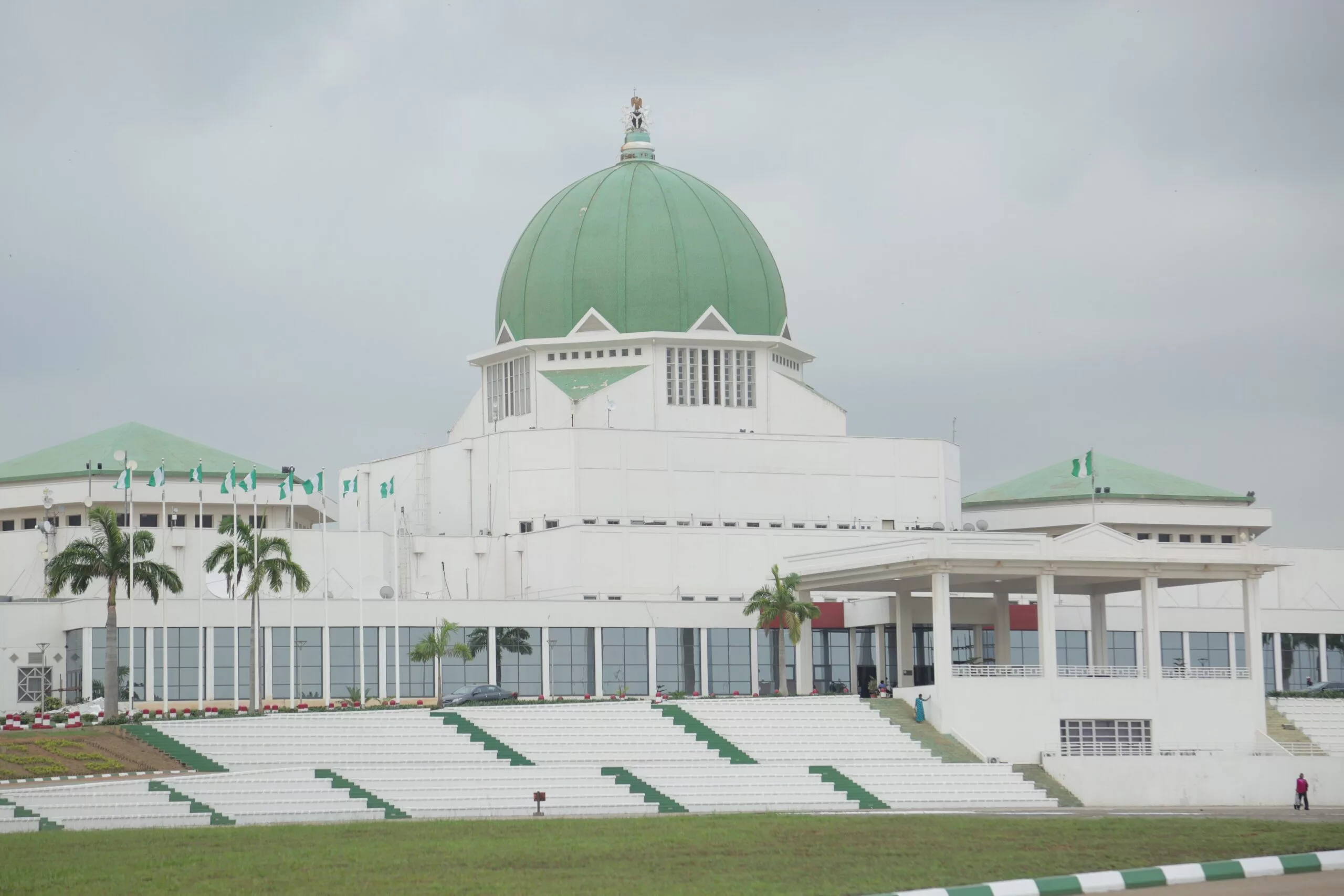
Africa spent this week reading its own institutions, and reading them coolly. The temper is a practised scepticism rather than a cynical one, and it asks who produced a number before it asks what the number says.
The question had unusual force because so many of the week’s counts were self-reported. A corps explained deaths in its own cells, a commissioner revised his own total, and an armed group counted the dead in a mine it controls.
Each of those counts appears to have been made in good faith, so far as this desk can establish. Each was also made by someone with something at stake in the answer, which is a different problem from dishonesty and a harder one to correct.
What steadies the week is that the institutions moved against themselves. Nigeria suspended the officer whose explanation was in question and opened a police investigation, and Malawi’s police chief corrected his own force’s casualty figure in public within a day.
Where nobody stands to gain, the numbers behave differently. A Congolese government report and a World Health Organization bulletin describe one epidemic at two dates, and the distance between them is simply the days that passed.
Underneath all of it the ordinary business of the continent carried on. A refinery sold shares to the public in Lagos, two central banks prepared decisions on the cost of money, and Morocco moved into the final week of a campaign.
Read in English, French, Arabic, Portuguese and Swahili, across the continent’s largest outlets and our own Africa desk. Every figure below carries the source that published it and the date.
A Corps Explains Its Own Cells, Then Suspends The Man Who Did
The Nigeria Security and Civil Defence Corps offered an account of the deaths in its custody before anyone had examined a body. Thirty-seven people arrested on suspicion of illegal mining died in its facility in Niger State, and Al Jazeera reported on Friday, 18 September that police had opened an investigation the previous day.
The corps is a federal uniformed agency, and the detainees were in its keeping rather than in police cells. Al Jazeera reported that they were taken in on the Tuesday and the Wednesday of this week, and that the deaths followed within days.
Suberu Siyaka Aniviye, who heads the corps in Niger State, attributed the deaths to an outbreak of disease, which Al Jazeera reported he left unnamed. He said the bodies had been sent for “further medical examination to establish the actual cause of death”, and he was afterwards suspended.
A survivor gave the Associated Press a number for the room. Dauda Shehu said 65 detainees were packed into a poorly ventilated cell, and told the agency: “We were jam-packed and there was no ventilation for us to breathe well.”
Al Jazeera, which carried Shehu’s account, also cited an intelligence report reported by Agence France-Presse. That report pointed to “overcrowding and poor ventilation inside the…detention facility” rather than to illness.
Mohammed Umaru Bago, the governor of Niger State, declared three days of mourning. The suspension and the investigation are the state acting on its own account before the examination reports, which is the part of this that reassures.
Thirty-seven deaths, in a facility where a survivor counted sixty-five detainees in one cell, is a toll an ordinary illness struggles to explain in a few days. The examination will settle it, and it is being conducted on the authority of the same state whose cells are in question.
A Commissioner Counts Out Loud While The Wards Are Still Filling
Ondo State did its arithmetic in public, and the public watched the figure move. People in two local government areas of the state, in southern Nigeria, died after drinking a locally brewed herbal alcohol known as monkey tail.
The drink is suspected of containing methanol, an industrial alcohol that damages the kidneys, the optic nerve and the brain. Banji Ajaka, the Ondo State Commissioner for Health, gave two different totals on Thursday, 17 September.
He told the Associated Press that at least 48 people had died, that around 100 were being treated and that 182 were believed affected. He told Vanguard the same day that 49 had died and 170 were affected.
Both numbers came from the same office on the same date, which is not a dispute between institutions. It is what a count looks like while patients are still being admitted, discharged and reclassified.
The gap runs in two directions at once, one death up and twelve affected down. Read as evasion it looks sinister, and read as a ward tally at two hours of one day it looks exactly like what it is.
Ajaka told Vanguard that the deaths had spread to a second area. Speaking of Irele Local Government, he said: “About eight people have been recorded to have died as at yesterday’s night.”
He described the mechanism plainly to the Associated Press. “This thing happened rapidly. Once they consume, depending on the quantity, the kidneys will pack up, the eyes will go, the brain will be damaged.”
Sola Adebayo, a 32-year-old survivor, told the agency what that looked like from inside. “I took like two shots and I went out on Friday. On Saturday, I noticed that I could not see.”
Abayomi Jimoh, the Ondo State police spokesman, confirmed 15 arrests, including one man suspected of producing substances containing methanol. The affected areas are the Odigbo and Irele local government areas, and the first death was reported nearly two weeks before 17 September.
The state has banned the sale and distribution of unverified alcoholic drinks, and Vanguard reported that a forensic examination of recovered substances is under way. Vanguard listed the National Agency for Food and Drug Administration and Control among the federal bodies involved.
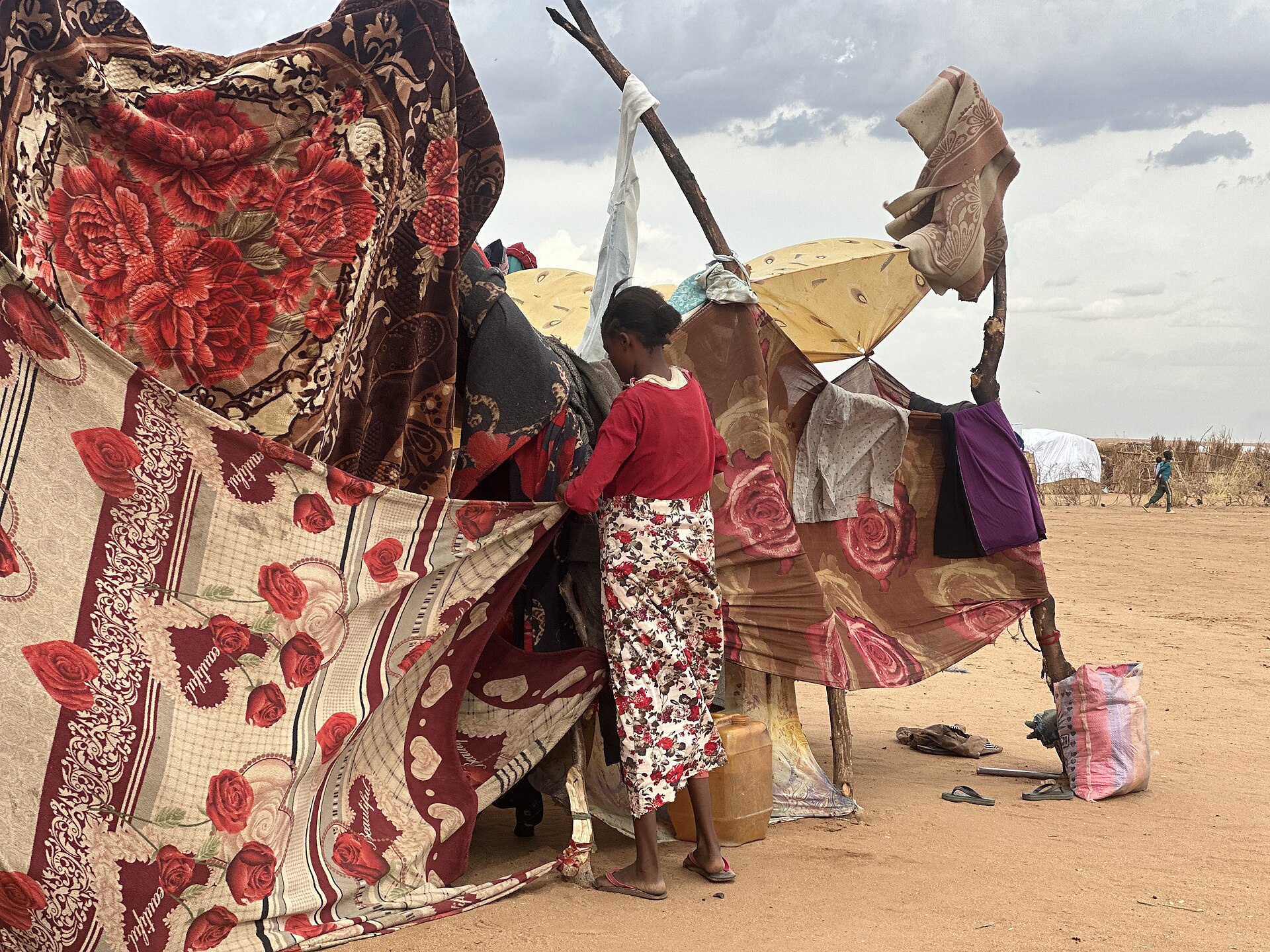
Key Facts
Sudan Learns To Ask Who Is Doing The Counting
At Al-Zaraa the identity of the source matters more than the arithmetic. An informal gold working near Al-Nuhud in West Kordofan gave way on Tuesday, in ground held since April 2023 by the Rapid Support Forces, a Sudanese paramilitary group.
Two counts were published and the parties behind them could hardly be further apart. The Sudanese Doctors Network, a medical group, said on Wednesday, 16 September that at least 67 people had been killed, on the figure Sudan Tribune carried.
The higher figure came from inside the force that controls the ground. A source in the Rapid Support Forces, speaking anonymously to Agence France-Presse because he was not authorised to talk to the media, said at least 82 had been killed and another 50 wounded.
That is the armed group whose revenue the mine helps provide, counting the men who died in it. Africanews carried the figure of 82 without attributing it, and attributed only the 50 injured to a local administrator.
The number of people still missing was not known, that administrator told Africanews. Al Jazeera reported that miners worked through the night with basic tools, and that one survivor said heavy equipment was needed.
The doctors’ network put the responsibility on how the ground is worked rather than on the ground itself. It said: “Mining activities in areas under RSF control, in the absence of safety standards and adequate protection and rescue equipment, turn mining into a direct threat to the lives of civilians.”
Gold is one of the few Sudanese exports that still functions through a war. The party that profits from it is also, on this occasion, the party supplying the casualty figure.
Grief Hardens In Ekurhuleni, And A Police Force Corrects Itself
South Africa has stopped waiting quietly for the East Rand investigation to produce something. President Cyril Ramaphosa asked South Africans on Thursday, 17 September for any information about the women found dead around Ekurhuleni.
He spoke through a message delivered to a memorial dialogue against gender-based violence and femicide at the Ekurhuleni Civic Centre in Kempton Park. The Witness published it on 18 September, quoting him as saying: “If you heard something, or if you know something that may assist the investigation, however insignificant it may seem, please report it.”
In the same message he said he had “directed that no stone be left unturned in bringing those responsible to justice”. He closed on the country rather than the case, saying: “We must build a country in which women do not have to live in fear.”
A ninth woman’s body was found at Dawn Park on the same Thursday, the ninth in and around the East Rand since July. Al Jazeera reported that day that all the victims were women in their twenties or thirties, and that most of the earlier bodies had been found in or near Kempton Park.
Major General Fred Kekana, the acting Gauteng provincial commissioner, left open the question of how many people are responsible. He said investigators are “considering all possibilities, including the possibility of multiple suspects or separate perpetrators”.
One suspect is in custody in connection with the first body, and Al Jazeera reported a reward of 400,000 South African rand, about US$25,000 on the gloss it published. Four of the nine have been publicly named: Itumeleng Kekana, Elizabeth Moselakgomo, Dineo Evelyn Motapane and Gracious Nkomo, 28.
The prosecution service spent the week moving in the other direction. On 15 September Andy Mothibi, the National Director of Public Prosecutions, ordered the withdrawal of four charges under the Public Finance Management Act against General Fannie Masemola, the suspended national police commissioner.
The Daily Maverick reported that the police health-services tender at issue was budgeted at 360 million rand, with 228 million rand awarded to a company owned by Vusimuzi Matlala. Mothibi said he was “satisfied that there are no reasonable prospects of a successful prosecution against the National Commissioner” on those charges.
Firoz Cachalia, the acting Police Minister, told Independent Online he was “very happy for Masemola and very relieved”. He said the President and the commissioner would probably meet shortly, which leaves the suspension where it has been all along, with Ramaphosa.
Malawi spent the same Thursday demonstrating the opposite instinct. Police freed Nusrat Osman, a 47-year-old British woman abducted in Blantyre on 11 September, six days after she was taken.
The force first said four suspected kidnappers had been killed in the operation. Richard Luhanga, the Inspector General of the Malawi Police Service, put the number at two the following day, Friday, 18 September.
The force said Osman “is safe and has been reunited with her family”, that a senior officer was wounded and stable, and that an AK-47 rifle and a pistol were recovered. A reward of about US$17,000 had been offered for information leading to the rescue, and two further suspects are being sought.
The Congo Counts Patiently, And The Numbers Behave
The Congolese epidemic produces the least contested figures on the continent this week, because nobody gains from the answer. The government published a situation report on Thursday, 17 September with figures to Tuesday, 15 September.
It counted 7,404 confirmed cases and 3,577 deaths, a case fatality rate of 48.3 per cent, with 1,776 people recovered. The outbreak covers 62 health zones across seven provinces, and Xinhua carried the figures on 17 September.
The virus is Bundibugyo, one of the Ebola species, and not the Zaire species behind most previous Congolese outbreaks. That distinction matters because the licensed vaccine in widest use was developed against the Zaire species.
The World Health Organization gave a lower count for an earlier date, and the difference is time rather than disagreement. Its Disease Outbreak News of 10 September carried 6,757 confirmed cases and 3,267 deaths in the country to 7 September, and a case fatality ratio of 48.3 per cent.
The organisation’s wider count to the same date, which adds 20 cases in Uganda and one in France, was 6,778 cases and 3,269 deaths. It listed 61 health zones in six of the country’s 26 provinces, with Ituri holding 28 of its 36 health zones.
Between 7 and 15 September, eight days, the national count rose by 647 confirmed cases and 310 deaths. The fatality ratio held at 48.3 per cent across both readings, which is the arithmetic of an outbreak spreading without becoming milder.
The direction of travel is different in different provinces, and that is the encouraging part. Jean-Jacques Muyembe, who directs the National Institute of Biomedical Research, said Ituri has passed a “peak” and entered a “downward slope”, while the North Kivu curve “has not yet reached the plateau”.
An epidemic can improve in one province and worsen in another at the same time. The national total is the sum of both, which is why it keeps rising while the news from Ituri keeps improving.
Lagos Buys Anyway, And The Barrel Gives A Little Back
Nigerian retail investors spent the week doing something the rest of the brief does not describe, which is putting their own money down. Dangote Petroleum Refinery is selling shares to the public on the Nigerian Exchange, and Forbes Africa reported that the offer opened on 14 September and closes on 13 October.
A listing is planned for November. The publication put the offer at slightly more than 2 trillion naira, about US$1.6 billion, at 525 naira a share.
That is about US$0.40 a share on its gloss, with a minimum subscription of ten shares, or 5,250 naira and about US$3.98. Nairametrics gave the same offer as 2.15 trillion naira, sold through 55 approved digital channels, and the two figures agree with each other.
Aliko Dangote called it “the biggest IPO in Africa’s history” and said he wanted “every human being living on the continent to be part of this action”. David Bird, the refinery’s managing director, put current capacity at 700,000 barrels a day, with an expansion to 1.4 million planned by 2028.
The appetite was heavy enough to take the platforms down. Bamboo and Cowrywise, two Nigerian investment applications, failed under the traffic, and Bamboo told users it was “getting a much higher-than-expected traffic trying to get into the Dangote IPO”.
Nairametrics reported that Bamboo handled 3.8 million equity transactions between January and July 2026, about 22 per cent of all such deals on the Nigerian Exchange. BusinessDay reported that the offer targets up to ten million retail investors.
The barrel the refinery sells into gave a little back on the same day. Brent crude for November settled at US$104.82 a barrel on Thursday, 17 September, US$1.01 below Wednesday’s US$105.83, a fall of 0.95 per cent.
The Central Bank of Nigeria holds its 307th Monetary Policy Committee meeting on 21 and 22 September, on its own published calendar. A share offer, a barrel above one hundred dollars and a rate decision fall inside the same ten days.
What This Means From Latin America
The scepticism described here is familiar on the other side of the Atlantic. Latin American readers have their own practice of asking who compiled a figure before deciding what to do about it, and the habit is a defence rather than a complaint.
Brent at US$104.82 a barrel reads as revenue in Brasília and Bogotá and as a fuel bill in Nairobi and Rabat. The same settlement is an argument for drilling on one side of the ocean and an argument for subsidy on the other.
The Dangote offer is the largest share sale in African history on its own sponsor’s account, and it was sold to the retail public through telephone applications. Latin American exchanges have spent a decade trying to widen retail ownership, and Nigeria has just run the experiment at 525 naira a share.
The custody deaths in Niger State and the poisonings in Ondo State are failures of inspection rather than of law. The same distance between what is licensed and what is affordable produces informal mining in the Andes and informal alcohol in the Brazilian interior.
What We Are Watching
- What the medical examination finds in Niger State — the civil defence corps attributed 37 deaths to disease. The survivor Dauda Shehu told the Associated Press that 65 detainees were packed into a poorly ventilated cell, and Nigerian police opened their investigation on 17 September.
- Where the Ondo State count settles — Banji Ajaka, the state health commissioner, gave 48 dead and 182 affected to the Associated Press and 49 dead and 170 affected to Vanguard on 17 September. A forensic examination of the recovered substances is under way.
- Morocco votes on Wednesday, 23 September — 18 to 24 year-olds are 12 per cent of the population but 3 per cent of registered voters. Youth unemployment runs at about 27 per cent, on the Reuters account Al-Monitor carried on 17 September.
- The Nigerian rate decision on 21 and 22 September — the Central Bank of Nigeria holds its 307th Monetary Policy Committee meeting on those two days. Its own calendar sets the next one for 23 and 24 November.
- The South African rate announcement on 23 September — the South African Reserve Bank publishes its Monetary Policy Committee decision that day. Its final announcement of the year falls on 19 November.
- How many bodies Sudan finally counts — the Sudanese Doctors Network counted at least 67 at Al-Zaraa and an anonymous Rapid Support Forces source told Agence France-Presse at least 82. The number still missing was not known, a local administrator told Africanews.
- Sao Tome and Principe votes on 27 September — the parliamentary election falls that Sunday, on the Africa Center for Strategic Studies calendar of 2026 African elections.
- The Dangote offer closes on 13 October — the sale of shares at 525 naira runs to that date, with a listing planned for November, on Forbes Africa’s account.
The Bigger Picture
The mood this week is an old one on this continent, and it is closer to competence than to gloom. Readers here have long known to ask who is holding the pencil, and the week gave them four occasions to prove the habit useful.
At Al-Zaraa the two figures come from a doctors’ network and from an anonymous source inside the armed group that controls the mine and takes revenue from its gold. In Niger State the corps that made the arrests produced the first explanation of the deaths in its own cells.
The other three are ordinary and deserve to be read as such. A health commissioner gave two totals in one day as wards filled, a police force corrected itself within a day, and the two Ebola counts are one series read eight days apart.
For a reader with money or family in these places, the practical movements were a barrel, a share offer and two rate meetings. Brent settled at US$104.82, the Dangote sale runs to 13 October, and Abuja and Pretoria both decide on the cost of money inside the next week.
Frequently Asked Questions
What happened to the 37 people who died in Nigerian custody?
They were arrested on suspicion of illegal mining and held in a Nigeria Security and Civil Defence Corps facility in Niger State, where 37 died. The corps attributed the deaths to disease, while the survivor Dauda Shehu told the Associated Press that 65 detainees were packed into a poorly ventilated cell, and police opened an investigation on 17 September.
How many people died from the drink in Ondo State?
Banji Ajaka, the Ondo State Commissioner for Health, gave two totals on 17 September: at least 48 dead and 182 affected to the Associated Press, and 49 dead and 170 affected to Vanguard. Both figures came from the same office on the same day, and the desk carries both.
How many people died at the Sudanese gold working?
The Sudanese Doctors Network said at least 67 people were killed at Al-Zaraa in West Kordofan, on the figure Sudan Tribune carried on 16 September. A source in the Rapid Support Forces, the paramilitary group that controls the area, told Agence France-Presse anonymously that at least 82 had been killed and 50 wounded.
Is the Ebola outbreak in the Congo getting worse?
A Congolese government situation report of 17 September counted 7,404 confirmed cases and 3,577 deaths to 15 September, against the World Health Organization’s 6,757 cases and 3,267 deaths to 7 September. Jean-Jacques Muyembe of the National Institute of Biomedical Research said Ituri has passed a peak while the North Kivu curve has not yet reached the plateau.
Sources: World Health Organization, Central Bank of Nigeria, South African Reserve Bank, Central Bank of Kenya, United Nations. Also Al Jazeera, Associated Press, Vanguard, Sudan Tribune, Africanews, Daily Maverick, Independent Online, The Witness, Forbes Africa. And Nairametrics, BusinessDay, Xinhua, Al-Monitor, allAfrica, Africa Center for Strategic Studies · 10-18 September 2026.
This article was produced by The Rio Times’ automated newsroom system. How we use AI · Report an error · Editorial responsibility: Matthias Camenzind, Editor-in-Chief
LatAm Markets: Live Signals → — real-time movers, turnover leaders and FX across Latin America.