Africa Intelligence Brief Comprehensive News Roundup for September 2, 2025
What Matters Today
On September 2, 2025, Africa confronted new crises as a massive landslide in Sudan’s Darfur killed over 1,000 people
On September 2, 2025, Africa confronted new crises as a massive landslide in Sudan’s Darfur killed over 1,000 people and heavy fighting in Mozambique’s Cabo Delgado drove tens of thousands from their homes.
Political repression cast a shadow as the UN warned that Cameroon’s pre-election clampdown threatens its credibility, and Burkina Faso’s military regime enacted a harsh anti-LGBT law tightening its grip.
Amid these challenges, African states navigated global arenas. West Africa emerged as a key cocaine trafficking corridor exploited by European cartels, prompting calls for international action.
At the same time, Ethiopia opened a landmark Africa Climate Summit to champion the continent’s climate agenda, and Morocco’s defense chiefs fostered closer military ties with Israel – reflecting shifting alliances.
And in a rare move, Botswana declared a public health emergency over acute medicine shortages, illustrating how global economic strains can batter even the continent’s more stable nations.
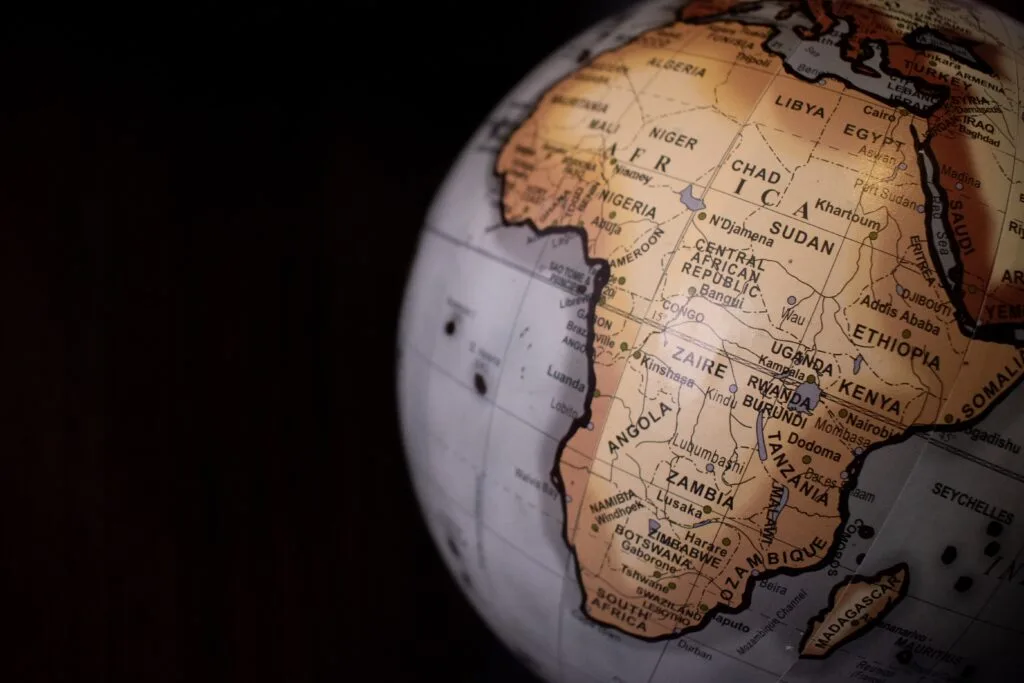
The day’s developments highlighted Africa’s dual realities: urgent humanitarian and governance struggles at home, and an assertive push for partnership and leadership on the world stage.
North Africa
(Algeria, Egypt, Libya, Morocco, Tunisia)
Defense — Morocco: Officers bolster ties with Israel
Summary: Senior Moroccan army officers traveled to Israel at Tel Aviv’s behest for meetings with Israeli defense companies (africaintelligence.com).
Such high-level military visits have grown frequent as Morocco deepens security cooperation following its 2020 normalization of relations with Israel.
Rabat is pursuing advanced Israeli drones, intelligence systems and other hardware to modernize its forces amid regional rivalries.
Why it matters: The burgeoning military partnership signals a strategic realignment in North Africa. Morocco’s embrace of Israeli defense technology aims to bolster its capabilities – particularly vis-à-vis neighboring Algeria – while solidifying a broader regional alliance with US allies.
East Africa
(Ethiopia, Kenya, Rwanda, Somalia, Sudan, South Sudan, Tanzania, Uganda)
Society — Sudan: Landslide disaster in Darfur
Summary: Torrential rains triggered a massive landslide in the Jebel Marra mountains of Darfur, wiping out the village of Tarseen.
A rebel group controlling the area, the Sudan Liberation Movement/Army (SLM/A), said only one person survived as at least 1,000 people were killed in the mudslide.
The SLM/A appealed for urgent United Nations assistance to recover bodies and aid displaced residents, warning that continued heavy rains threaten other villages.
Why it matters: The catastrophe highlights Sudan’s compounded humanitarian crises. Already ravaged by civil war, Darfur is now facing a climate disaster in rebel-held territory largely cut off from government support.
The immense death toll underscores the vulnerability of communities in conflict zones to extreme weather, and how Sudan’s instability hampers disaster response.
Security — South Sudan: Clashes renew in Upper Nile
Summary: Fighting flared between government troops and a militia known as the “White Army” in South Sudan’s Upper Nile state, near Nasir town. The army reported 14 people killed – 4 soldiers and 10 militia fighters – in three separate clashes on September 1.
Notably, the violence erupted in the same area where earlier clashes in March led to the detention of First Vice President Riek Machar, a longtime rival of President Salva Kiir.
Why it matters: The renewed clashes raise fears of South Sudan’s fragile peace unraveling. Machar’s detention in March – for allegedly backing this militia – already stoked ethnic tensions between Kiir’s Dinka supporters and Machar’s Nuer base.
Diplomacy — Ethiopia: Africa climate summit kicks off
Summary: Ethiopia opened the Second Africa Climate Summit in Addis Ababa alongside the UN’s Africa Climate Week, drawing thousands of delegates from across the continent and beyond.
The high-profile event, running September 1–10, focuses on climate financing and “Africa-led solutions” to global warming, aiming to position African nations as decisive voices before the COP30 climate talks in Brazil.
Delegates – including heads of state, business leaders and civil society – convened at the new Addis Ababa conference center to discuss investments in renewable energy, climate adaptation, and leveraging the continent’s vast natural resources responsibly.
Why it matters: By hosting a major climate summit, Ethiopia (and Africa as a whole) is asserting leadership in global climate diplomacy.
The continent bears the brunt of climate change but has historically had a minor voice in negotiations. This summit is a platform to demand increased climate finance and technology transfers from wealthier nations.
West Africa
(Benin, Burkina Faso, Côte d’Ivoire, Gambia, Ghana, Guinea, Liberia, Mali, Niger, Nigeria, Senegal, Sierra Leone, Togo)
Politics — Burkina Faso: Anti-LGBT law entrenches junta’s agenda
Summary: Burkina Faso’s transitional parliament (installed by the military junta) unanimously passed a law criminalizing LGBTQ activities, introducing prison terms of 2–5 years and fines for those convicted (reuters.com).
The new Persons and Family Code, adopted on September 1, also tightens rules on citizenship and statelessness.
Authorities under Captain Ibrahim Traoré’s regime framed the law as “modernizing” family values, but it effectively makes Burkina Faso the latest African country to enact sweeping anti-LGBT restrictions. The justice minister announced that repeat offenders could even face deportation if not citizens.
Why it matters: The law cements the junta’s conservative and authoritarian turn since the 2022 coup. It aligns Burkina Faso with a broader regional backlash against LGBTQ rights, seen in recent laws in Uganda, Senegal, and others.
The move likely aims to shore up domestic support by appealing to traditionalist sentiment. However, it also raises alarm among human rights groups and could strain relations with Western donors.
Crime — Senegal/Guinea-Bissau: Smugglers widen West Africa’s cocaine corridor
Summary: A new international report revealed that Western Balkans crime syndicates – some of Europe’s top cocaine traffickers – have deeply infiltrated West Africa, turning the region into a major transit hub for cocaine bound for Europe.
Faced with tighter enforcement on direct Latin America-to-Europe routes, traffickers from the Balkans (notably Albanian and Slavic groups) forged alliances in coastal states like Senegal, Guinea-Bissau, Sierra Leone, The Gambia, and Cape Verde to funnel drugs through Africa (reuters.com).
They collaborate with Latin American cartels – including Brazil’s PCC – and even European gangs to move multi-ton shipments, taking advantage of West Africa’s expanding port infrastructure and patchy enforcement.
Why it matters: West Africa’s emergence as the “cocaine corridor” to Europe underscores growing transnational security threats.
The region’s vast coastline and resource-strapped law enforcement make it attractive to powerful foreign drug networks, which bring corruption and violence in their wake.
Central Africa
(Cameroon, CAR, Chad, DR Congo, Equatorial Guinea, Gabon, Republic of Congo)
Governance — Cameroon: UN warns of election clampdown
Summary: The UN High Commissioner for Human Rights sounded an alarm over mounting restrictions in Cameroon ahead of the country’s October 2025 presidential election.
Volker Türk, the UN rights chief, noted that opposition rallies have been banned, a TV interview with an opposition figure was forcibly halted by security forces, and some candidates have been barred from running.
In an unusually direct statement, he urged President Paul Biya’s government to “ensure an environment conducive to free, transparent, inclusive, and genuine elections,” instead of intimidating civil society and the media.
Why it matters: Cameroon’s political space has been shrinking under Biya – one of Africa’s longest-ruling leaders at over 40 years in power.
The UN’s public rebuke indicates international concern that the upcoming election may be neither free nor fair if current trends continue.
With separatist conflicts already simmering in Cameroon’s Anglophone regions, a contested election marred by repression could spark broader instability.
Southern Africa
(Angola, Botswana, Malawi, Mozambique, Namibia, South Africa, Zambia, Zimbabwe, Eswatini)
Health — Botswana: State of emergency over medicine shortages
Summary: Botswana took the extraordinary step of declaring a public health emergency due to severe shortages of essential medicines and medical supplies.
President Duma Boko announced a multimillion-pula emergency plan, including military oversight of the pharmaceutical supply chain, to restock depleted drugs ranging from cancer treatments to basic antibiotics.
The crisis is attributed to a slump in Botswana’s diamond revenues and abrupt cuts in U.S. aid, which have sapped funds for healthcare.
Why it matters: It’s a shocking scenario for Botswana – a relatively affluent and stable African nation known for good governance – to be pleading for medical supplies.
The declaration underscores how global economic shifts can ripple into social crises: Botswana’s economy was knocked by a downturn in the diamond market and donor retrenchment, directly impacting public health.
Security — Mozambique: Cabo Delgado violence displaces thousands
Summary: Escalating jihadist attacks in Mozambique’s northern Cabo Delgado province since late July have driven nearly 60,000 people from their homes.
According to the UN’s International Organization for Migration, a surge of insurgent raids beginning on July 20 caused over 13,000 families to flee in just two weeks, with Chiúre district worst hit.
Humanitarian agencies report that relief efforts are lagging badly, as donor funding has been cut and only a fraction of required aid is reaching displaced populations.
The violence, carried out by Islamist militants affiliated with ISIS, comes as regional peacekeepers from SADC scale down their presence, putting more pressure on Mozambique’s army and units from Rwanda that are assisting in the fight.
Why it matters: After a period of relative lull, the insurgency in Cabo Delgado has reignited, raising concerns for regional stability and Mozambique’s economic future.
The province sits on huge offshore gas reserves, and renewed conflict has already delayed a $20 billion LNG project led by TotalEnergies.
The fresh wave of displacement exacerbates a humanitarian emergency – with reports of child abductions and villages emptied – and highlights the consequences of wavering international support.
Conclusion
September 2, 2025, encapsulated Africa’s intensifying fight on multiple fronts. Natural disaster and conflict exacted a heavy toll – from Sudan’s rainfall-induced tragedy to persistent insurgencies in South Sudan and Mozambique – even as authoritarian turns in Burkina Faso and Cameroon raised new alarms about governance and human rights.
Yet the continent also staked out a proactive role internationally: whether by convening a climate summit to assert Africa’s policy voice, or by recalibrating alliances and security cooperation from Rabat to Abuja.
The day’s headlines captured a landscape where urgency and agency coexisted. African nations grappled with entrenched crises of violence, repression, and human need, while simultaneously striving to reshape their global partnerships and claim a seat at the table on issues like climate action and transnational crime.
Together, these narratives underscore a continent in the throes of change – balancing immediate humanitarian imperatives with long-term strategic repositioning on the world stage.
This article was produced by The Rio Times’ automated newsroom system. How we use AI · Report an error · Editorial responsibility: Matthias Camenzind, Editor-in-Chief
Part of our ongoing coverage
Africa: The New Scramble — the great-power contest over the continent.