Abu Dhabi Fund Adds Brazil to Global Sailing Circuit
In a move signaling a major investment in Brazil, Mubadala Capital has acquired a Brazilian team in the international sailing competition, SailGP.
This announcement set for Friday will mark Brazil’s debut in the league, adding an 11th team and expanding the league’s reach into South America.
Managed by IMM, a Brazilian company led by former Olympic sailor Alan Adler, this new team has not disclosed financial details yet.
“Brazil has a deep connection with sailing,” remarked Andrew Thompson, Managing Director of SailGP.
In addition, he reflected on the nation’s long-standing maritime tradition and community support for the sport.
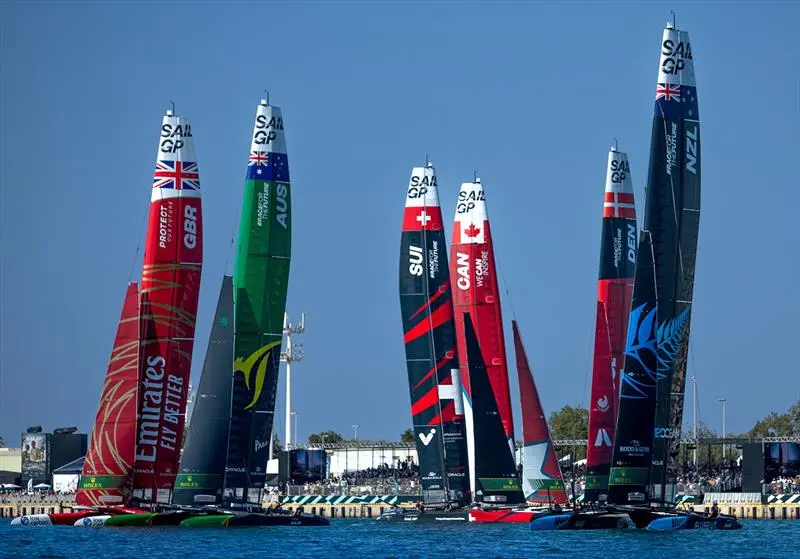
SailGP, initiated by Oracle’s co-founder Larry Ellison and sailor Russell Coutts in 2019, involves racing 50-foot catamarans.
This league originally owned all teams but has shifted towards private ownership.
Recently, the US team was sold for over $40 million, with the Brazilian team transaction becoming the league’s largest yet.
Mubadala’s Strategic Investment in SailGP and Brazil
Mubadala’s engagement with SailGP extends beyond team ownership. It sponsors events like the upcoming New York race and partners with Strata Manufacturing to produce catamaran parts.
This highlights Mubadala’s broader strategy of diversifying investments and reinforcing its commitment to Brazil. The company plans to invest $1 billion annually in the country.
Oscar Fahlgren, Mubadala Investment Director, emphasized this acquisition’s alignment with their strategy to bolster their investment portfolio and deepen ties with Brazil.
This year’s SailGP, with races in cities like Dubai and Sydney, will conclude in San Francisco. Looking ahead, Brazil could host future races.
The league currently consists of teams from nations including Canada, Spain, and Australia, with plans to grow to 12 teams next season.
Expansion into Asian markets like China and Japan is also under consideration.
This strategic move by Mubadala not only enhances its global investment footprint but also boosts Brazil’s presence in international sports.
In short, it potentially brings economic and cultural benefits to the region.
This article was produced by The Rio Times’ automated newsroom system. How we use AI · Report an error
Read More from The Rio Times