Zinc Market in Latin America Nears 4‑Year Price Highs
Key Facts
- Zinc prices are holding near multi‑year highs with London Metal Exchange spot zinc quoted around 3,529.00 dollars per tonne on 20 July 2026, close to levels last seen four years ago.
- Global refined zinc demand rose 1.9 percent to 13.86 million tons in 2025 while refined production grew 2.1 percent, leaving the market in a modest 33,000‑ton deficit as mine output expanded.
- Nexa Resources produced 79,000 tonnes of zinc in Q1 2026 an 18 percent increase versus Q1 2025, supported by record output at its Aripuanã operation and recovering Brazilian smelters.
- Buenaventura reported an average realised zinc price of 3,451 dollars per metric ton in Q2 2026 showing how Peruvian miners have been able to lock in strong terms for zinc alongside gold, silver, lead and copper sales.
- Treatment charges for zinc concentrate have collapsed to historically low levels with the annual benchmark for 2026 at just 85 dollars per tonne, signalling severe pressure on smelter margins and reinforcing the story of tight mine supply.
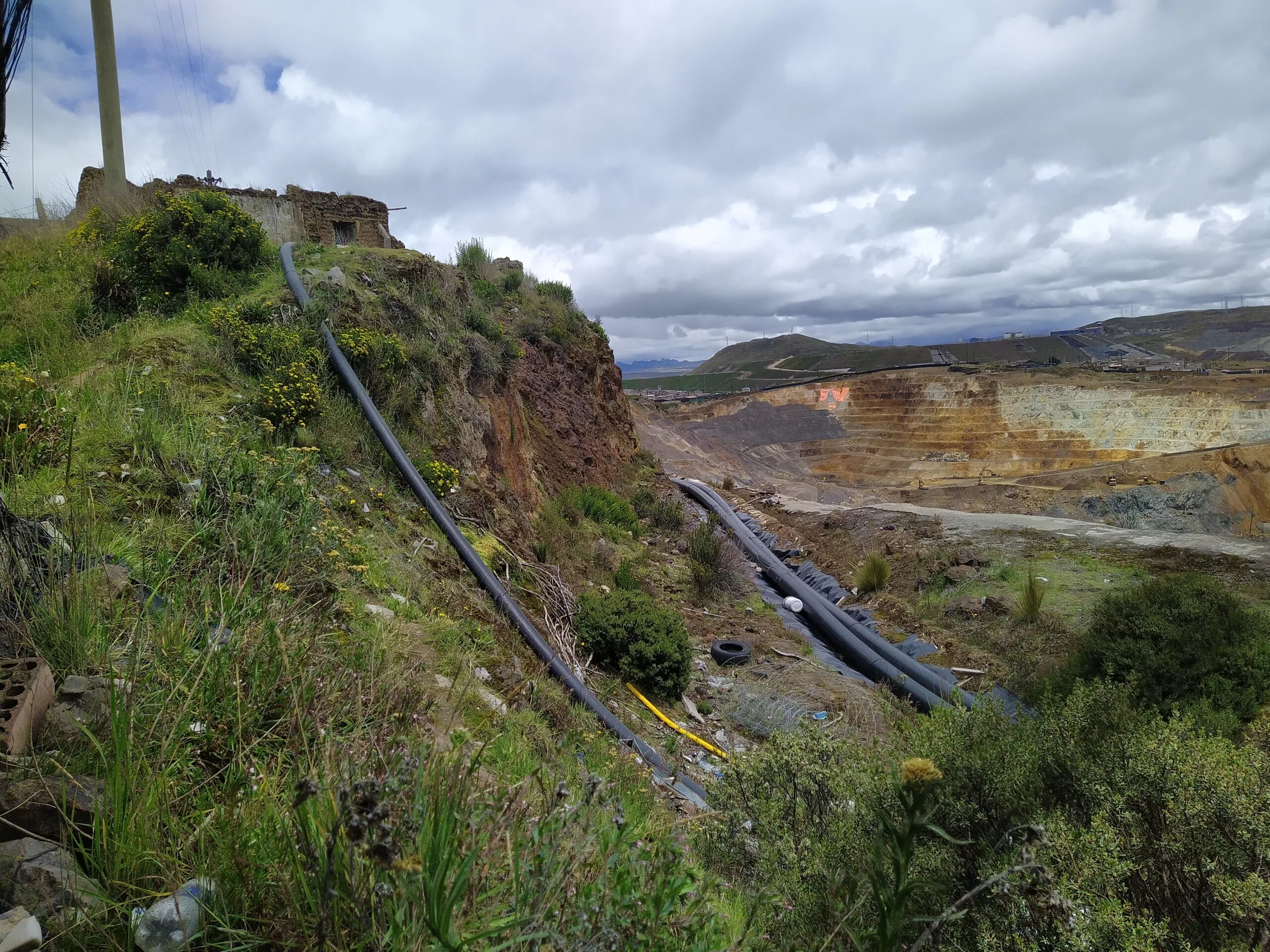
- Latin America remains a heavyweight in global zinc mine supply with Peru, Mexico and Bolivia ranked among the world’s largest producers, anchoring regional plays such as Nexa Resources and Buenaventura in the global zinc trade.
Today’s Focus
Zinc is trading just below recent peaks, with London benchmarks around 3,529.00 dollars a tonne and only modest day‑to‑day moves, reflecting a market that is tight on supply but hesitant on demand from steel and construction users.
The underlying balance still looks supportive for prices, with the global refined zinc market posting a 33,000‑ton deficit in 2025 and mine production climbing 5.4 percent on the back of higher output in countries such as Peru and Australia.
For Latin American producers, this mix of strong prices and constrained concentrate availability is feeding through to earnings, as seen in Nexa Resources’ 18 percent year‑on‑year increase in Q1 2026 zinc output and Buenaventura’s robust realised zinc prices in Q2 2026.
Investors watching Latin America can therefore treat the live board levels for Nexa Resources at 12.82 dollars and Buenaventura at 31.25 dollars as real‑time proxies on how the region’s zinc‑exposed miners are digesting a still‑tight but increasingly complex global market.
What matters today. What matters now is whether tight mine supply and low treatment charges can keep zinc near multi‑year highs even as galvanised‑steel and construction demand in key consuming regions remains uneven.
01 The session in one read
London Metal Exchange spot zinc is holding around 3,529.00 dollars a tonne, close to four‑year highs, with recent trading described as tight but waiting for a clearer demand signal from steel and construction users. This plateau at elevated levels follows a period in which zinc emerged as a standout performer among base metals, advancing nearly 2 percent in the previous week to settle around 3,541 dollars a tonne on the back of persistent supply‑side constraints.
Behind the price, the global refined zinc market remains fundamentally constrained, with the International Lead and Zinc Study Group reporting a 33,000‑ton deficit in 2025 even as mine production climbed 5.4 percent on stronger output in countries including Peru and Australia. That deficit reflects demand growth of 1.9 percent to 13.86 million tons, driven by higher consumption in China, India, the United States and Europe, and only partially offset by weaker use in Brazil, Peru and South Africa.
Across the zinc complex, verified data point to a market still underpinned by constrained mine supply and low exchange inventories, yet facing a tug of war between galvanised‑steel demand and the drag from slower construction orders in parts of Asia and the Americas. Prices near 3,529.00 dollars a tonne on the London Metal Exchange, the 33,000‑ton refined deficit reported for 2025, and the collapse in treatment charges to around 85 dollars per tonne together suggest that the fundamental floor under zinc remains firm, even if day‑to‑day moves have flattened out. In Latin America, miners such as Nexa Resources and Buenaventura are translating this backdrop into higher output, stronger realised prices and resilient share performance, leaving investors to focus on the next data point for galvanised‑steel demand and construction pipelines as the variable to watch.
02 The board
The live board for Latin American zinc‑exposed miners now shows Nexa Resources at 12.82 dollars, up 6.66 percent day‑on‑day in the latest settled New York session, and Buenaventura at 31.25 dollars, higher by 3.96 percent on the day, reinforcing their role as regional proxies for the zinc story in Peru and Brazil. Those moves represent a marked contrast to the more subdued action seen earlier in the week, when Nexa and Buenaventura had tracked zinc’s plateau at high levels with only modest changes, underlining how quickly sentiment can swing around earnings and operational headlines.
For a foreign investor, these prices on the board offer a direct read‑through from metal to equity: Nexa, with its mix of Peruvian and Brazilian mines and smelters, tends to move most closely with zinc itself, while Buenaventura, as a diversified Peruvian miner producing gold, silver, lead, zinc and copper, can diverge when precious‑metal dynamics dominate. In other words, the board is not just a tally of numbers but a live gauge of how Latin American operating risk, currency moves and metal‑specific fundamentals are being priced in the equity market.
| Asset | Level | Change |
|---|---|---|
| Nexa Resources | 12.82 $ | +6.66% |
| Buenaventura | 31.25 $ | +3.96% |
Source: RT close, 2026-07-21. Where a commodity has no spot feed, an exchange-traded tracker or leading producer is shown as a labelled proxy.
Live Market IntelligenceThe live market board
Rio Times · Live Market Intelligence
Latin America — Cross-Market Board
| Instrument | Last | Change | YoY | Prev. | High | Low | Volume |
|---|---|---|---|---|---|---|---|
| IBOV | 203,276.70 | -1.56% | +21.85% | 206,495.23 | 168,310 | 167,142 | — |
| IPSA | 10,792.54 | -1.76% | — | 10,985.55 | 11,210 | 10,984 | 1,513,213,483 |
| IPC MEX | 70,249.54 | +1.43% | +12.17% | 69,258.58 | 66,121 | 65,405 | 108,886,187 |
| MERVAL | 3,017,221 | — | +30.51% | 3,022,485 | 3,042,365 | 2,991,150 | — |
| COLCAP | 2,524.78 | -1.39% | — | 9.04 | 9.05 | 9.02 | 4,133 |
| BVL PERÚ | 59,561.23 | -1.85% | — | — | — | — | — |
| USD/BRL | 5.16 | +0.01% | -5.13% | 5.16 | 5.18 | 5.14 | — |
| EUR/BRL | 5.95 | +1.01% | -5.83% | 5.89 | 5.98 | 5.94 | — |
| USD/MXN | 17.06 | -0.24% | -8.58% | 17.10 | 17.08 | 17.01 | — |
| USD/CLP | 913.98 | +0.04% | -5.67% | 913.65 | 915.11 | 906.68 | — |
| USD/COP | 3,140 | +0.03% | -22.04% | 3,139 | 3,141 | 3,105 | — |
| USD/PEN | 3.36 | -0.66% | -4.82% | 3.38 | 3.38 | 3.35 | — |
| USD/ARS | 1,493 | +0.10% | +12.96% | 1,491 | 1,494 | 1,480 | — |
| USD/UYU | 40.27 | +1.24% | +1.80% | 39.77 | 40.27 | 40.23 | — |
| USD/PYG | 5,939 | +1.68% | -19.54% | 5,841 | 5,939 | 5,925 | — |
| USD/BOB | 11.64 | -0.76% | +72.04% | 11.73 | 11.72 | 11.64 | — |
| USD/DOP | 58.34 | +1.25% | -3.44% | 57.62 | 58.34 | 58.04 | — |
| USD/CRC | 445.92 | +0.89% | -9.71% | 441.97 | 448.50 | 445.92 | — |
03 What moved it
Verified data point to supply‑side constraints as the prime driver keeping zinc elevated rather than any sudden surge in demand: supply disruptions at smelters in Kazakhstan, the gradual recovery of Nexa’s operations in Peru, and lingering issues at European mines have collectively tightened refined metal availability even as global macroeconomic headwinds persist. This picture is echoed in company reporting, where Nexa’s Q1 2026 update highlighted that zinc prices advanced 4 percent during the period to 3,185 dollars per tonne, supported by concentrate tightness and low London Metal Exchange inventories that have left smelter margins severely compressed.
On the demand side, analysts still frame galvanised‑steel and construction as the key end‑uses to watch, with softer orders from consuming industries cited as a reason why zinc futures eased earlier in July despite the underlying tightness in supply. The international demand profile remains uneven: growth has been strong enough in China, India, the United States and Europe to push refined zinc consumption higher overall, but declines in Brazil and Peru show that Latin America itself is not immune to a softer construction and manufacturing cycle.
04 The Latin American read
Latin America continues to be central to the zinc story because of its mine supply footprint, with Peru, Mexico and Bolivia ranked among the world’s largest zinc producers by recent industry and survey data. Nexa Resources’ operations in Peru and Brazil and Buenaventura’s mines across Peru therefore offer foreign investors a practical way to gain exposure to the region’s role in the global zinc chain, from ore extraction through to smelting and sales into galvanising and construction markets.
Company disclosures underline how this regional production base is responding to current price signals: Nexa reported zinc mine production rising 18 percent year‑on‑year to 79,000 tonnes in Q1 2026, alongside a 13 percent increase in smelting zinc sales to 147,000 tonnes as Brazilian smelters recovered. Buenaventura, meanwhile, reported average realised Q2 2026 zinc prices of 3,451 dollars per metric ton, showing that Peruvian producers have been able to secure attractive terms even while managing mixed demand across metals and geographies.
05 The names to watch
Nexa Resources stands out as the purest Latin American proxy for zinc, with consolidated mining zinc production of 316,000 tonnes in 2025 and guidance that points to a further 6 percent increase at the midpoint in 2026, driven by higher output at Brazilian assets such as Vazante and Atacocha and expanding production at the Aripuanã mine. The company’s own outlook ties zinc’s price resilience to tight concentrate availability, low exchange inventories and demand linked to galvanising and infrastructure, reinforcing why its share price tends to respond quickly to any change in the physical zinc market.
Buenaventura offers a broader metals exposure while still providing a meaningful zinc read‑through: its latest filings show a diversified revenue mix, with Q2 2026 realised prices of 4,342 dollars an ounce for gold, 89.52 dollars an ounce for silver, 1,852 dollars per metric ton for lead, 3,451 dollars per metric ton for zinc and 14,029 dollars per metric ton for copper. For foreign investors, that means Buenaventura can benefit from zinc’s strength while being cushioned or amplified by moves in precious metals, making it a useful comparative name against the more zinc‑focused Nexa when gauging regional sentiment.
06 The outlook
Forecasts from macro and bank analysts suggest zinc is likely to remain elevated through the rest of 2026, though perhaps with less drama than earlier in the year: Trading Economics projects prices near 3,570.97 dollars by quarter‑end and 3,755.81 dollars in 12 months, while JP Morgan expects London Metal Exchange zinc to average between 3,400 and 3,500 dollars per metric ton for the remainder of the year. At the same time, broader research points to mine supply growth and new capacity gradually pushing the market toward a surplus of more than 270,000 metric tons in 2026, which would cap upside unless demand from galvanised‑steel and construction re‑accelerates in Latin America, Asia and Europe.
07 What to watch
- Galvanised‑steel demand: Watch order books for galvanised‑steel makers in China, India, the United States and Latin America, because these flows into construction and automotive sectors will determine whether zinc’s multi‑year highs are sustained or fade.
- Smelter treatment charges: Track spot and benchmark treatment charges for zinc concentrate, which are currently near historically low levels and squeezing smelter margins; any rebound would signal easing supply tightness and could soften price support.
- Latin American mine output: Monitor production updates from key Latin American producers in Peru, Mexico and Bolivia, including guidance changes from Nexa Resources and Buenaventura, as any disruption or expansion directly feeds into the global mine supply story.
- Inventory levels on exchanges: Follow zinc inventory data on the London Metal Exchange and other exchanges, because critically low stocks outside China have been a major pillar of price support and any sustained rebuild would point to a loosening market.
Frequently Asked Questions
How high are zinc prices compared with recent history?
London Metal Exchange spot zinc is quoted around 3,529.00 dollars per tonne, close to levels last seen four years ago, which places current prices in the upper band of recent trading ranges rather than at absolute record highs.
Is the global zinc market in surplus or deficit?
Preliminary data from the International Lead and Zinc Study Group show a global refined zinc deficit of 33,000 tons in 2025, down from a 69,000‑ton shortfall in 2024, even as mine production rose 5.4 percent and refined output grew 2.1 percent.
Why are smelter margins under pressure despite strong prices?
Smelter margins are being squeezed because treatment charges for zinc concentrate have fallen to historically low levels, with the annual benchmark for 2026 at just 85 dollars per tonne, reflecting tight concentrate availability even as refined prices stay high.
How exposed are Nexa Resources and Buenaventura to zinc?
Nexa Resources is heavily exposed to zinc, with 316,000 tonnes of consolidated zinc production in 2025 and guidance for higher volumes in 2026, whereas Buenaventura has significant zinc output but also large gold, silver, lead and copper businesses, making it a more diversified proxy for Peru’s mining sector.
This article was produced by The Rio Times’ automated newsroom system. How we use AI · Report an error · Editorial responsibility: Matthias Camenzind, Editor-in-Chief
LatAm Markets: Live Signals → — real-time movers, turnover leaders and FX across Latin America.