Venezuela Again Rejects Guyana Border Court
Venezuela says it will not accept the world court in its Essequibo dispute with Guyana, even though the judges have not yet ruled on the border.

Politics: Venezuela
Venezuela’s acting president, Delcy Rodríguez, said on Friday 20 November 2026 that her country will not accept the International Court of Justice (ICJ, the UN’s top court, in The Hague) in its border dispute with Guyana. Her written statement, posted on her Telegram channel, calls the 1899 arbitral award that fixed the frontier “fraudulent”.
The court has not yet issued its final judgment on the border, and it has announced no date. Its hearings on the substance of the case ended on Monday 11 May 2026, so the rejection covers the court’s earlier rulings and any verdict still to come.
Key Facts
- Who. Venezuela’s acting president Delcy Rodríguez, and Guyana’s President Irfaan Ali.
- What. Venezuela again rejects the UN’s top court and the 1899 border award; judgment still pending.
- Where. The Essequibo, about two thirds of Guyana’s territory, which Venezuela claims.
- When. Rodríguez’s statement came on Friday 20 November 2026; the court has set no judgment date.
- As of. 21 November 2026, 10:30 GMT.
Venezuela says it will not accept the world court in its Essequibo dispute with Guyana, even though the judges have not yet ruled on the border.
The statement reaffirms what Rodríguez called Venezuela’s “historic stance of rejecting the fraudulent 1899 arbitral award” and its non-recognition of the ICJ and any related decision. It also calls on Guyana to respect the 1966 Geneva Agreement, signed by Venezuela, the United Kingdom and then British Guiana, which sets a negotiated route to settlement.
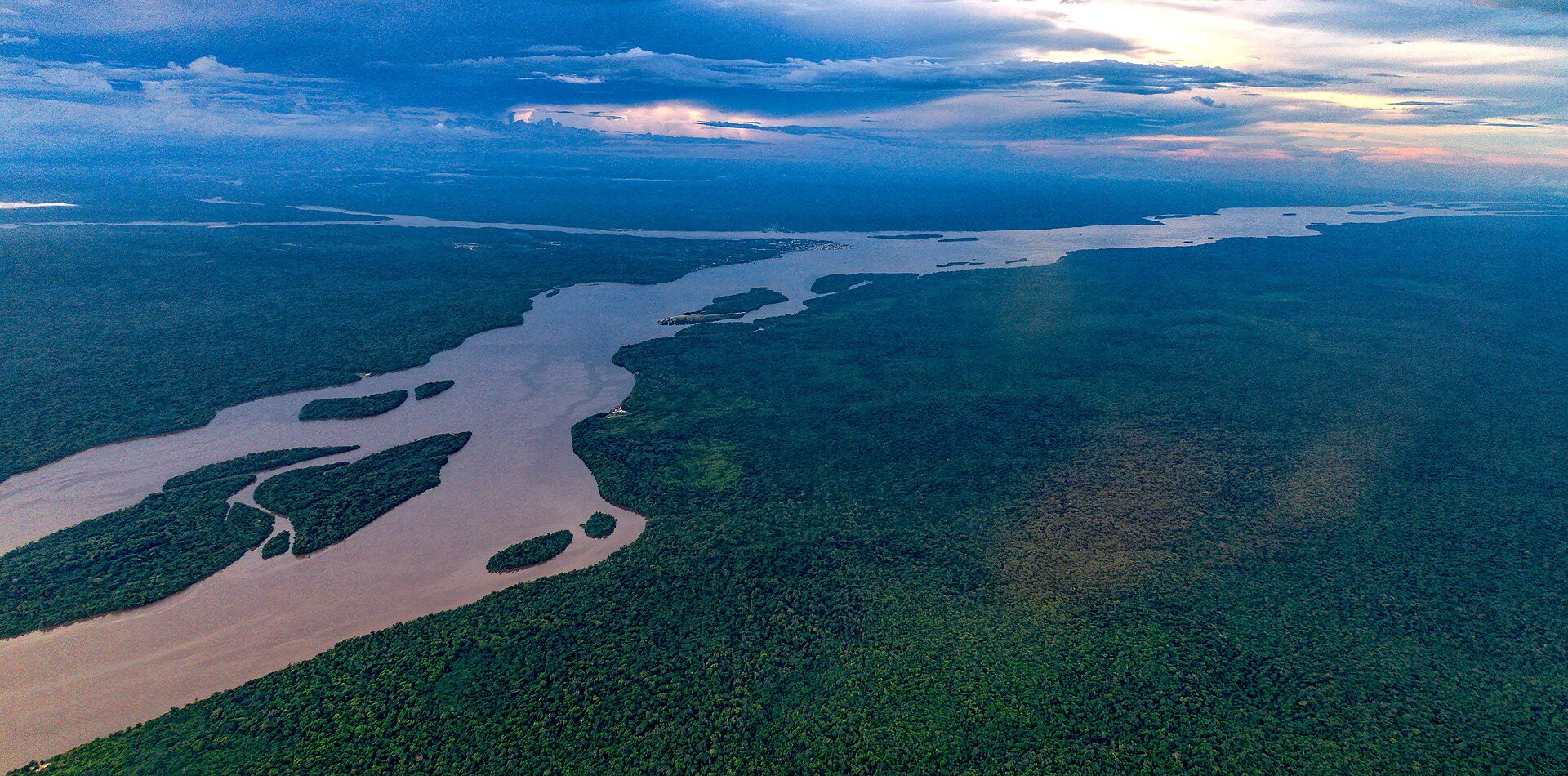
The Essequibo is the region west of the Essequibo River, about 160,000 square kilometres and roughly two thirds of Guyana’s territory, which Venezuela claims. The statement presents the region as Venezuelan land and the 1899 award as the root of the dispute.
Guyana filed the case in 2018, asking the court to confirm the validity of the arbitral award of 3 October 1899, which a Paris tribunal issued to fix the border. On 18 December 2020 the court ruled that it has jurisdiction over the validity of the award and the boundary question.
The court rejected a Venezuelan preliminary objection on 6 April 2023 and ordered interim protective steps, called provisional measures, on 1 December 2023. On 1 May 2025 it modified those measures, ordering Venezuela not to hold elections in the Essequibo, an order Venezuela rejected.
Venezuela did attend the hearings on the substance of the case at The Hague from 4 to 11 May 2026. Rodríguez said attending did not mean recognising the court’s jurisdiction, and Venezuela asked the judges to decline jurisdiction and said it would negotiate only under the Geneva Agreement.
The new statement therefore extends a stance held since 2020 rather than changing it. It came a day after Guyana’s Ministry of Foreign Affairs and International Cooperation said on Thursday 19 November 2026 that “Guyana has received the assurance of the United States Government that nothing has changed since”.
That answered reports, based on unnamed sources, that Jeremy Lewin, then the State Department’s policy chief, had floated at a September 2026 meeting in Washington the idea of Venezuela taking partial control of the Essequibo. Lewin, who left the department at the end of October, said the White House had asked him to hold “preliminary and confidential conversations”, and called any other suggestion “entirely false”.
The US Embassy in Georgetown, Guyana’s capital, reaffirmed US support for the 1899 award, which it said “should be respected unless or until a new boundary is set by a competent legal body or with the consent of both parties”. The statement calls on Guyana, the neighbouring country, to honour its obligations.
Ali said on Thursday 19 November 2026 that the ICJ ruling “is what all of us will have to accept”. He added that the United States supports settling the dispute through the court.
For readers in the United States, the dispute reaches an American company. ExxonMobil operates the Stabroek oil block off Guyana’s coast, and the company said in November 2025 that output there had reached 900,000 barrels a day.
A judgment of the court is binding under the UN Charter, the founding treaty of the United Nations, but the court has no police force. Enforcement goes through the UN Security Council, where permanent members hold a veto.
Rodríguez’s statement signals that Venezuela will not voluntarily accept an adverse judgment. Ali says the court’s decision is what everyone must accept, which leaves little room for a deal outside the court.
Rodríguez argues that the 1899 award was a fraud and that the Geneva Agreement is the proper route. Ali argues that the court’s decision binds everyone and that Guyana will wait for it.
The court has not said when it will deliver its judgment. Neither government has said what Venezuela would do if the judges uphold the 1899 award.
Frequently Asked Questions
Has the court already ruled on the border?
Not yet. The final judgment is pending and no date has been announced.
Can the court force Venezuela to comply?
Its judgments are binding under the UN Charter, but it has no police force. Enforcement would run through the UN Security Council, where veto powers apply.
Why does this matter in the United States?
The US Embassy in Georgetown has reaffirmed support for the 1899 award, and an American company operates the oil block offshore. A border change could affect that business.
Sources
International Court of Justice, Guyana v. Venezuela case page · ExxonMobil Guyana, production release of November 2025 · US Embassy in Georgetown, Guyana
Connected Coverage
Venezuela news · Venezuela Says Geneva Agreement Is Only Essequibo Path · Exxon Drills Two Guyana Wells to Year-End · Latin America Power Map
This article was produced by The Rio Times’ automated AI newsroom. Editorial responsibility: Matthias Camenzind, Publisher and Editor-in-Chief. The Rio Times also runs Ask Rio Times, which answers from 100,000+ of our own articles, the daily Latin America Power Map, and prediction-market odds on elections and markets.. How we use AI · Report an error
Venezuela and the United States
- What Is Going On Between Venezuela and the United States?
- What Is Going On Between Venezuela and the United States?
- Venezuela Geopolitics Explained, US Now Runs Its Oil
- Venezuela Politics 2026, Who Holds Power After Maduro