US Urges Partners to End Business With Nicaragua
Nicaragua · DIPLOMACY
Key Facts
- —What happened Nicaragua’s Congress passed a constitutional reform on 1 September 2026.
- —The reform It bars opposition parties from elections and extends most official terms to seven years.
- —US response Secretary of State Marco Rubio urged partners to stop business with Nicaragua.
- —What comes next Washington will bring specific measures to the next OAS foreign ministers meeting.
- —The catch The US did not call for a trade halt or name any trade measures.
- —Trade pact Nicaragua has been part of CAFTA-DR, a free trade deal with the US, since 2006.
Washington wants allies to stop normal dealings with Nicaragua after a vote that locks out the opposition. The next step goes to the Organization of American States.
The United States has called on international partners to stop business with Nicaragua’s government. Secretary of State Marco Rubio made the appeal after Nicaragua’s Congress passed a constitutional reform that locks out the opposition.
Rubio’s Statement
On 2 September 2026, Secretary of State Marco Rubio said the country’s National Assembly had ‘eroded the fiction of Managua’s democracy.’ He said the vote entrenched an ‘illegitimate dynasty’ in the country.
He urged partners to ‘immediately stop business as usual operations with this brutal dictatorship.’ Rubio added that dictatorships should not get the same benefits as democratic governments.
Nicaragua’s Constitutional Reform
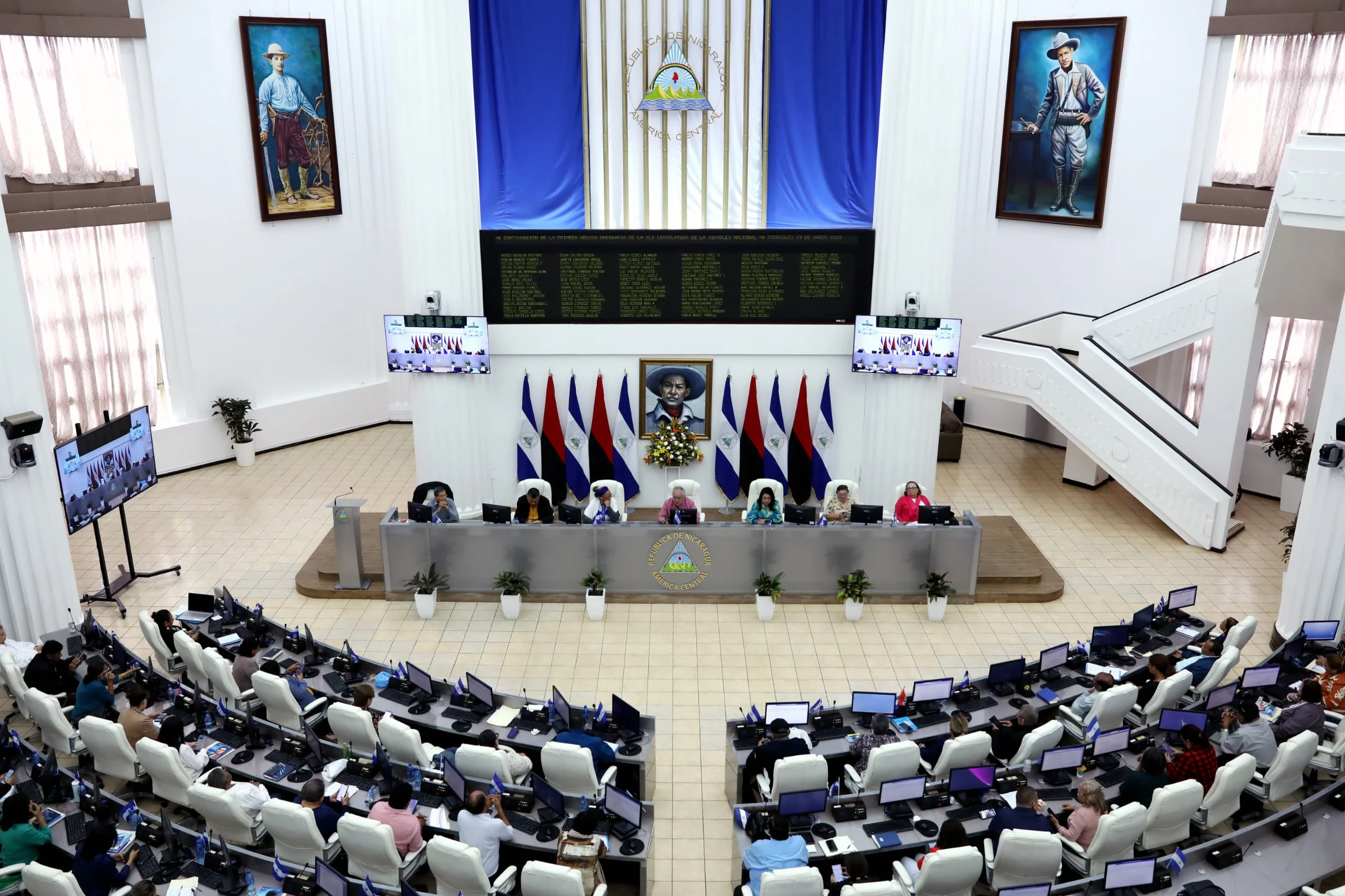
the country’s Congress passed the constitutional reform on 1 September 2026. It was the first of two votes required for such changes to take effect.
The reform bars opposition parties from Managua’s elections. It also extends terms for co-presidents and other top officials from six to seven years.
Terms grow to seven years for deputies, mayors, judges, and the heads of the army and police. Officials already in office keep their longer terms automatically.
Inside the Reform Text
The reform bars anyone labelled a ‘traitor to the homeland’ from holding elected office in the country. That label has already stripped nationality from at least 452 critics and opponents, per the Tico Times.
Among them are the writers Sergio Ramirez and Gioconda Belli. The reform also lets the country’s Supreme Electoral Council cancel parties it says received foreign funding.
A Vote Staged in Leon
Managua’s Congress passed the reform unanimously by a show of hands on 1 September 2026. Lawmakers met in Leon, a city roughly 90 kilometers from Managua.
The session opened the government’s self-declared Patriotic Month. Assembly president Gustavo Porras laid a copy of the text at the tomb of poet Ruben Dario.
the country’s official gazette, La Gaceta, published the amendment’s certification the next morning. That step gave the first vote on Nicaragua’s constitution full legal effect.
Ortega’s Long Rule in Nicaragua
Daniel Ortega is 80 years old and has led the country since 2007. Rosario Murillo has stood at his side for most of that time.
Managua’s government has faced years of criticism over democracy and human rights. The September reform is the latest change critics say weakens checks on power in the country.
Ortega and Murillo’s Role
Daniel Ortega and Rosario Murillo pushed the reform through the country’s Congress. Murillo has been co-president since an earlier constitutional change in 2024.
That 2024 change extended the presidential term from five to six years. It also pushed Managua’s presidential election back to late 2027.
US Calls for Action
Rubio said Washington remains committed to addressing human rights violations in the country. His statement did not spell out what actions partners should take.
It named no specific companies, industries, or countries in the country. It called only for a broad end to normal dealings with Managua’s government.
OAS Meeting Next
Rubio said the United States will bring specific measures to the next meeting of OAS foreign ministers on the country. He did not describe those measures.
The OAS Permanent Council voted on 19 August to call that meeting. Brazil opposed the vote and Mexico abstained, and no date has been set.
No Trade Measures Announced
The State Department statement does not call for a halt to trade with the country. It does not name any trade measures, such as suspending CAFTA-DR.
The Tico Times and other outlets confirm the call was to end ‘business as usual,’ not to start an embargo.
Trade Pact Context
Managua belongs to CAFTA-DR, a free trade pact linking the US, five Central American nations, and the Dominican Republic. It removes tariffs on most goods.
The pact entered into force for the United States and the country on 1 April 2006. Nicaragua gained duty-free access to US markets, especially for textiles and farm goods.
How CAFTA-DR Works
The United States is the country’s largest trading partner, according to Britannica. Exact current trade figures for Managua are not publicly available right now.
CAFTA-DR also includes investment protections and a dispute process. Suspending it for the country would require formal steps by both the US and Nicaragua.
Reform and Nicaragua’s Trade Obligations
the country’s new constitution says foreign laws do not apply inside Managua. Havana Times reported this rule on 31 August 2026.
Legal experts say the change has no practical effect on treaties. Nicaragua remains bound by CAFTA-DR and its other international agreements.
Ortega’s Earlier Comments
On 19 July 2026, Daniel Ortega said ‘there won’t be any more elections’ in Nicaragua. He said this would stop the opposition from ‘seizing the government’ again.
Reuters reported the comment ahead of the constitutional reform’s first vote. It came weeks before Rubio’s statement on Nicaragua.
International Reaction
The US call is aimed at international partners, not only OAS members. It seeks to isolate Nicaragua’s government both diplomatically and economically.
Responses from other countries are not yet known. The OAS meeting on Nicaragua will be a key moment to watch, and Nicaragua’s government has not yet replied to Rubio.
What Comes Next
A second vote on the reform is required under Nicaragua’s constitution before it takes effect. It is expected after Nicaragua’s new legislative session opens in January 2027.
No exact date has been set for that second vote in Nicaragua. The US will present its own measures at the coming OAS meeting.
Understanding the OAS
The Organization of American States is a regional body with 35 member states, founded in 1948. It includes the United States and most Latin American countries.
Its charter promotes democracy, human rights, and regional security. Nicaragua itself withdrew from the OAS in November 2023.
Resolutions can condemn actions or suspend a member state. Enforcement still depends on member states acting on their own.
More: Latin America news in English, every day from The Rio Times.
Frequently Asked Questions
What did the US call for regarding Nicaragua?
The US urged international partners to stop business with Nicaragua’s government. Secretary of State Marco Rubio made the call after a constitutional reform.
What does Nicaragua’s constitutional reform do?
The reform bars opposition parties from elections and extends most official terms to seven years. It passed a first vote in Nicaragua’s Congress on 1 September 2026.
Will the US stop trade with Nicaragua?
No, the US did not call for a trade halt with Nicaragua. It only urged an end to business as usual and will bring measures to an OAS meeting.
What is CAFTA-DR?
CAFTA-DR is a free trade agreement linking the US, Central America, and the Dominican Republic. It has applied to Nicaragua since 2006.
Connected Coverage
Sources: The Tico Times; U.S. Department of State; Reuters; Havana Times; Britannica; Divergentes.
This article was produced by The Rio Times’ automated newsroom system. How we use AI · Report an error · Editorial responsibility: Matthias Camenzind, Editor-in-Chief