US Says Guyana Border Policy Is Unchanged
Washington says its border policy has not changed, and Guyana says it holds that assurance. Venezuela refuses to recognise the court that will rule on the dispute.

Politics: Guyana
A US State Department official said this week that Washington’s policy on the Guyana-Venezuela land border has not changed. The statement followed reports that Jeremy Lewin, a State Department official until October, had held preliminary discussions on the dispute with Guyanese and Venezuelan officials.
Guyana’s Foreign Ministry said on Thursday 19 November 2026 that it has received a US assurance that nothing has changed. Venezuela’s acting president, Delcy Rodríguez, said on Friday 20 November 2026 that her country does not recognise the International Court of Justice (ICJ), the UN’s top court.
Key Facts
- Who. The US State Department, Guyana’s Foreign Ministry and Venezuela’s acting president, Delcy Rodríguez.
- What. Washington says its policy on the Guyana-Venezuela land border has not changed.
- Where. The Essequibo, a region covering more than two thirds of Guyana’s territory.
- When. Statements on 19 and 20 November 2026; the ICJ has set no judgment date.
- As of. 21 November 2026, 19:00 GMT
Washington says its border policy has not changed, and Guyana says it holds that assurance. Venezuela refuses to recognise the court that will rule on the dispute.
The Essequibo is the territory west of the Essequibo River, more than two thirds of Guyana’s land area. A tribunal in Paris fixed the boundary on 3 October 1899, and Venezuela’s government calls that award fraudulent.
In 1966 Venezuela, the United Kingdom and what was then British Guiana signed the Geneva Agreement, which sets a negotiated route to settlement. The ICJ, based in The Hague, ruled that it has jurisdiction on 18 December 2020 and rejected Venezuela’s objection to the case being heard on 6 April 2023.
That 2023 ruling cleared the way for the hearings on the substance of the case, which the court held from Monday 4 to Monday 11 May 2026, according to its website. It has announced no judgment date, so the verdict on who owns the Essequibo is still pending.
The latest row began with reports of a meeting in Washington in September 2026 between Guyanese and State Department officials. Lewin, who left the department in October, has described the discussions as preliminary, according to reports of his comments.
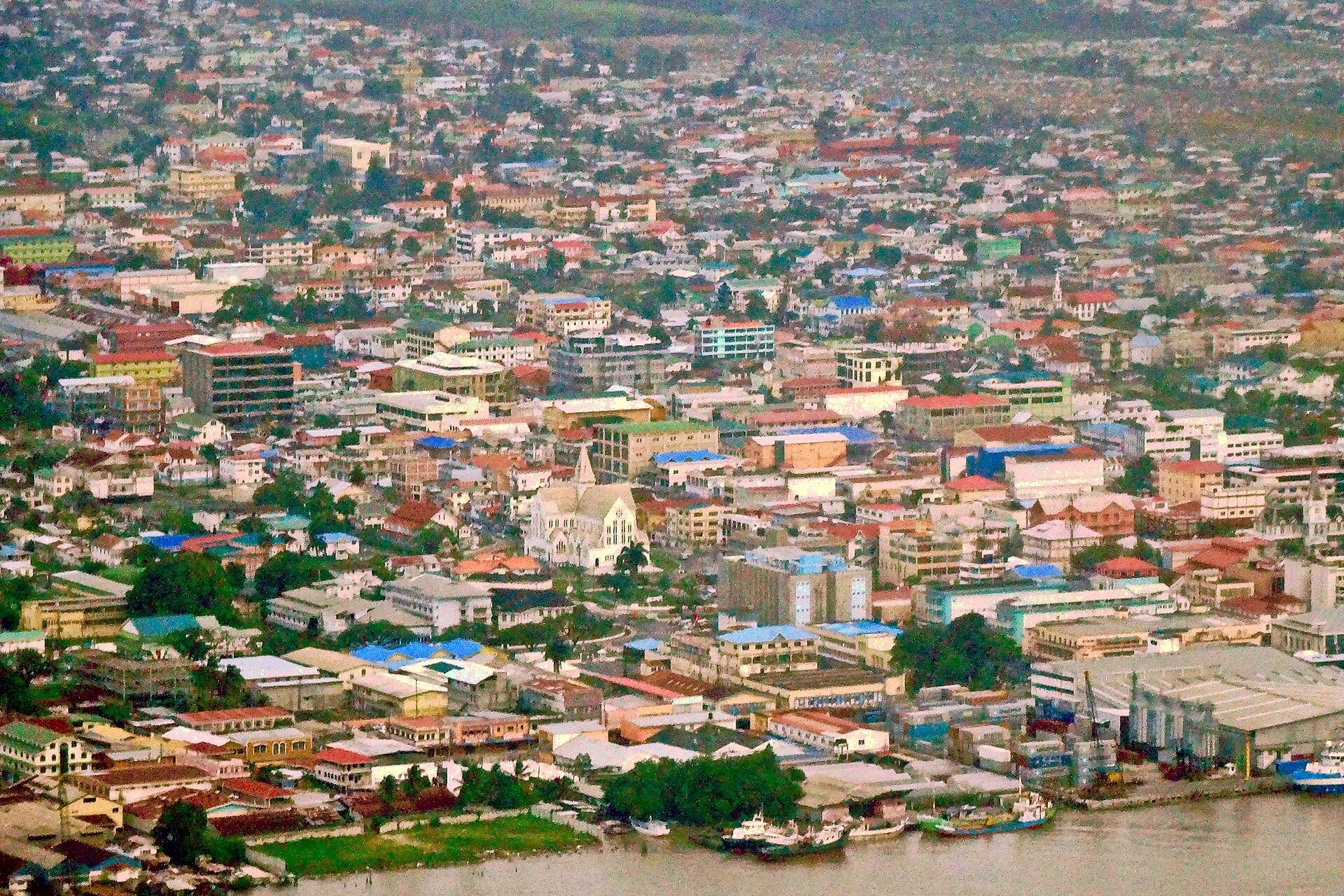
A State Department official said this week that the policy on the land boundary between the two countries has not changed. The official was not named in the reports.
Guyana’s Ministry of Foreign Affairs and International Cooperation said on Thursday 19 November 2026 that the September meeting focused on the pending ICJ ruling and on reaffirming US support for the process. It said Guyana has received the assurance of the US government that nothing has changed since.
The ministry’s statement did not address whether territorial concessions were discussed. Guyana’s government says its focus is the ICJ process.
Rodríguez said in a statement on Friday 20 November 2026 that Venezuela does not recognise the ICJ or any related decision. She called on Guyana to respect the Geneva Agreement instead.
ICJ judgments are binding and final under the court’s statute, but the court has no police force to enforce them. A ruling for Guyana would therefore give it a legal title, while Venezuela has said in advance that it will not recognise the court.
The stakes reach US business too, since the US oil majors ExxonMobil and Chevron hold stakes in Stabroek, Guyana’s offshore oil block. ExxonMobil operates it with 45%, Chevron holds 30% and China’s state-owned oil company CNOOC 25%, according to the companies.
Washington’s wording on the border therefore matters to investors as well as to diplomats. The statement has no legal force, but it signals that US policy toward the boundary is unchanged.
The court has set no date for its judgment, and no other dated step has been confirmed. Until it rules, the US statement, Guyana’s assurance and Venezuela’s refusal stand side by side with no ruling yet to test them.
Frequently Asked Questions
Has US policy on the Guyana-Venezuela border changed?
A State Department official says it has not, and Guyana says Washington gave it the same assurance. Guyana’s statement did not address whether concessions were discussed.
What does Venezuela say?
Its acting president says Venezuela does not recognise the ICJ. She wants Guyana to follow the Geneva Agreement.
When will the court decide?
The court has not announced a date for its judgment. The verdict remains pending.
Sources
Source: statement of Guyana’s Ministry of Foreign Affairs and International Cooperation, 19 November 2026; US State Department; International Court of Justice, case 171 (Guyana v. Venezuela): icj-cij.org/case/171
Connected Coverage
Guyana news · Venezuela Again Rejects Guyana Border Court · Exxon Drills Two Guyana Wells to Year-End
This article was produced by The Rio Times’ automated AI newsroom. Editorial responsibility: Matthias Camenzind, Publisher and Editor-in-Chief. The Rio Times also runs Ask Rio Times, which answers from 100,000+ of our own articles, the daily Latin America Power Map, and prediction-market odds on elections and markets.. How we use AI · Report an error