Turkey’s BRICS Bid Falls Short: Partner Status Offered, Not Full Membership
Turkey’s bid to join the BRICS group has taken an unexpected turn. The country, a long-standing NATO member, has been offered partner status rather than full membership.
This development marks a significant moment in Turkey’s quest to expand its global influence. Turkish Trade Minister Omer Bolat revealed this news on Wednesday.
He described it as a transitional period in the BRICS‘ organizational process. This offer comes after Turkey’s initial application to join the group earlier this year.
President Recep Tayyip Erdogan’s government sees BRICS as a way to diversify Turkey’s alliances. The country aims to protect its interests in a changing geopolitical landscape.
This move reflects Turkey’s desire to balance its traditional Western ties with new partnerships. BRICS has recently expanded its membership.
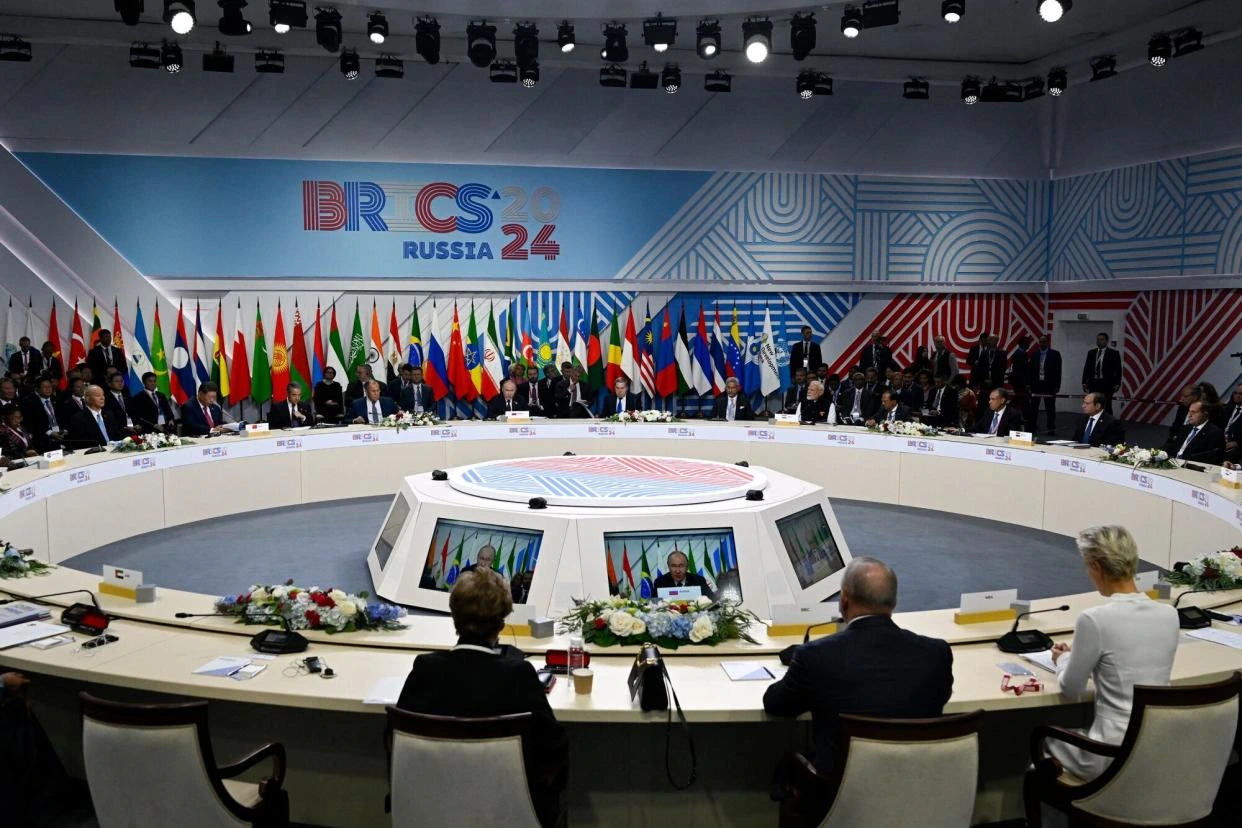
Iran, the United Arab Emirates, Ethiopia, and Egypt joined the group this year. Unlike Turkey, these nations became full members without a transition period. This difference has raised questions about Turkey’s position.
Bolat dismissed speculation about India opposing Turkey’s membership. He stated that several countries received partner status offers. The final decision on full membership will come later, he added.
Turkey’s Interest in BRICS
The BRICS group represents a significant portion of the global economy. It includes Brazil, Russia, India, China, and South Africa. These nations aim to increase their collective influence in world affairs.
Turkey’s interest in BRICS aligns with its broader foreign policy goals. The country seeks to maintain its NATO membership while exploring new alliances. This strategy reflects Turkey’s complex position between East and West.
The offer of partner status presents both opportunities and challenges for Turkey. It allows the country to engage with BRICS without fully committing. However, it falls short of the full membership Turkey initially sought.
Turkey’s path forward remains uncertain. The country must navigate its relationships with both BRICS and NATO carefully. This balancing act will likely shape Turkey’s international relations in the coming years.
The BRICS decision on Turkey highlights the group’s evolving nature. It suggests a more cautious approach to expansion. This move may influence how other nations view potential BRICS membership in the future.
As global power dynamics shift, Turkey’s BRICS journey bears watching. It represents a broader trend of nations seeking to diversify their international partnerships. The outcome may have implications for global economic and political alignments.
More: Egypt news in English, every day from The Rio Times.
This article was produced by The Rio Times’ automated newsroom system. How we use AI · Report an error · Editorial responsibility: Matthias Camenzind, Editor-in-Chief
Horn of Africa and the Red Sea
- Horn of Africa 2026: Why It Matters and Who Backs Whom
- Ethiopia’s Neighbors Explained, Ports, Eritrea, Somalia
- Eritrea Explained 2026, a Red Sea Country Guide
- Somalia Explained: Al-Shabaab, Somaliland, the Ports and the Fight Over a 2026 Vote