Transnet Fraud Case Survives Delay Bid
A court told prosecutors to fix the evidence problem rather than let delay end the case, and the accused now wait for a trial date that does not exist yet.

Courts: South Africa
A Johannesburg court on Thursday 26 November 2026 refused to end the long-delayed corruption trial over contracts at Transnet, South Africa’s state-owned rail and ports company. Acting Judge Matodzi Brian Nemavhidi dismissed bids by five former Transnet executives to have the case struck off the roll for unreasonable delay.
Instead of freeing the accused, the judge ordered the State to build a working system for reviewing 49 terabytes of electronic evidence. For anyone weighing South African rail and port assets, it keeps alive a case that traces back to a 2012 advisory tender.
Key Facts
- Who. Brian Molefe, Anoj Singh and three co-accused lost their bid to have the case struck off.
- What. The court ordered the State to open a searchable platform for 49 terabytes of evidence within 90 days.
- Next. The State must file a written implementation plan within 30 days; no trial date is set.
- As of. 26 November 2026, 20:00 GMT.
A court told prosecutors to fix the evidence problem rather than let delay end the case, and the accused now wait for a trial date that does not exist yet.
The five applicants are Brian Molefe, Transnet’s former group chief executive, and Anoj Singh, its former group chief financial officer. The others are Siyabonga Gama, a former Transnet chief executive, Garry Pita, another former finance chief, and Phetolo Ramosebudi, a former group treasurer.
Also accused are Niven Pillay and Litha Nyhonyha, directors of the advisory firm Regiments Capital. Daniel Roy of Trillian Asset Management, an investment firm, and Kuben Moodley of Albatime, a private company, stand accused alongside them.
The charges are fraud, corruption, money laundering and breaches of the Public Finance Management Act, which governs how state bodies spend public money. No one has been convicted, because the trial has not started.
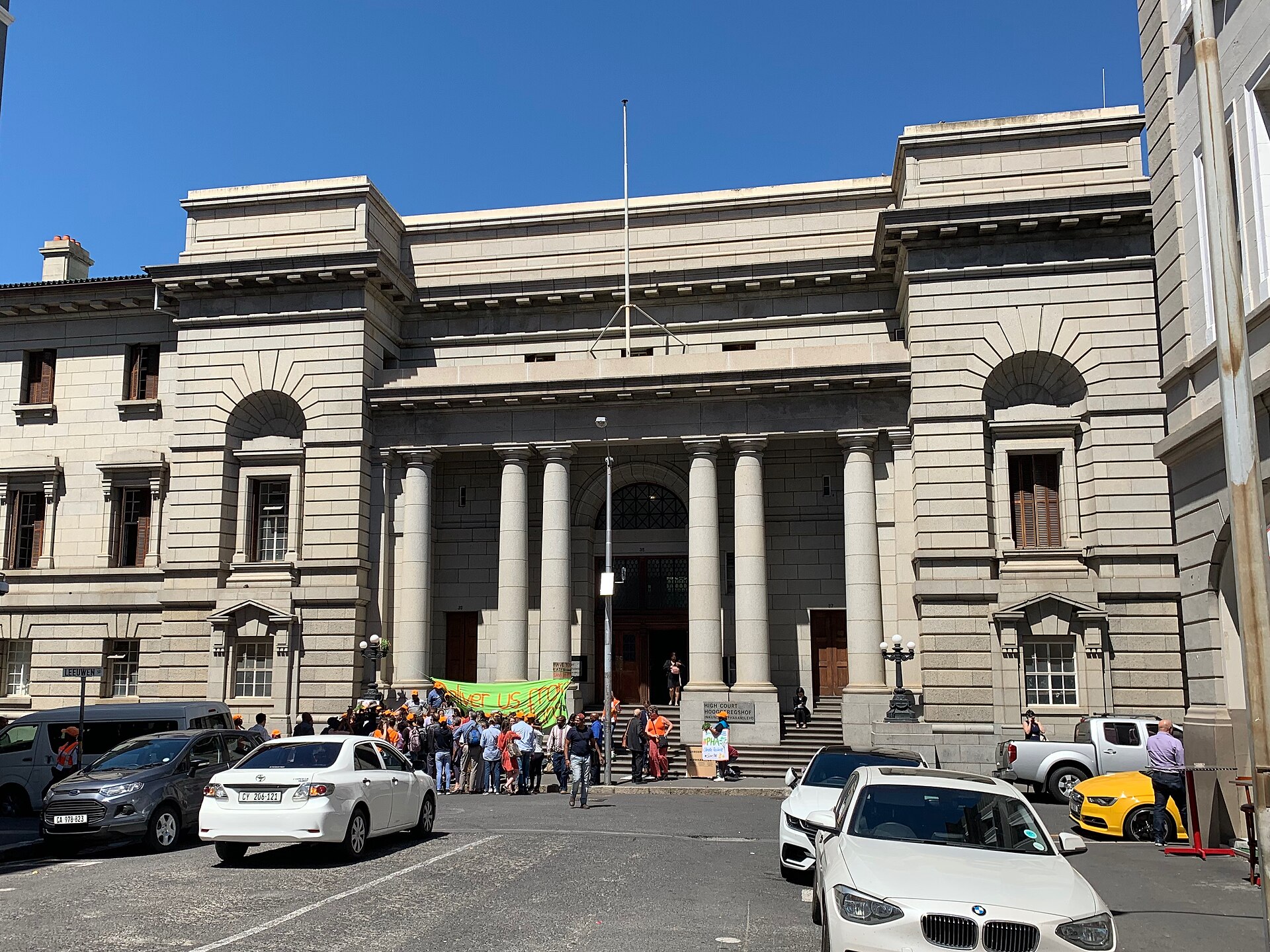
The case traces back to a tender for transaction advisers, awarded in 2012 to a consortium led by the global consultancy McKinsey. That tender led to the procurement of 1,064 locomotives worth more than R54 billion (about US$3.1 billion at USD/ZAR 17.55, the 25 November close).
The State alleges Regiments Capital was brought in irregularly and that its contract grew in value and scope to more than R305 million (about US$17 million). It also points to a R93.4 million (about US$5.3 million) payment to Trillian in 2015.
The case was first enrolled in 2022 at the Palm Ridge Magistrate’s Court, near Johannesburg. A trial set for 2 February 2026 never began, because of the evidence-access dispute and the delay applications.
At hearings on 15 and 21 October, the defence argued the delay was unreasonable and asked the court to strike the case off the roll. It also asked that prosecution not resume without a written instruction from Andy Mothibi, head of the National Prosecuting Authority (NPA), South Africa’s state prosecution service.
State counsel Emile van der Merwe conceded on 15 October: “The state admits there has been a delay.” He said the accused had requested 22 postponements against the State’s five, and on 21 October the State offered about R1.6 million (about US$91,000) for a searchable review platform.
Henry Mamothame, spokesperson for the Investigating Directorate Against Corruption, an NPA unit, said after the October hearing: “The court has not made a final order in the application.” IDAC previously lost a similar bid in the corruption case against Matshela Koko, a former Eskom interim chief executive.
In his ruling on 26 November, the judge wrote: “I am not persuaded that the relief … is justified at this stage.” He added: “A prosecution involving tens of terabytes of electronic evidence cannot be approached as though it were an ordinary matter.”
The judge said the State alone cannot be blamed for the delay, citing side disputes heard before the main trial and difficulties with legal representation. He also wrote: “It does not follow, however, that striking the matter from the roll is the only remedy.”
The State must file a written implementation plan within 30 days. It must provide a functional, searchable review environment for the evidence within 90 calendar days, or longer if the court allows.
The State must also give the accused access credentials, technical support and training. It may not deny access because an accused cannot afford the software or storage, and it must report progress every 30 days.
No trial start date has been set, and the case is due back in court on 18 January 2027, according to reports of the ruling. We found no published response from prosecutors to the ruling by Thursday evening.
For US investors in South African rail and ports, the ruling matters mainly as a test of accountability. Transnet is trying to rebuild, as shown in our September report on Transnet’s return to profit, and a case over its past governance remains open.
Transnet also faces legal pressure on other fronts, including a labour court order against Transnet on 12 November. The next signal is whether the State files its plan within 30 days.
Frequently Asked Questions
What did the court decide?
It refused to strike the case off the roll and ordered the State to fix access to the evidence. The judge said the State alone was not to blame for the delay.
Does the ruling mean the accused are guilty?
No. The trial has not started, and none of the accused has been convicted of any charge.
Why does the case matter to investors?
Transnet runs much of South Africa’s rail and ports, so how its past is handled shapes confidence in its future. The case also tests whether state-capture prosecutions can reach a trial.
Sources
Johannesburg High Court ruling of 26 November 2026; Investigating Directorate Against Corruption statements of October 2026
More: South Africa news
This article was produced by The Rio Times’ automated AI newsroom. Editorial responsibility: Matthias Camenzind, Publisher and Editor-in-Chief. The Rio Times also runs Ask Rio Times, which answers from 100,000+ of our own articles, the daily Latin America Power Map, and prediction-market odds on elections and markets.. How we use AI · Report an error