Johannesburg Storms Hit Three Train Routes
Storms that flooded Johannesburg streets on Wednesday have disrupted three commuter rail routes, and officials say the weather risk will last until Saturday.

SOUTH AFRICA · WEATHER
Severe thunderstorms swept across Gauteng province on Wednesday 25 November 2026, flooding roads in Johannesburg and forcing changes to three commuter rail routes. Metrorail, run by the Passenger Rail Agency of South Africa (PRASA), said the changes took effect on Thursday morning 26 November and stay in place until further notice.
The Johannesburg Metropolitan Police Department (JMPD), the city’s police service, says most major roads have reopened, but mud and debris remain on several of them. Severe weather is expected to continue across Gauteng until Saturday 28 November, PRASA spokesperson Lwaphesheya Shozi said.
Key Facts
- Where Gauteng, South Africa’s most populous province, around Johannesburg and Pretoria, took severe thunderstorms on Wednesday.
- What Metrorail, the commuter rail service, changed or suspended service on three routes from Thursday morning.
- Roads Most main roads have reopened, but debris and some traffic lights that are out remain.
- When Severe weather is expected to last until Saturday 28 November. As of 26 November 2026, 10:00 GMT.
Storms that flooded Johannesburg streets on Wednesday have disrupted three commuter rail routes, and officials say the weather risk will last until Saturday.
Gauteng is South Africa’s most populous province and its economic heartland, built around Johannesburg and Pretoria. Johannesburg, Ekurhuleni, the metro area east of it, and Tshwane, the Pretoria area, all took the storms.
The South African Weather Service (SAWS), the national forecaster, issued severe thunderstorm warnings for Gauteng covering heavy rain, possible flooding, hail, damaging winds and excessive lightning. PRASA said the warnings remain in force until Saturday.
Johannesburg had already seen flash flooding this month. On Tuesday 17 November a flash flood in Dobsonville, Soweto, swept away an 11-year-old girl, and city emergency services spokesperson Robert Mulaudzi said the chances of finding her alive were slim.
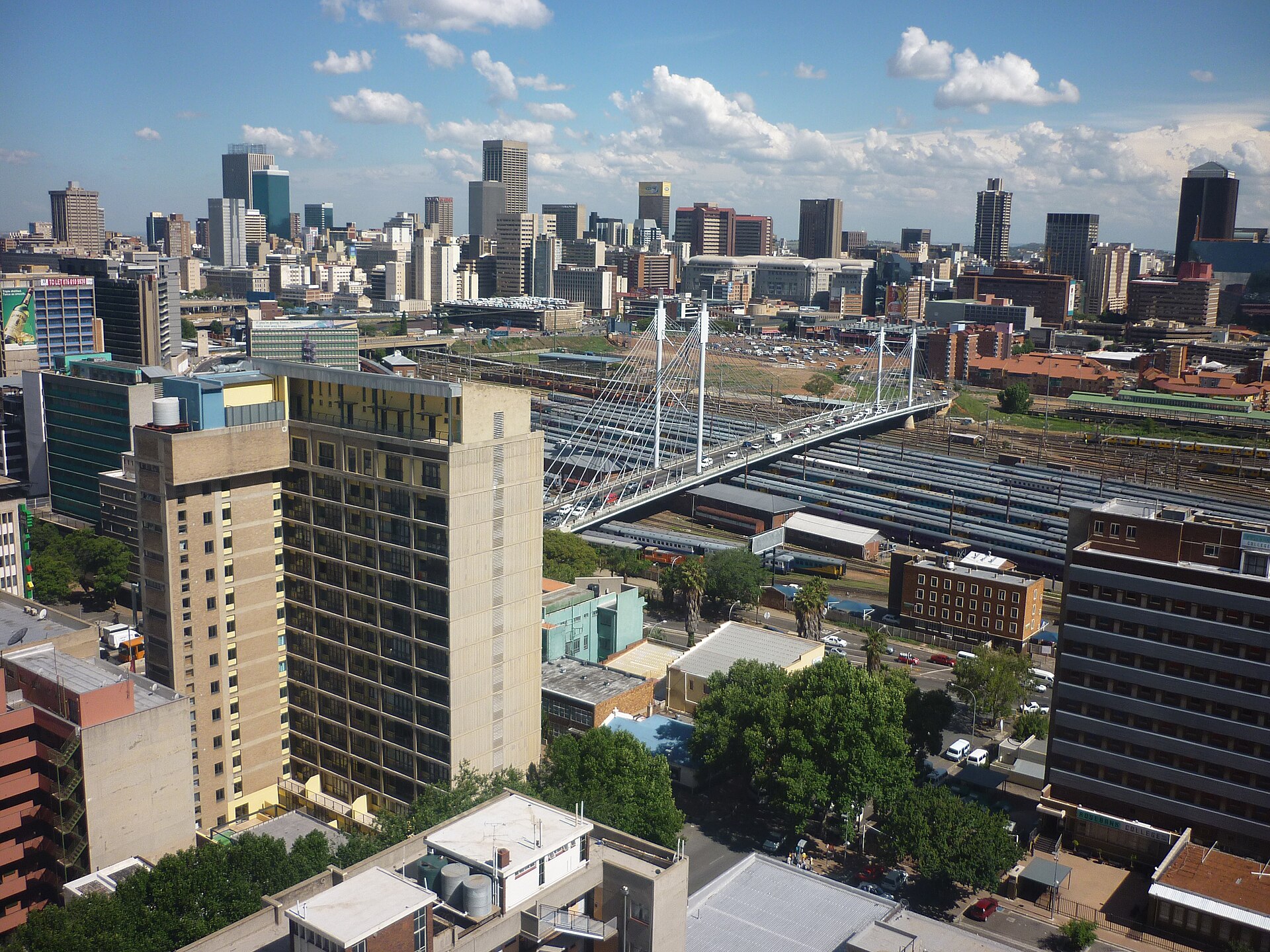
Metrorail announced temporary changes on three routes from Thursday morning. Shozi said technical teams are still assessing damage and restoring service where it is safe.
On the Naledi to Johannesburg line, trains run on a single line, so timetables may change and waits may grow longer. On the Roodepoort to Johannesburg line a wall collapsed at Mayfair, so Roodepoort trains turn back at Langlaagte station.
Passengers between Langlaagte and Johannesburg should use the Naledi and Lenz services, two other Metrorail lines. On the Pretoria to Pienaarspoort line, two shuttle trains run between Pretoria and Koedoespoort, and one train runs from Hercules to Koedoespoort.
There is no service between Koedoespoort and Pienaarspoort, or to Mamelodi Gardens, until further notice. Shozi warned that trains may be slowed, stopped short of their destination or withdrawn, and may stay out of service until inspections clear the line.
PRASA also told passengers to keep away from platform edges, tracks and flooded areas, and never to cross a flooded section of line. Shozi said affected sections stay closed until inspections clear them.
On the roads, JMPD spokesperson Xolani Fihla said on Thursday that water had receded in some areas and most major roads and crossings had reopened after Wednesday night’s storms. Mud, rocks, branches and other debris remain on several roads, and some traffic signals are out of order.
Heavy rain is expected to persist on Thursday, according to Fihla. “Because the ground is already saturated, additional rainfall could rapidly trigger fresh localised flooding,” Fihla said.
JMPD named crossings that were submerged earlier and need extreme care: Witkoppen Road Bridge in Fourways, Belgrave Street Bridge in Bryanston, the Allandale Road on-ramp to the N1 Freeway in Midrand, Vincent Tshabalala Road (London Road), Marlboro Drive in Kelvin and other roads in Alexandra. JMPD asks drivers to stay alert there.
Known flood-prone spots include Joe Slovo Drive and Currey Street in Doornfontein, the M1 Double-Decker section in the inner city, Klipspruit Valley Road in Orlando and Mzilikazi Street in Mofolo, both in Soweto, and Abu Baker Asvat Drive in Lenasia. JMPD asks drivers to stay vigilant at all of them.
JMPD advises drivers to reduce speed, switch on headlights, keep a longer following distance and treat any traffic light that is out as a four-way stop. Drivers and pedestrians should not cross low-lying bridges, underpasses or overflowing streams if water rises again, and should watch for open manholes.
To report fallen trees, debris, flooded roads, damaged signals or blocked drains, call the Johannesburg Roads Agency (JRA) on 0860 562 874. For emergencies and trapped vehicles, call the City of Johannesburg emergency services on 011 375 5911, 10177 or 112.
Robert Mulaudzi, spokesperson for Johannesburg’s Emergency Management Services (EMS), said crews handled a high volume of emergency calls after the storms. A motorist whose vehicle was swept away in Witkoppen was rescued, and Mulaudzi reported no injuries.
Road infrastructure on Nasrec Road in Riverlea collapsed, closing it between Main Reef Road and Dunlin Drive. In Alexandra, floodwater entered homes and the Jukskei River, which runs through the township, rose sharply near Cheetah Street.
Ione Loots, a civil engineering researcher at the University of Pretoria, said on Thursday that rainfall at one university monitoring site in Tshwane peaked at roughly a one-in-10-year event. That means a 10% chance of being matched or exceeded in any year, and official SAWS data was not yet available when she spoke.
Her argument is simple: “Built-up areas have large impermeable surfaces, which reduce infiltration and increase the amount of runoff that needs to be managed.” That is one researcher’s reading of one monitoring site, not an official finding.
Johannesburg and Pretoria are South Africa’s business and diplomatic hubs, so travellers and companies with staff there face rail changes and road hazards. Metrorail has given no restoration date, while the weather warning runs until Saturday.
No casualty count for this storm has been confirmed. Metrorail has given no date for restoring the three routes.
Frequently Asked Questions
Which Metrorail routes are affected?
Three routes are affected: Naledi to Johannesburg, Roodepoort to Johannesburg and Pretoria to Pienaarspoort. The changes took effect on Thursday morning and stay until further notice.
Are Johannesburg’s roads open?
Most major roads and crossings have reopened, but debris and faulty traffic lights remain. Drivers should avoid low-lying bridges and underpasses if water rises again.
Whom do I call about a flooded road?
The Johannesburg Roads Agency handles fallen trees, debris, flooded roads and damaged signals. The city’s emergency services take calls about trapped vehicles.
Living in or visiting Johannesburg? See this month's events and our Johannesburg city guide with rents, safety and upcoming concerts.
Sources: Johannesburg Metropolitan Police Department statement, 26 November 2026; PRASA and Metrorail service notice, 26 November 2026; City of Johannesburg Emergency Management Services; South African Weather Service warnings; University of Pretoria, department of civil engineering. Weather service and city documents are taken as relayed by the spokespersons.
This article was produced by The Rio Times’ automated AI newsroom. Editorial responsibility: Matthias Camenzind, Publisher and Editor-in-Chief. The Rio Times also runs Ask Rio Times, which answers from 100,000+ of our own articles, the daily Latin America Power Map, and prediction-market odds on elections and markets.. How we use AI · Report an error