Transnet Returns to Profit as US$4 Billion Investment Plan Advances
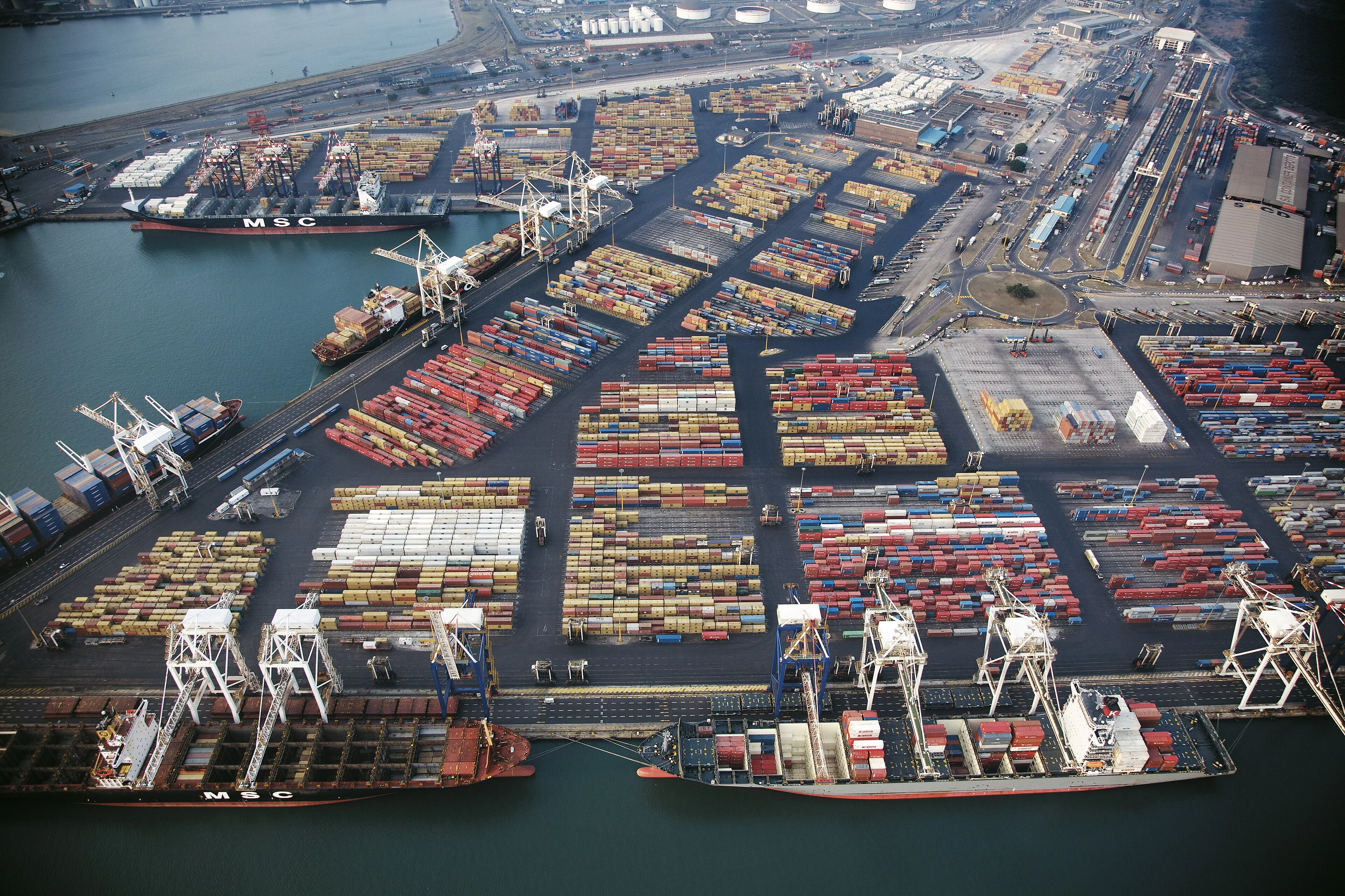
Key Facts
- —What happened Transnet reported a R4.6bn (about US$261 million) profit for the year to 31 March 2026, its first annual profit in four years.
- —How big Revenue rose 7.1% to R88.6bn (about US$5.0 billion) in the year to March 2026, up from R82.7bn (about US$4.7 billion) a year earlier.
- —The catch Debt remains above R130bn (about US$7.4 billion), and the National Treasury has extended guarantees totalling R196.3bn (about US$11.2 billion) to support the turnaround.
- —What comes next Transnet plans roughly R70bn to R76.6bn (about US$4.0 to US$4.4 billion) of capital investment over three years, with about 85% going to sustaining rail, port and pipeline infrastructure.
- —Why it matters Transnet’s rail and port network underpins global flows of South African coal, iron ore, manganese and automotive exports.
South Africa’s state-owned freight rail, ports and pipelines group Transnet has returned to profit while advancing a roughly R70bn (about US$4.0 billion) investment plan focused on strategic commodity and logistics corridors.
Transnet reported a R4.6bn (about US$261 million) profit for the year to 31 March 2026, its first annual profit in four years. The result reverses losses of R1.9bn (about US$108 million) in 2024/25 and R7.3bn (about US$415 million) in 2023/24.
A Turnaround Built on Volumes and an Asset Sale
Revenue rose 7.1% to R88.6bn (about US$5.0 billion) in the year to March 2026, up from R82.7bn (about US$4.7 billion) a year earlier. The improvement was supported by higher rail and pipeline volumes and the sale of the Durban Pier 2 container terminal.
Capital investment climbed 44.2% to R24bn (about US$1.36 billion) in the 2025 financial year. Earnings before interest, tax, depreciation and amortisation rose 39.4% to R30.6bn (about US$1.74 billion) over the same period.
The profit marks a sharp reversal for a group that has struggled with operational breakdowns, cable theft and locomotive shortages. Transnet’s leadership has framed the result as evidence that reform efforts are beginning to bite.
Inside the Transnet Investment Plan
Transnet’s corporate plan envisages roughly R70bn to R76.6bn (about US$4.0 to US$4.4 billion) of capital investment over three years. Over five years, the figure rises to R127.7bn (about US$7.3 billion).
About 85% of that spending is earmarked for sustaining rail, port and pipeline infrastructure. The remainder is set aside for expansion projects.
Priority corridors include coal, iron ore, manganese and container traffic. An R18.9bn (about US$1.1 billion) “Container Corridor” aims to eliminate bottlenecks and increase throughput.
State Backing and the Debt Overhang
The turnaround remains heavily state-backed. South Africa’s National Treasury has extended guarantees totalling R196.3bn (about US$11.2 billion), including R145.8bn (about US$8.3 billion) in 2025/26, to support Transnet’s refinancing and capital plan.
Debt is above R130bn (about US$7.4 billion), which limits self-funded investment. That constraint is pushing the group toward reforms and public-private partnerships.
Liberalisation measures include rail slot concessions, port terminal public-private partnerships and private rolling-stock leasing. The goal is to attract foreign and domestic capital while reducing fiscal risk.
The Great-Power Angle on African Logistics
Transnet sits at the heart of Africa’s great-power competition over logistics and minerals. Its network underpins global flows of South African coal, iron ore, manganese and automotive exports.
That makes reliability critical for Chinese, European and United States-linked supply chains. A functioning Transnet is therefore not just a domestic concern but a strategic question for multiple global players.
The group is a key test case for state-owned infrastructure reform in Africa. Its progress, or lack of it, will be watched closely by investors and governments far beyond South Africa, as explored in our pillar on Africa: The New Scramble.
What to Watch Next
The immediate test is whether Transnet can sustain volume growth while executing its capital plan. The sale of the Durban Pier 2 container terminal has helped the balance sheet, but further asset sales may be needed.
Private participation in rail and port operations will be a key indicator of reform momentum. The National Treasury’s continued guarantee support suggests the state remains committed, but fiscal space is finite.
For investors, the signal is clear: Transnet’s recovery is real but fragile. The next 12 to 24 months will show whether the profit is a one-off or the start of a durable turnaround.
More: South Africa news in English, every day from The Rio Times.
Frequently Asked Questions
How much profit did Transnet make in 2026?
Transnet reported a R4.6bn (about US$261 million) profit for the year to 31 March 2026, its first annual profit in four years.
What is the size of Transnet’s investment plan?
Transnet plans roughly R70bn to R76.6bn (about US$4.0 to US$4.4 billion) of capital investment over three years, with about 85% going to sustaining existing infrastructure.
How much debt does Transnet carry?
Transnet’s debt is above R130bn (about US$7.4 billion), and the National Treasury has extended guarantees totalling R196.3bn (about US$11.2 billion) to support its refinancing and capital plan.
Connected Coverage
Sources
This article was produced by The Rio Times’ automated newsroom system. How we use AI · Report an error · Editorial responsibility: Matthias Camenzind, Editor-in-Chief
LatAm Markets: Live Signals → — real-time movers, turnover leaders and FX across Latin America.