São Paulo Says Fund Holds Down Water Bills
The state says the fund lets a privatised utility invest heavily without passing the full cost to customers, but the figures behind that claim come from the state itself.

BRAZIL · BUSINESS
The São Paulo state government says a public fund keeps water and sewage bills lower than they would otherwise be, more than two years after it sold control of the utility Sabesp. Natália Resende, the state’s secretary for environment, infrastructure and logistics, made the case on 25 November 2026.
Sabesp, formally the Companhia de Saneamento Básico do Estado de São Paulo, is the water and sewage utility of São Paulo, Brazil’s largest city. The fund is called Fausp, short for the Fund to Support Universal Sanitation in the State of São Paulo.
Key Facts
- What São Paulo says its Fausp fund absorbs part of the cost of expanding water networks.
- Funding At least 30% of the net sale proceeds, plus the state’s dividends from Sabesp.
- Not stated The fund’s balance, and the size of the tariff cut it pays for.
- Power Index Brazil ranks 1st of 14 in The Rio Times Latin America Power Index, with 74.2 points (November 2026 edition).
- As of 26 November 2026, 10:00 GMT
The state says the fund lets a privatised utility invest heavily without passing the full cost to customers, but the figures behind that claim come from the state itself.
Resende said the state created Fausp so that the proceeds of the share sale and all of the state’s dividends flow back into the fund. “The state’s profit, as it remains the largest shareholder, returns to people in the form of a fairer tariff,” she said (translated from Portuguese).
State law 17,853 of 8 December 2023 created the fund and attached it to the state environment secretariat. It requires the state to pay in at least 30% of the net proceeds of the Sabesp sale and to send the fund the dividends it receives from the company.
Under the law, the fund’s money must be applied mainly to lowering tariffs, with preference for poorer households. The law also lets use of the fund stop once the regulator certifies that the tariff stays at or below the level that would have applied without privatisation.
The state describes two tariffs set by Arsesp, the São Paulo state utility regulator. The equilibrium tariff is what Sabesp needs to cover costs and investment, and the applied tariff is what customers pay, so the fund can cover part of any gap between them.
In December 2025, Arsesp approved a 6.11% increase effective 1 January 2026, equal to inflation over 16 months. The state says this left the reference tariff 15% below the level estimated for a state-run Sabesp, while Sabesp’s notice at the time gave 6.5% as an average across tariff categories.
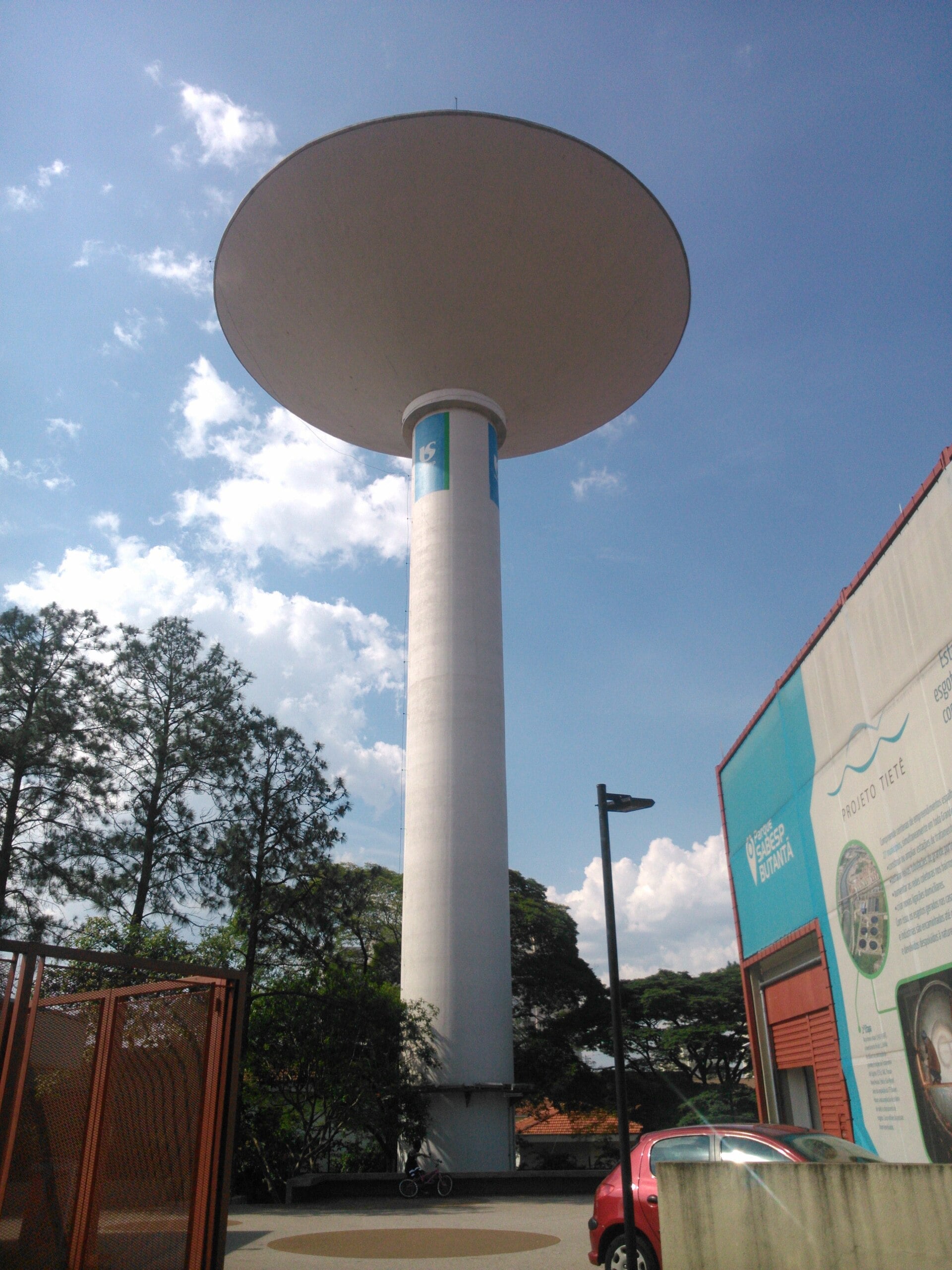
The state also says Sabesp invested about R$15 billion (about US$2.6 billion at 5.83 reais per dollar, RT, 26 November) after the sale in July 2024. Of that, R$10.4 billion (about US$1.8 billion) was spent from January to September 2025, up 151%, the state says.
The 15% comparison is against a hypothetical tariff, what a state-run Sabesp would have charged, so it cannot be checked against a bill. No consumer group or independent analyst is quoted in the state’s remarks, and the figures come from the state, which also manages the fund.
The fund is run by a council chaired by the same environment secretary, Resende, with the state finance and partnerships-in-investments secretaries and two members the governor picks. The state’s 25 November remarks, as quoted, give no tariff figure and no balance for the fund.
Sabesp’s American depositary receipts (ADRs, certificates that let US investors hold its shares) trade on the New York Stock Exchange, so tariff politics in São Paulo reach US portfolios. Our report on Sabesp’s third-quarter results and on its redesigned water bill give the company side.
The state’s case rests on a counterfactual that only Arsesp’s own certification can settle. What to watch is whether the regulator publishes that certification, and whether the fund’s balance and payouts are disclosed.
More: Brazil news in English, every day from The Rio Times.
Frequently Asked Questions
What Is Fausp?
A São Paulo state fund set up by law in December 2023 to help pay for sanitation and keep tariffs down. The state environment secretariat runs it.
Does the Fund Mean Cheaper Water Bills?
The state says it helps hold tariffs below what they would otherwise be. That claim compares with a hypothetical state-run Sabesp, so a customer cannot check it on a bill.
Sources: São Paulo state government, remarks by Secretary Natália Resende, 25 November 2026; State of São Paulo, Law 17,853 of 8 December 2023 (Fausp); São Paulo Secretariat of Environment, Infrastructure and Logistics, tariff release, 2 December 2025; Arsesp tariff tables, 1 December 2025; Sabesp material-fact notice, 1 December 2025; RT, USD/BRL, 26 November 2026.
This article was produced by The Rio Times’ automated AI newsroom. Editorial responsibility: Matthias Camenzind, Publisher and Editor-in-Chief. The Rio Times also runs Ask Rio Times, which answers from 100,000+ of our own articles, the daily Latin America Power Map, and prediction-market odds on elections and markets.. How we use AI · Report an error
Living in or visiting São Paulo? See this month's events and our São Paulo city guide with rents, safety and upcoming concerts.
Brazil runoff, Sunday, October 25: Brazil runoff start time and results schedule. Latest: Brazil runoff polls, Flávio 51%, Lula 49%.