Peru Wants Life Terms for Gang-Linked Police
Peru already has a life-term law for officers who take part in killings, and the minister now wants it extended to those who join or arm gangs.

Security: Peru
Peru’s interior minister told lawmakers on Tuesday 24 November 2026 that he wants life in prison for police officers and soldiers who join criminal gangs or supply them with weapons. César Astudillo, who oversees the National Police, spoke to the Defence and Internal Order Committee of the Chamber of Deputies, the lower house of Peru’s new two-chamber Congress.
A law already imposes life terms in some cases, so the proposal would widen it rather than start it. For US companies and travellers in Peru, it shows how far the government is willing to go to discipline the officers they meet every day.
Key Facts
- Who. César Astudillo, Peru’s interior minister, who oversees the National Police.
- What. Life in prison for police and soldiers who join gangs or supply them with arms.
- Where. Defence and Internal Order Committee, Chamber of Deputies, Lima, 24 November 2026.
- Power Index. Peru ranks 5th of 14 in The Rio Times Latin America Power Index, with 53.9 points (November 2026 edition).
- As of. 25 November 2026, 07:44 GMT
Peru already has a life-term law for officers who take part in killings, and the minister now wants it extended to those who join or arm gangs.
Congress passed that law, Law 32735 of 2026, on 23 June 2026, when the previous, single-chamber Congress approved it with 52 votes in favour in the second round, according to El Peruano, the government’s official gazette. Because the Executive, meaning the president’s government, did not enact it within the constitutional deadline, Congress president Fernando Rospigliosi promulgated it on Monday 20 July 2026 under article 108 of the Constitution, El Peruano reported.
Law 32735 sets life imprisonment when an officer or soldier, as perpetrator, accomplice or instigator, takes part in a person’s death while helping a gang or an unauthorised armed group. A legal summary published on 21 July says the law sets prison terms of 20 to 30 years for other forms of collaboration with gangs.
The law also bars trying the same officer for the same facts in both the ordinary courts and the special military-police courts. Lawyer Yván Montoya, quoted in the same summary, says the law may be incompatible with the Constitution and with Inter-American human-rights standards.
A motion by four lawmakers, including Ruth Luque and Sigrid Bazán, to reopen the June vote was rejected with 58 votes against, 45 in favour and one abstention, according to El Peruano. The gazette’s account does not record their arguments.
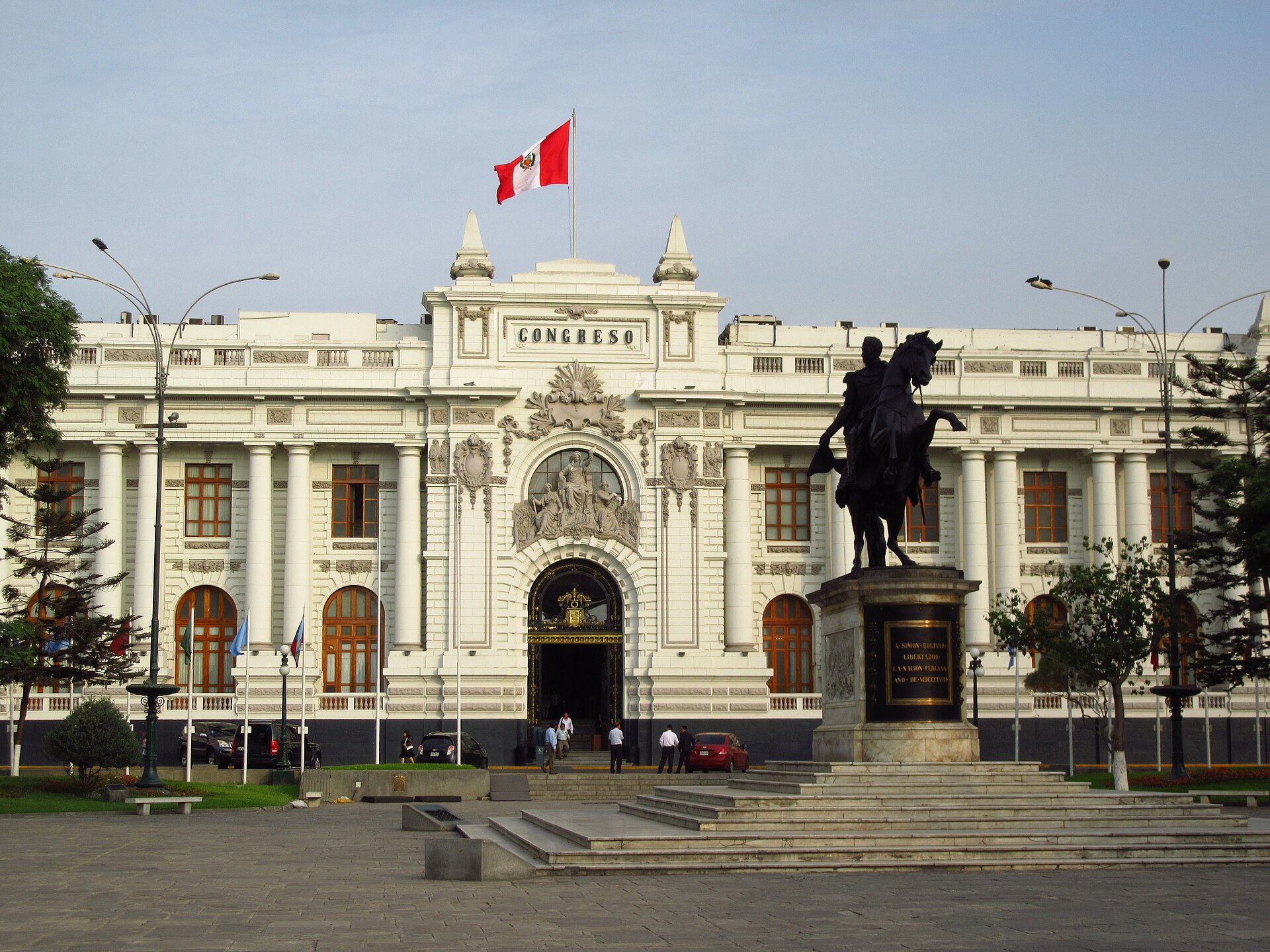
On Tuesday Astudillo went further than the law. “What we propose is life imprisonment for military and police personnel who join criminal organisations or who supply weapons, ammunition and explosives to criminal gangs,” he told the committee, in a translation of the Spanish published by El Peruano that evening.
He added that “in recent times we have identified several police officers involved in these criminal organisations”, and he framed the idea as a proposal for the committee to debate, not as a bill he had filed. He told legislators that those who disagree can raise their position and keep debating, and the proposal was left to the committee for evaluation.
Astudillo has pushed the idea for months. In early September he asked the same committee to resume debate on an initiative with the same penalty, saying that it “cannot be that whoever wears the uniform ends up committing crimes against the population he swore to defend”, as reported at the time.
On 25 September he said there would be no esprit de corps, meaning no loyalty among colleagues, with an officer who stains the uniform. He said the police Inspectorate General, its internal watchdog, had sent 260 case files on appeal to the Police Disciplinary Tribunal, a police disciplinary court, since 28 July 2026, El Peruano reported.
The proposal is part of a package to reform the National Police meant to restore discipline, public trust and institutional integrity. The minister said the officer profile “has to change”, with more technology knowledge and democratic values, and that the training curriculum must be strengthened.
The gazette’s report gives no bill number and no vote date, so it is not clear whether the ministry will send Congress a new bill or ask it to amend Law 32735. The 260 disciplinary files from late September give a sense of the scale of internal complaints, while any life sentence would apply only after a conviction in court.
Frequently Asked Questions
Is life in prison already law for police who help gangs in Peru?
In part. Law 32735 imposes it when an officer took part in a death while helping a gang, and the minister wants to widen it.
Is the new proposal a bill?
Not yet. The minister presented it to a committee as a proposal to debate, and no vote date has been published.
Sources
Congress of Peru, plenary vote of 23 June 2026 (El Peruano) and promulgation of 20 July 2026 (El Peruano); Law 32735, promulgated 20 July 2026 (El Peruano, the official gazette, legal summary); Ministry of the Interior, presentation to the Defence Committee, 24 November 2026 (El Peruano report); minister’s statements of early and late September 2026 (one, two, three).
More: Peru news
This article was produced by The Rio Times’ automated AI newsroom. Editorial responsibility: Matthias Camenzind, Publisher and Editor-in-Chief. The Rio Times also runs Ask Rio Times, which answers from 100,000+ of our own articles, the daily Latin America Power Map, and prediction-market odds on elections and markets.. How we use AI · Report an error