Paraguay Bank Lobby Chief Blames Ueno Merger
Paraguay’s banking lobby points at the regulator’s own 2024 decision, and a 2025 rating report shows the concessions that came with the merger.

Paraguay · Ueno Bank
Osvaldo Serafini, president of Asoban, the association of Paraguay’s banks, has named the “original sin” behind the collapse of Ueno Bank, a Paraguayan digital lender. He blamed regulators’ approval of its merger with Visión Banco, a bank it absorbed, in an interview published on 20 November 2026.
He named two sins: regulatory exceptions that distorted the bank’s solvency, and the later emptying of its assets. He also faulted credit-rating agencies and auditors for not warning loudly enough, while praising how quickly the financial system contained the damage.
Key Facts
- Who. Osvaldo Serafini, president of Asoban, the association of Paraguay’s banks.
- What. He calls approval of the Ueno Bank and Visión Banco merger the “original sin”.
- Why it matters. Days after Ueno failed, Paraguay’s Senate removed President Santiago Peña (6 November 2026).
- Power Index. Paraguay ranks 10th of 14 in The Rio Times Latin America Power Index, with 35.0 points (November 2026 edition).
- As of. Saturday 21 November 2026, 19:00 GMT
Paraguay’s banking lobby points at the regulator’s own 2024 decision, and a 2025 rating report shows the concessions that came with the merger.
On 27 May 2024 the central bank, the Banco Central del Paraguay (BCP), cleared the two banks to proceed with a full merger by absorption (filing with the Asunción stock exchange). The central bank approved the absorption itself on 21 June 2024.
FIX SCR, a credit-rating agency, rated Ueno AA-py, a high grade on Paraguay’s local scale, with a stable outlook on 14 October 2025. It noted that the merger came with “a series of facilities”, including deferral of the absorbed bank’s impaired loans (FIX SCR report).
The report put Ueno’s tangible capital at 6.1% of tangible assets and its total assets at about US$2.75 billion on 30 September 2025. It warned that a marked deterioration in performance, or weak control of the merger’s risks, could push the rating down.
Asoban says it saw trouble early, in a presentation reported on 20 September 2026 that did not name Ueno but whose details point to it. The association recalled its warning of June 2025 and said the latest audited accounts of the merged bank showed a markedly more strained capital and liquidity position.
It said that of every ten guaraníes (Paraguay’s currency) of balance-sheet growth, about nine came from other people’s money, with a heavy weight of public-sector deposits. Exposure to companies in its own business group reached 2.94 trillion guaraníes at the end of 2025 (about US$480 million at 6,081 per US$, the 20 November close), or 133% of effective equity.
Asoban asked President Peña and the central bank for written answers on each point and for a joint technical working group to protect the stability of the financial system. It also asked how exposure to related companies is counted in a bank’s effective equity, the regulatory measure of capital.
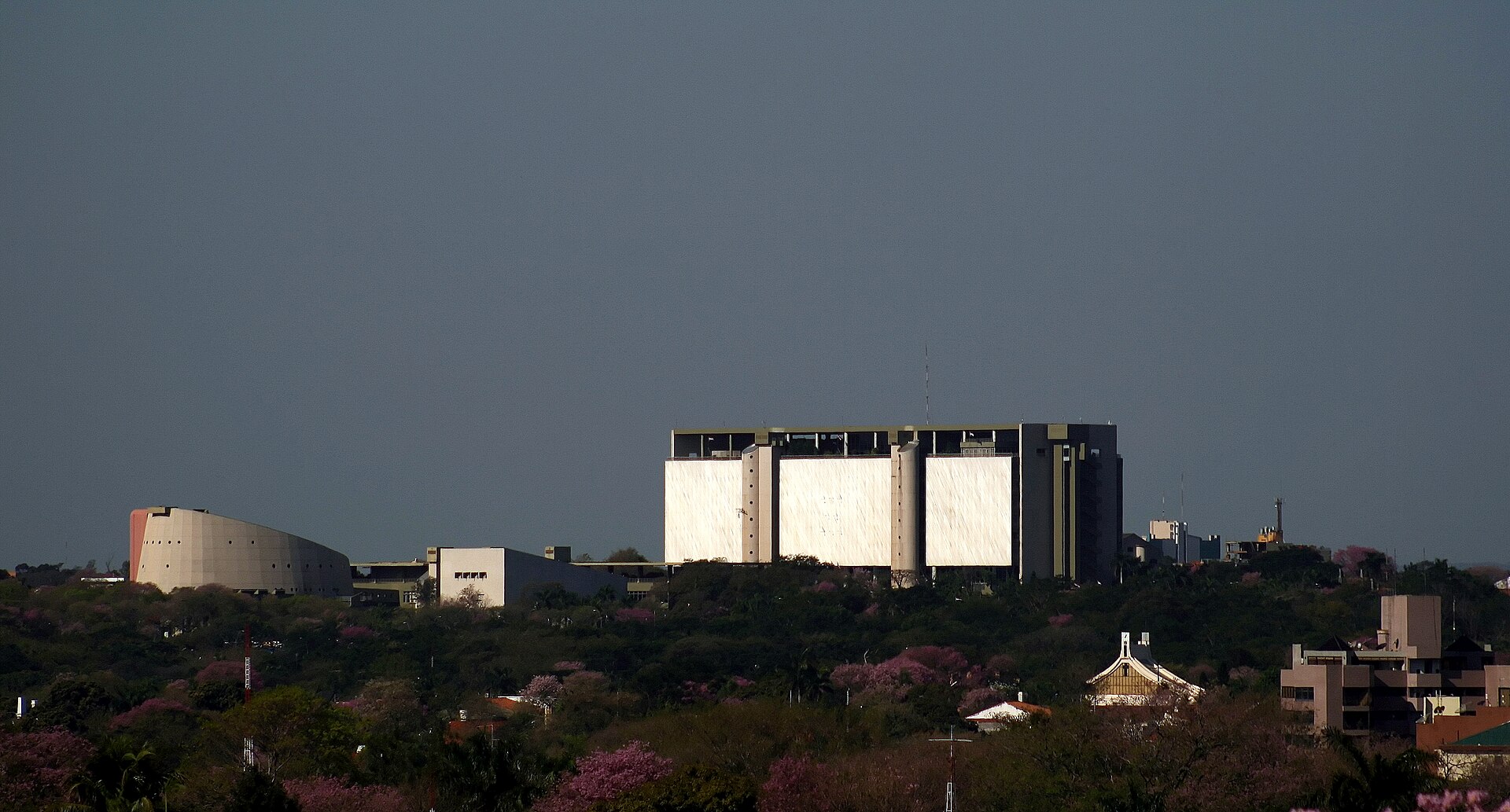
The central bank’s board decided on 2 November 2026 to start the resolution of Ueno, a supervised wind-down under the deposit-guarantee law. It acted after adjustments to the bank’s accounts left its solvency ratio below half the required minimum.
Four days later Paraguay’s Senate removed President Santiago Peña from office for “poor performance of duties”, the constitutional ground for impeachment. Serafini’s second sin, the emptying of assets, is now a criminal matter: prosecutors are pursuing former directors, the charges are allegations, and no one has been convicted.
Moody’s, a credit-rating agency that grades countries and companies, said in a 6 November report that the collapse exposed weak governance and weak controls on corruption. It also raised questions about the central bank’s independence; its chairman, Carlos Carvallo, who earlier headed Financiera Ueno, the bank’s predecessor, resigned after the intervention.
That is the strongest challenge to Serafini’s praise for the system’s response, yet Moody’s expected no immediate hit to Paraguay’s sovereign credit profile. It cited solid growth and public debt of about 38% of GDP.
For investors in Paraguayan assets, the live question is how the central bank handles concessions to other lenders from now on, since Moody’s anchors its view of the country on solid growth and low public debt. Which exceptions Serafini means is not spelled out in the account of his interview that has been published.
More: Paraguay news in English, every day from The Rio Times. Earlier in the case: former president Peña moved to a military prison and a former Ueno executive hands files to prosecutors.
Frequently Asked Questions
Who is Osvaldo Serafini?
He is the president of Asoban, the Paraguayan banks’ association, and speaks for the private banking sector. His view is one side of a debate about who failed Ueno’s savers.
Did regulators grant exceptions in the Ueno merger?
A rating report from 2025 shows at least one concession tied to the merger. Which others exist is still unclear.
Sources: Banco Central del Paraguay resolution of 27 May 2024, as filed by Visión Banco with the Bolsa de Valores de Asunción; FIX SCR rating report on Ueno Bank, 14 October 2025; Banco Central del Paraguay announcement of the Ueno resolution procedure, 3 November 2026; Moody’s report of 6 November 2026; Asoban’s presentation reported on 20 September 2026 and its president’s interview of 20 November 2026; RT guaraní close, 20 November 2026.
This article was produced by The Rio Times’ automated AI newsroom. Editorial responsibility: Matthias Camenzind, Publisher and Editor-in-Chief. The Rio Times also runs Ask Rio Times, which answers from 100,000+ of our own articles, the daily Latin America Power Map, and prediction-market odds on elections and markets.. How we use AI · Report an error