
MOROCCO · LANGUAGE GUIDE
Key Facts
- —What is happening Morocco has two official languages, Arabic and Amazigh, but most people speak Darija and 57.7 percent of literate adults read and write French (2024 census).
- —Why it matters A few Darija words and French as a fallback open markets, taxis and hotels, while Amazigh is spreading slowly into schools, offices and public life.
- —The numbers Darija is used by 91.9 percent and Amazigh by 24.8 percent of residents; 20.5 percent of literate people aged 10 and over read English (2024 census).
- —Who is who Darija is spoken Moroccan Arabic; Tashelhit, Tamazight and Tarifit are the main Amazigh varieties; IRCAM is the Royal Institute of Amazigh Culture.
- —What to watch Primary schools are targeted for full Amazigh teaching by 2029 to 2030, and the Amazigh New Year holiday falls next on Thursday, 14 January 2027.
- —What it means for you US citizens enter without a visa for under 90 days; greet in Darija, use French in hotels and insist on the taxi meter.
Arabic and Amazigh are the two official languages of Morocco. Daily life, however, runs on Darija and French.
This Morocco language guide explains that Arabic and Amazigh are official, Darija is spoken daily and French opens many doors. The 2024 census gives the latest official count of who speaks what.
US visitors can manage with French in hotels and on trains and a few Darija words in markets. Wider coverage sits on the Morocco page of The Rio Times.
The Morocco Language Map in Four Layers
Morocco has four layers of language: formal Arabic, spoken Darija, the Amazigh languages and French. Each layer has its own job in school, on the street and at work.
The High Commission for Planning (HCP), the state statistics office, counted residents on 1 September 2024. It published language tables on 17 December 2024, and the Morocco population guide covers totals and ethnic groups.
The percentages in those tables add up to well over 100 percent. Many Moroccans speak two or three languages, so one person can appear in several rows.
Official Languages Under the 2011 Constitution
Article 5 of the 2011 constitution says Arabic remains the official language of the State. It also says Tamazight, the Amazigh language, is an official language and a common heritage of all Moroccans.
The same article says the State will preserve Hassani, the Arabic dialect of the Sahrawi south, as part of Moroccan cultural unity. It also promises to promote the learning of the foreign languages most used in the world.
French therefore has no official status, yet it stays strong in business and tourism. The Morocco politics guide explains who sets the rules behind that gap between law and habit.

Darija, the Language of the Street
Darija is Moroccan Arabic, the spoken everyday language. The 2024 census found that 91.9 percent of residents use it, 96.3 percent in towns and 84.5 percent in the countryside.
Darija mixes Arabic with Amazigh, French and Spanish words, and it is mostly spoken rather than written. Formal Arabic, used in schools, news and official papers, is a different register.
Arabic is read and written by 99.2 percent of literate people aged 10 and over. Illiteracy among everyone aged 10 and over fell from 32.2 percent in 2014 to 24.8 percent in 2024.
Morocco’s digital ministry and the French firm Mistral AI unveiled AI tools adapted to Darija in September 2026. Le360 and The Rio Times covered the launch.
Amazigh, Three Main Varieties and One Script
Amazigh, also called Berber, covers several related languages that the census counts together. It found that 24.8 percent of residents use one, 19.9 percent in towns and 33.3 percent in the countryside.
The three main varieties are Tashelhit, mainly in the south west, Tamazight in the Atlas mountains and Tarifit in the north. The word Tamazight is used both for one variety and, in the constitution, for the whole language.
Organic law 26.16 set the rules for official Amazigh and appeared in the Bulletin officiel on 26 September 2019. Parliament chose Tifinagh as the script.
The census counted 1.5 percent who read and write Amazigh in Tifinagh, TelQuel reported, among literate people aged 10 and over. Tifinagh appears on some signs, but spoken Amazigh matters far more to a traveller.
AMREC, a Moroccan cultural association, disputed the Amazigh figure in a statement on 20 December 2024. It argues that the census undercounts speakers, especially in cities where people were classed as Darija speakers.
The Morocco culture guide covers the music, crafts and festivals tied to these languages. The Morocco history explainer covers the older roots.
French, Still Widely Used in Business and Tourism
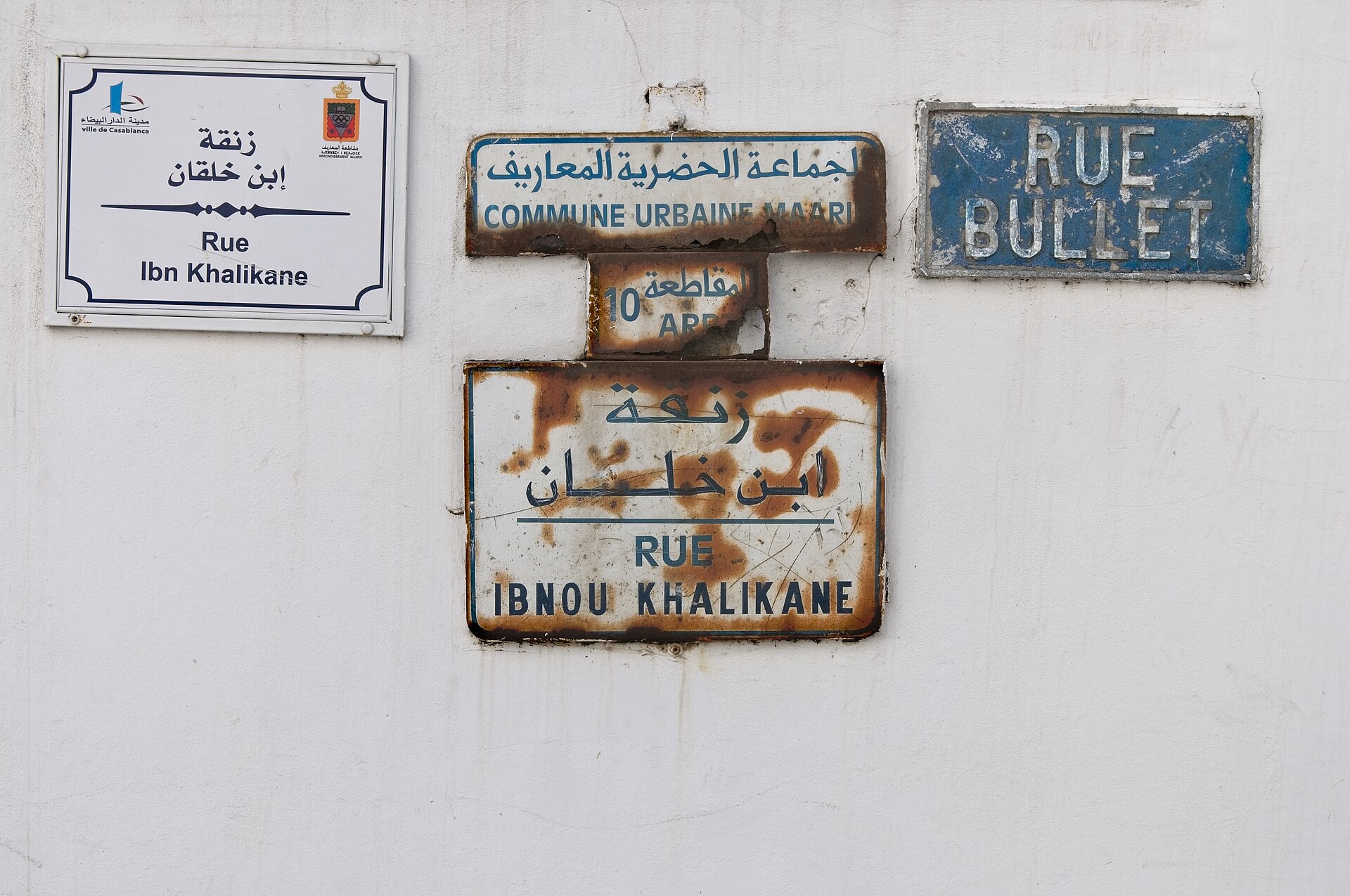
French has no official status, but 57.7 percent of literate people aged 10 and over read and write it, the census found. The share is 64.3 percent in towns and 42.1 percent in the countryside.
French literacy runs from 47.9 percent in Tanger-Tétouan-Al Hoceïma to 64.0 percent in Casablanca-Settat. The gap shows that French is a city and coastal habit more than a national one.
For a US visitor, French matters most in hotels, restaurants, pharmacies and train stations. Staff in the main cities often switch between Darija and French within one sentence.
A 2019 education framework law lets schools teach science and technical subjects in foreign languages, with priority for the two official ones. It does not name the foreign language, so each school chooses.
English, Spanish and Hassaniya
English is read and written by 20.5 percent of literate people aged 10 and over. The share is 25.2 percent in towns and 9.6 percent in the countryside, so English is easiest to find in cities.
Spanish is read and written by 1.2 percent of literate people aged 10 and over. It is a minor language nationally, so French is the safer fallback.
Hassaniya, an Arabic dialect, is used by 0.8 percent of residents, with higher shares in the southern provinces. Article 5 commits the State to preserving it.
Phrases for Markets, Taxis and Hotels
Greet first in Darija, then ask in French or English whether the person prefers another language. The spellings below are common Latin transliterations, because Darija has no single standard spelling.
- Salam alaykum hello; the reply is wa alaykum salam.
- Shukran thank you; La, shukran means no, thank you.
- Afak please.
- Wakha OK, agreed.
- Bshhal? how much?
- Ghali bzzaf too expensive.
- Safi enough, done; also used for OK.
- Bslama goodbye.
- Ma fhemtsh I do not understand.
- Azul and Tanmirt hello and thank you in Tashelhit, understood widely in Amazigh regions.
In markets, ask the price early with Bshhal and answer with a lower figure. Say La, shukran with a smile to end a pitch, and Safi to say you are done.
Conversions in this guide use the open.er-api.com rate of 17 October 2026, about 9.81 dirhams per US$. Prices in Morocco change, so treat every figure as dated.
Petit taxis are small metered city cabs, and the law requires the driver to start the meter once a passenger is aboard. TelQuel quoted a Marrakech user whose usual 10 dirham (about US$1.02) ride drew a 40 dirham (about US$4.08) quote without a meter.
Ask for the meter in French with Le compteur, s’il vous plaît before you get in. Agree the fare first if the driver refuses.
Many hotel and riad staff in the main cities speak French, and some speak English. Signs and menus are often in Arabic and French.
How Schools and Offices Are Changing
Organic law 26.16 required a full school rollout of Amazigh within five years of its September 2019 publication. Fifteen Amazigh associations sued the Prime Minister’s Office and the Education Ministry in Rabat over delays, Hespress reported on 4 July 2025.
Two ministerial memoranda of 23 May 2023 and 19 April 2024 push full primary coverage to 2029 to 2030, the lawsuit says. They set a target of 50 percent coverage for 2024 to 2025.
Three agreements signed on 22 July 2025 support translating 110 years of law into Amazigh by 2034, as organic law 26.16 requires. IRCAM, led by Ahmed Boukouss, is the reference body for Amazigh translation and signed two of them.
Digital Transition Minister Amal El Fallah Seghrouchni said 488 reception agents had been trained in Amazigh. She added that 11 call centres with 72 operators had been activated.
Yennayer, the Amazigh New Year, became a paid national holiday on 14 January each year under a decree confirmed in August 2023. King Mohammed VI first announced it in May 2023, and the next date is Thursday, 14 January 2027.
What It Means for US Readers
Morocco welcomed a record 19.8 million tourists in 2025, up 14 percent, the tourism ministry said in January 2026. Tourism receipts reached 124 billion dirhams (about US$12.6 billion) through November 2025.
US citizens need no visa for stays under 90 days, and the passport needs six months of validity, the State Department says. The page checked on 17 October 2026 still lists a Level 2 advisory, issued on 21 April 2025, that cites terrorism.
The US Consulate General in Casablanca handles consular services, while the embassy in Rabat does not. It also warns that most medical staff may have limited English, so a few French medical words or a translation app help.
Anyone planning a longer stay can read the Moving to Morocco paperwork guide before arriving. Arabic and French forms matter most there.
What Is Not Known
The census figures for French and English measure reading and writing among literate people, not spoken fluency. No official figure shows how many Moroccans can hold a conversation in either language.
AMREC and other Amazigh groups question the 24.8 percent figure, and the sources checked show no independent count. The census also does not say how many people use Amazigh at home but Darija at work.
Actual Amazigh teaching coverage in 2025 and 2026 is not published in the sources checked. No ministry reply to the Rabat lawsuit appeared there either.
The State Department page checked on 17 October 2026 showed an update from June 2025. Entry rules and advisories should be checked again before booking.
Frequently Asked Questions
What is the official language of Morocco?
Morocco has two official languages, Arabic and Amazigh, under Article 5 of the 2011 constitution. French has no official status but is widely used in business and tourism.
What language do Moroccans speak every day?
Darija, or Moroccan Arabic, is used by 91.9 percent of residents, the 2024 census found. Amazigh languages are used by 24.8 percent.
Do people in Morocco speak English?
English is read and written by 20.5 percent of literate people aged 10 and over. It is easiest to find in cities and tourist businesses, so French is the safer fallback.
Is French widely spoken in Morocco?
French is read and written by 57.7 percent of literate people aged 10 and over. It is common in hotels, restaurants and business, especially in the big cities.
What is the difference between Darija and Arabic?
Darija is the spoken Moroccan dialect of Arabic and is mostly not written. Formal Arabic is used in schools, news and official documents.
Which phrases should a US visitor learn first?
Start with Salam alaykum for hello, Shukran for thank you and Bshhal for how much. In Amazigh regions, Azul and Tanmirt earn a warm reply.
Sources: Constitution of Morocco 2011, Article 5; High Commission for Planning, 2024 census results; TelQuel, census language figures; Hespress, AMREC on the Amazigh figures; Medias24, organic law 26.16; Hespress, Amazigh associations sue over school rollout; TelQuel, translating legislation into Amazigh; TelQuel, Amazigh New Year holiday; Hespress, 2025 tourism figures; TelQuel, taxi fares and meters; US State Department, Morocco country information; Le360, Morocco and Mistral AI Darija tools; open.er-api.com exchange rates (all accessed 17 October 2026).
This article was produced by The Rio Times’ automated newsroom system. How we use AI · Report an error · Editorial responsibility: Matthias Camenzind, Editor-in-Chief
Part of our ongoing coverage
Africa: The New Scramble — the great-power contest over the continent.
Expat Guide to Morocco
What The Rio Times publishes for foreigners who live in or move to Morocco.
Start here
- Is Morocco Safe? Level 2 Advisory, Violent Crime Down 10%
- Best Places to Live in Morocco for Expats 2026, Ranked
- Renting in Morocco 2026: Leases, Deposits and Rents
- Open a Bank Account in Morocco as a Foreigner 2026
City guides
Coming up in Morocco
- U-17 Women's World Cup in Rabat-Salé: USA Opens 19 October 17 Oct
- Rabat Hosts Global Champions Tour Finals on 30 October 30 Oct
- Morocco's First Unity Day Holiday Is 31 October 2026 31 Oct
- French Star GIMS Plays Casablanca 7 November 7 Nov
Understand Morocco