MOROCCO · NEIGHBOURHOOD
Key Facts
- —What it is Morocco sits at the western edge of North Africa, bordered by Algeria, Mauritania and the Spanish enclaves of Ceuta and Melilla.
- —Why it matters The Morocco–Algeria rivalry and the Western Sahara dispute shape trade, migration and security across the whole Maghreb.
- —The numbers Morocco exported about US$338 million to Mauritania in 2023, up from US$208 million in 2018, according to a 2025 Policy Center for the New South study.
- —The catch The land border with Algeria has been closed since 1994, and Algeria severed diplomatic relations in August 2021.
- —What it means for you Foreigners and investors should treat the Maghreb as separate markets, not one integrated region, when planning trade, travel or logistics.
Morocco neighbours range from close partner Mauritania to rival Algeria, and the unresolved Western Sahara dispute still defines how the Maghreb works. Understanding these relationships explains why North Africa remains divided despite shared language, religion and geography.
Morocco is North Africa’s most outward-facing economy, with strong links to Europe and West Africa. This guide explains its borders, rivalries, trade routes, migration flows and regional institutions as they stand in 2026.
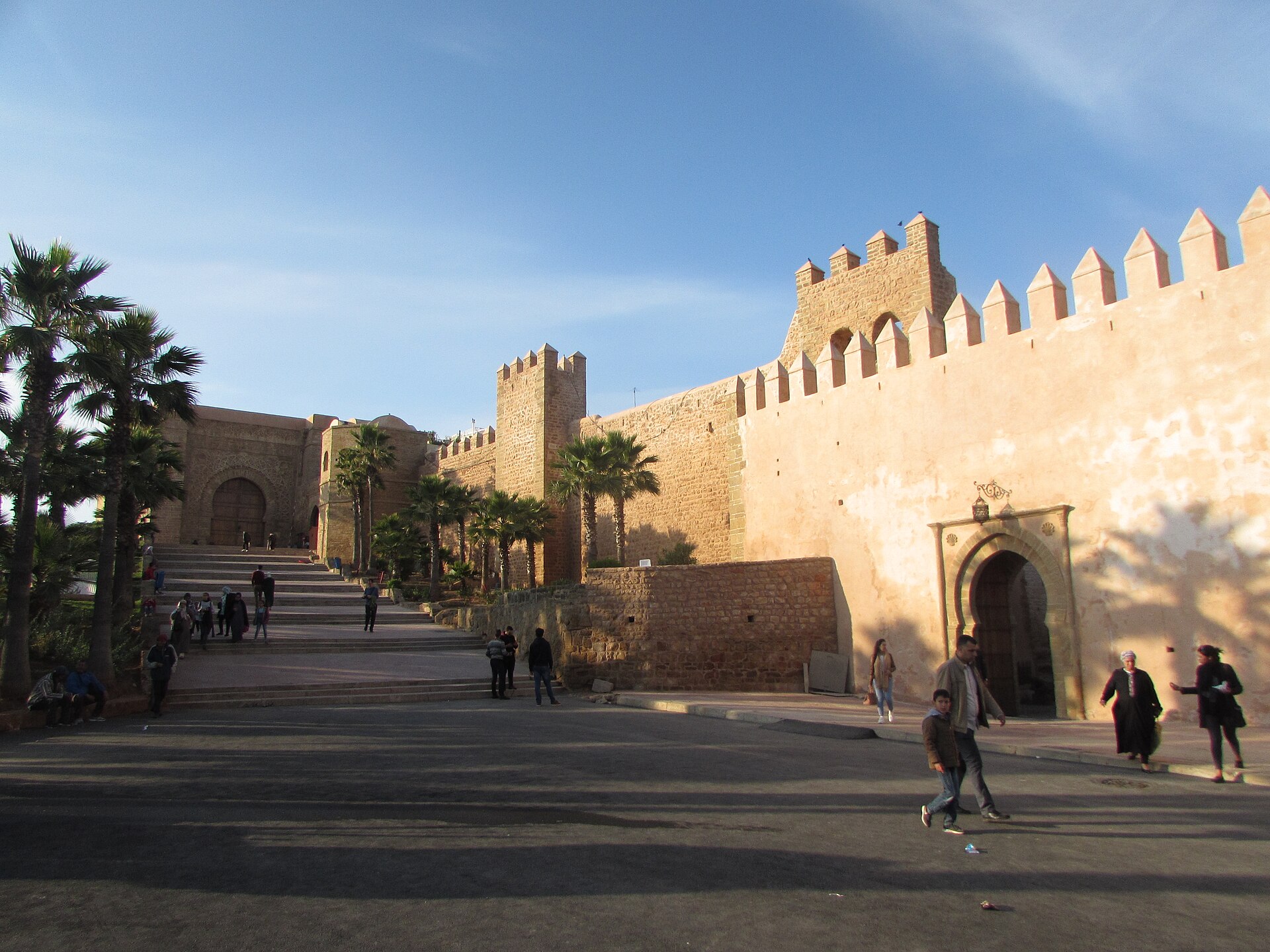
The Geography of Morocco’s Neighbourhood
Morocco occupies the northwestern corner of Africa. It faces the Atlantic Ocean to the west and the Mediterranean Sea to the north. Its land borders connect it to Algeria to the east and southeast, and to Mauritania through the territory of Western Sahara, which Morocco administers largely as the “Moroccan Sahara.” Spain also shares land borders with Morocco at the enclaves of Ceuta and Melilla, though Spain is a European rather than North African neighbour.
The legal status of Western Sahara remains contested. Morocco claims sovereignty and proposes autonomy under Moroccan sovereignty. The Polisario Front seeks independence. The United Nations continues to treat Western Sahara as a non-self-governing territory, and the UN Mission for the Referendum in Western Sahara, known as MINURSO, remains deployed. This dispute is the central issue structuring Morocco’s relations with both Algeria and Mauritania.
Morocco’s effective land access to Mauritania runs through the Guerguerat crossing in the southern part of Western Sahara near the Mauritanian border. The crossing is strategically important for trade with Mauritania and West Africa. Its status is politically sensitive because the Polisario Front contests Moroccan control of the territory. Any disruption at Guerguerat directly affects road freight between Morocco and sub-Saharan Africa.
Morocco and Algeria: The Region’s Defining Rivalry
The Morocco–Algeria relationship is the principal strategic fault line in the Maghreb. The two countries have not had normal relations for decades. The land border has been closed since 1994, and Algeria severed diplomatic relations in August 2021. Algeria subsequently closed its airspace to Moroccan aircraft. Morocco has not restored diplomatic relations as of October 2026.
The rivalry has deep roots. It stems from the Western Sahara dispute, the 1963 Sand War, competition for regional influence, and rival approaches to relations with the Sahel, Europe and the Gulf states. Both sides have exchanged accusations involving security, terrorism, espionage and support for separatist movements. These are allegations, not established facts, but they frame how each country views the other.
The two states now represent contrasting regional models. Morocco is an Atlantic-facing economy with strong links to Europe and West Africa. It uses ports, logistics, banking, telecommunications and investment as regional instruments. Algeria is a hydrocarbon exporter with major gas reserves and greater military weight. It uses energy supplies, state diplomacy and security influence. Morocco seeks international support for its Western Sahara autonomy proposal, while Algeria supports the Polisario Front and advocates Sahrawi self-determination.
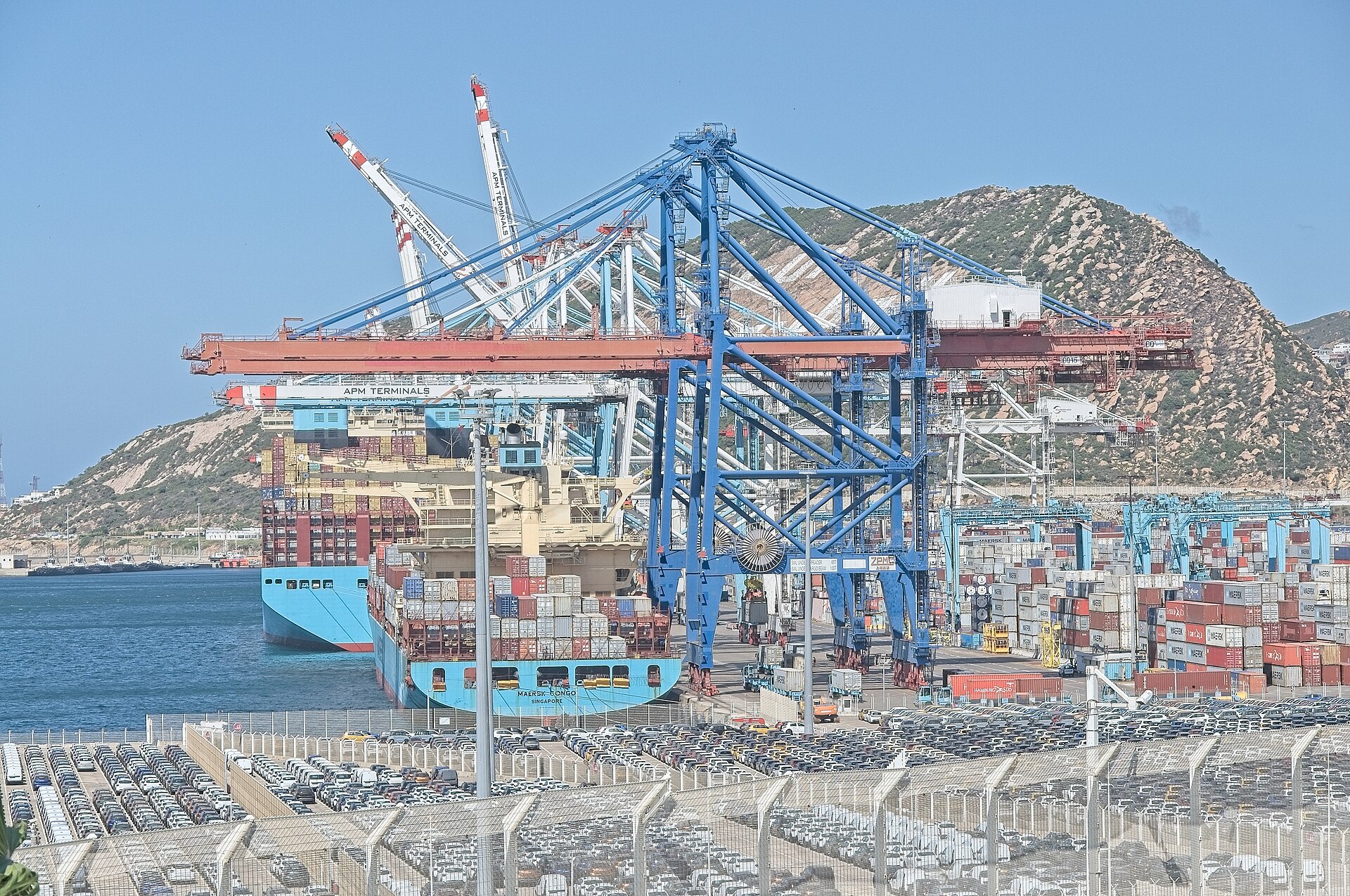
A 2026 analysis by Spain’s Institute for Strategic Studies described the breakdown in Morocco–Algeria relations as intensifying competition and reviving a regional “axis” dynamic. It also identified Mauritania as a country sought by both Rabat and Algiers. The rivalry is not an active conventional war, but it has practical effects: no bilateral land trade corridor, no direct energy or electricity integration, competing infrastructure proposals toward Mauritania and the Sahel, and rival diplomatic campaigns over Western Sahara.
For investors, the rivalry means the Maghreb is not a single integrated market. Morocco and Algeria are large but largely separate economic systems. Transport, energy and security planning must account for the closed border. A company cannot easily serve both markets from one hub.
Morocco and Mauritania: Cautious Partnership
Mauritania is Morocco’s most important immediate southern neighbour and an increasingly valuable strategic partner. The relationship is based on trade through Guerguerat, road transport, agricultural and fisheries links, Moroccan investment and banking activity, and cooperation in education, religion and training. Both countries share an interest in Atlantic infrastructure.
The commercial numbers tell a clear story. Morocco’s exports to Mauritania reached approximately US$338 million in 2023, up from about US$208 million in 2018, according to a 2025 Policy Center for the New South study citing trade data. The study said Morocco represented about 19% of Mauritania’s trade with Africa. Morocco and Mauritania signed an electricity-interconnection agreement in January 2025, intended to connect the two national grids and form part of a wider Atlantic–West Africa energy corridor.
The relationship is cooperative but not an alliance. Mauritania has repeatedly sought to avoid taking sides in the Morocco–Algeria rivalry. It maintains its own position on Western Sahara and is sensitive to any development that could undermine its territorial security or economic access. Mauritania benefits from competition between the two northern neighbours. It can seek Moroccan investment, Algerian energy and infrastructure cooperation, and international support without formally aligning with either side.
Morocco and Tunisia: Limited Alignment, Practical Cooperation
Morocco and Tunisia do not share a border, but both belong to the Arab Maghreb and maintain diplomatic, commercial and people-to-people links. Their relationship is less strategically intense than Morocco’s relationship with Mauritania and less antagonistic than its relationship with Algeria. Key areas include tourism, education, services and investment, labour mobility, and trade in manufactured and agricultural products.
Tunisia has traditionally tried to avoid taking a clear side in the Western Sahara dispute. This balancing became more difficult after Tunisia hosted Polisario leader Brahim Ghali at the Tokyo International Conference on African Development in August 2022. Morocco recalled its ambassador and temporarily downgraded relations. Diplomatic ties were later restored.
Tunisia is economically more dependent on European markets and financing than Morocco, while Morocco has a larger export-manufacturing base and stronger West African commercial presence. Tunisia’s advantages include its proximity to Italy, established industrial capabilities, human capital and a central Mediterranean position.
Morocco and Libya: Limited Direct Ties
Morocco has no common border with Libya, but it has played a diplomatic role in Libyan peace efforts. The most important Moroccan initiative was the Skhirat Agreement, signed in December 2015 under UN auspices. It created the framework for Libya’s Government of National Accord, although the agreement did not end Libya’s institutional division.
Morocco has generally presented itself as a neutral facilitator rather than a military patron of one Libyan faction. It hosted talks involving Libyan institutions, including discussions between the House of Representatives and the High State Council. Relations are constrained by Libya’s continuing institutional division, competition between foreign sponsors, security risks, limited direct trade, and the absence of a shared border.
Moroccan citizens also work and reside in Libya, and Morocco has concluded social-protection and social-security arrangements affecting migrant workers.
Trade: A Commercially Under-Integrated Neighbourhood
Morocco’s trade with its immediate Maghreb neighbours is much smaller than its trade with Europe. The principal reasons are the Morocco–Algeria border closure, weak Maghreb-wide customs integration, political disputes, inadequate east–west rail and road connectivity, currency and regulatory differences, security conditions in Libya and the Sahel, and Morocco’s stronger commercial orientation toward the EU and West Africa.
Morocco’s most important regional trade route is southward through Mauritania rather than eastward through Algeria. Morocco exports food products, manufactured goods, pharmaceuticals, construction materials, electrical products and consumer goods to Mauritania and other West African markets. The Arab Maghreb Union, created in 1989 by Morocco, Algeria, Tunisia, Libya and Mauritania, has largely ceased to function as an engine of economic integration. The organization has not overcome the Western Sahara dispute or the Morocco–Algeria rupture.
This institutional paralysis contrasts with Morocco’s active participation in other frameworks: the African Union, the African Continental Free Trade Area, the Arab League, the Organisation of Islamic Cooperation, Atlantic African cooperation initiatives, bilateral EU and European trade arrangements, and Mediterranean and Euro-African migration and security partnerships. Morocco therefore leads regionally through bilateral and extra-regional relationships rather than through a functioning Maghreb bloc.
Migration and Mobility Across Borders
Morocco is simultaneously a country of emigration, a transit country toward Europe, a destination for migrants from sub-Saharan Africa, and a security partner for Spain and the European Union. Morocco’s northern and Atlantic coasts are major routes toward Spain, including the Strait of Gibraltar, the western Mediterranean and the Atlantic route toward the Canary Islands. Morocco also faces pressure around Ceuta and Melilla.
The Moroccan Interior Ministry reported that authorities blocked 73,640 irregular migration attempts in 2025, dismantled more than 300 smuggling networks and rescued 13,595 migrants at sea. Morocco has pursued a policy combining border enforcement with selective regularization and migrant integration measures.
Morocco is particularly important to Spain and the EU because it can influence departures toward Europe. That gives Rabat bargaining power in negotiations over trade, fisheries, visa policy, development funding, security cooperation and Western Sahara. Migration cooperation is not a formal substitute for a Maghreb-wide mobility regime. Movement among North African countries remains uneven.
The Atlantic Initiative and the Sahel
Morocco has promoted an Atlantic Initiative offering Sahel states access to Atlantic ports and trade routes. The initiative is designed to connect landlocked countries, including Mali, Burkina Faso, Niger and Chad, with Moroccan and West African maritime infrastructure. For Morocco, this serves several objectives: diversifying trade away from the European market, positioning Moroccan ports as gateways to the Sahel, expanding the role of Moroccan banks, telecom operators and logistics companies, building diplomatic support among African states, counterbalancing Algeria’s influence in the Sahel, and supporting Morocco’s broader claim to be a bridge between Europe and sub-Saharan Africa.
The main limitation is that the proposed corridor depends on security, customs, road and financing conditions across several politically unstable countries. It is therefore a strategic framework rather than a fully operational regional transport system. As of October 2026, the initiative remains a work in progress rather than a completed network.
What This Means for Foreigners and Investors
For a foreigner living in or visiting Morocco, the neighbourhood shapes daily realities. Travel to Algeria is effectively impossible by land and complicated by air. Travel to Mauritania is possible by road through Guerguerat, but the route passes through a politically sensitive area. Travel to Spain is easy by ferry or air, but migration controls at Ceuta and Melilla are strict.
For investors, the key lesson is that the Maghreb is not one market. Morocco and Algeria are separate economic systems with no bilateral land trade corridor and no direct energy integration. A business strategy built on serving the whole Maghreb from one hub will fail. Instead, investors should treat Morocco as a gateway to West Africa and Europe, with Mauritania as the most practical southern partner.
The Western Sahara dispute remains the single most important political risk. It affects diplomatic relations, trade routes, infrastructure planning and international partnerships. Any investor with exposure to Moroccan logistics, fisheries, phosphates or infrastructure should understand the dispute and monitor developments at Guerguerat and in UN diplomacy.
What to Watch
Several developments will shape Morocco’s neighbourhood in the coming years. First, watch whether the Morocco–Algeria border remains closed and whether diplomatic relations are restored. Any change would transform regional trade and investment. Second, watch the Guerguerat crossing and the Western Sahara diplomatic campaign. Morocco has gained international support for its autonomy proposal, but the dispute is not resolved.
Third, watch the electricity-interconnection agreement with Mauritania signed in January 2025. If implemented, it could create a real Atlantic energy corridor. Fourth, watch the Atlantic Initiative for the Sahel. Its success depends on security and financing conditions in several unstable countries. Fifth, watch migration flows toward Spain and the EU, which give Morocco leverage in negotiations over trade, visas and Western Sahara.
Frequently Asked Questions
Which countries border Morocco?
Morocco borders Algeria to the east and southeast, Mauritania through the territory of Western Sahara, and Spain through the land borders at Ceuta and Melilla. It also faces the Atlantic Ocean to the west and the Mediterranean Sea to the north.
Why is the Morocco–Algeria border closed?
The land border has been closed since 1994 due to political tensions, and Algeria severed diplomatic relations in August 2021. The Western Sahara dispute, the 1963 Sand War and competition for regional influence are the main causes.
Is Mauritania a friend or rival of Morocco?
Mauritania is a cautious partner. Morocco’s exports to Mauritania reached about US$338 million in 2023, and the two countries signed an electricity-interconnection agreement in January 2025. But Mauritania avoids taking sides in the Morocco–Algeria rivalry.
What is the Western Sahara dispute?
Morocco claims sovereignty over Western Sahara and proposes autonomy under Moroccan sovereignty. The Polisario Front seeks independence. The United Nations treats Western Sahara as a non-self-governing territory, and MINURSO remains deployed.
Can you travel by land from Morocco to Mauritania?
Yes, the main route runs through the Guerguerat crossing in the southern part of Western Sahara near the Mauritanian border. The crossing is strategically important for trade but politically sensitive because the Polisario Front contests Moroccan control of the territory.
Is the Maghreb a single market?
No. The Arab Maghreb Union, created in 1989, has largely ceased to function as an engine of economic integration. Morocco and Algeria are large but largely separate economic systems, and transport, energy and security planning must account for the closed border.
Sources: defensa.gob.es, hcp.ma, hcp.ma, policycenter.ma, moroccodailyherald.com, mixedmigration.org. Retrieved 2 October 2026.
This article was produced by The Rio Times’ automated newsroom system. How we use AI · Report an error · Editorial responsibility: Matthias Camenzind, Editor-in-Chief
Read More from The Rio Times