Moving to Morocco and the paperwork that decides everything else
Morocco · Relocation
Key Facts
- —How long you can simply stay Morocco allows a tourist stay of up to three consecutive months in any six months. After that a residence card is compulsory.
- —Where you apply In person at the central police station, the police prefecture or the royal gendarmerie for where you live.
- —What you can own A foreigner may buy urban property freely. Agricultural land has been closed to foreigners since 1973.
- —What buying costs Registration duty, land registry and notary fees together run somewhere between 6 and 10 per cent of the price.
- —The language that works French runs business, administration and the schools. Darija is the street. English will not get you through a government counter.
- —The catch Money leaves Morocco only if it arrived as foreign currency through a bank. Ordinary dirhams never become convertible.
Ninety days is free and simple. What follows is a residence card from the police, and a bank account whose form decides whether money can ever leave.
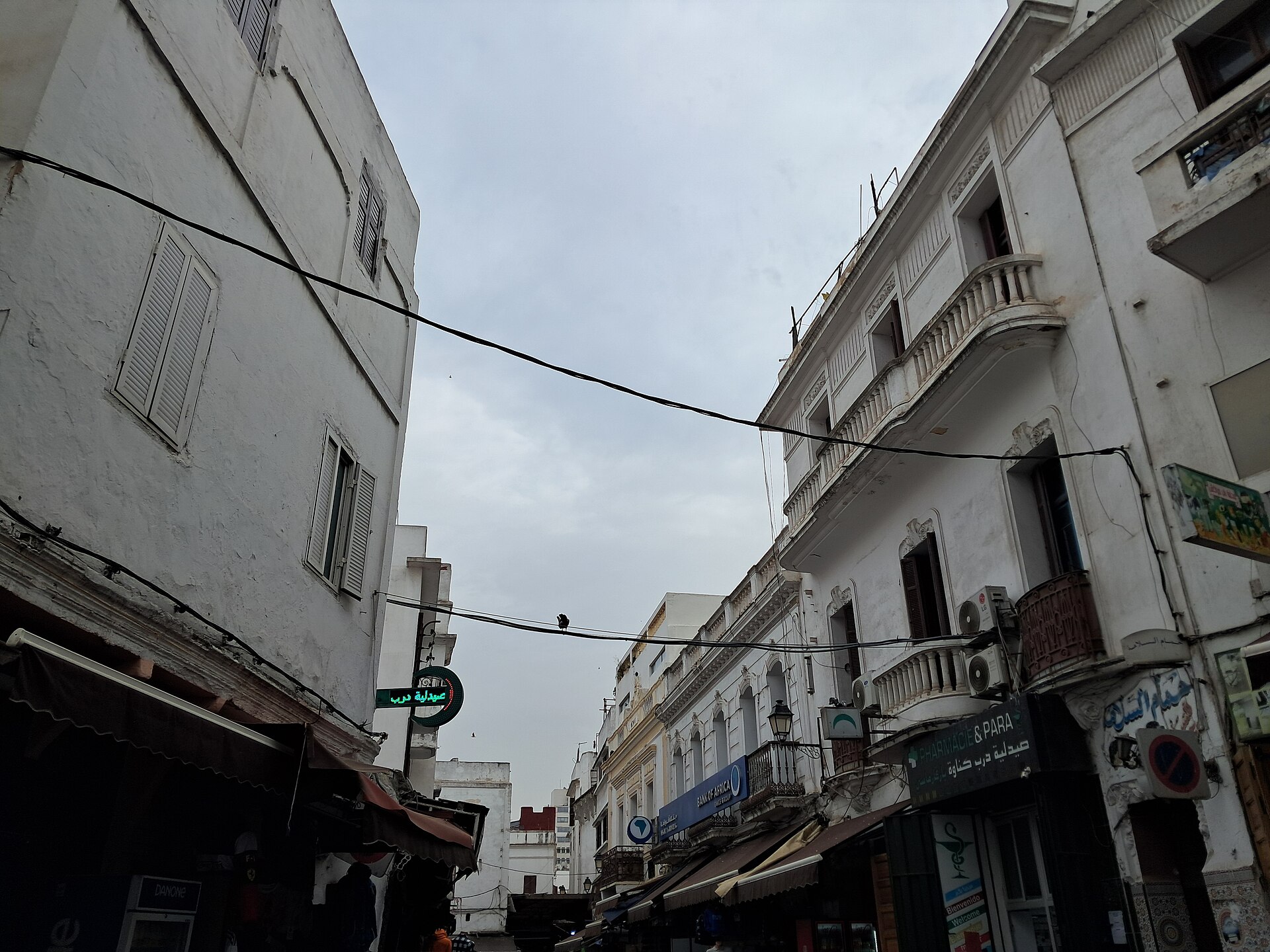
Moving to Morocco is easy for ninety days and a bureaucratic exercise after that. The line between the two is a card issued by the police.
Everything else hangs off that card. The furniture, the car, the dog and the bank account all wait behind it.
All dirham figures below convert at 9.4596 dirhams (about US$1), the mid-market rate on 17 September 2026. Dated figures carry their date.
Ninety days, and what happens on day ninety-one
A long list of nationalities enters Morocco without a visa, including most of western Europe and North America. The authoritative list is the Moroccan consular services portal, and it is the one to check.
The rule underneath all of it is stated plainly by the French embassy. A tourist stay cannot exceed three consecutive months in any six-month period.
Past that, a residence card is mandatory rather than optional. There is no long-stay tourist status and no quiet extension at the airport.
The card, the prefecture and the wait
The document most foreigners hold is the carte d’immatriculation. It is issued for between one and ten years and is renewable for the same period.
It lapses after six months of absence from Morocco. Moving to Morocco part-time is not what this card is designed for.
After four or more years of continuous residence a second document exists, the carte de résidence. It is also granted to spouses of Moroccan nationals and to certain family members.
Applications are made in person. The place is the central police station, the police prefecture, or the royal gendarmerie for where you live.
The file runs to a legalised passport copy, eight photographs taken within three months, and proof of your address. A lease, a utility bill or a hosting attestation will serve.
It also needs a medical certificate, proof of means, and a criminal record extract from your country of origin. Renewals substitute a Moroccan extract.
The fee is modest and is paid locally. You are given a récépissé, an interim receipt, and the card itself follows some weeks later.
Minors under eighteen whose parent holds a permit get a document de circulation. Common-law unions are not recognised, so an unemployed partner cannot obtain a card of their own.
The five boxes you can be put in
Moroccan law on foreigners, Law 02-03, provides five mentions a card can carry. They are visitor, student, work, family regrouping, and long-term treatment.
There is no statutory mention for a retiree or an investor. Issuance can also be conditioned on holding a long-validity visa bearing the matching mention.
Only foreigners aged sixteen to eighteen declaring an intention to settle receive a card as of right. Every other category is discretionary, and turns on documented means.
Getting your furniture into the country
Moroccan customs publishes a relocation franchise for household goods. Whether a non-Moroccan on first installation qualifies on the same terms as a returning Moroccan is not established.
Anyone moving to Morocco with a container should know the mechanism regardless. It is a one-time allowance per family, and the import must coincide with the change of residence.
Goods arrive in one shipment, or at most two through the same customs office within six months. The paperwork is a certificate of change of residence and a dated, signed inventory.
Used furniture and clothing in current use come in duty-free, with one household appliance per category. Family gifts are allowed up to 30,000 dirhams (about US$3,171).
Used tools and working materials are capped at 150,000 dirhams (about US$15,857). New furniture, carpets, televisions, new appliances and motorcycles are excluded.
The car, the dog and the driving licence
The car has its own regime. Temporary admission allows a foreign-plated private vehicle 180 days per calendar year, continuous or split, for strictly personal use.
Unused days do not carry forward. Before the period ends the car must leave or be cleared by paying duty.
Overstaying is priced from 1,000 dirhams (about US$106) for up to 30 days to 10,000 dirhams (about US$1,057) beyond 180 days. The bands between are 2,500 dirhams (about US$264) and 5,000 dirhams (about US$529).
Customs publishes a calculator rather than a rate, so duty on a permanent import is quoted case by case.
Pets travel on a tight clock. The microchip or tattoo must be applied before the rabies vaccination, not after.
The international health certificate for dogs and cats runs to four pages, and all four are required. It is issued within five business days of export.
A foreign driving licence, by contrast, gives you a year. The exchange must be made within twelve months of establishing residence, at a road safety agency centre.
The file wants a valid residence permit, the original licence, a translation where needed, two photographs and a medical certificate.
The cost is 700 dirhams (about US$74), stamps included, and processing runs 30 to 60 days. A provisional permit valid 60 days covers the gap.
Reciprocity is not universal. The named countries include France, Spain, Italy, Portugal, Belgium, Switzerland, Turkey, Japan and Poland.
Renting first, and then the notary
Most people rent before they buy, and the lease does double duty. It is also the proof of address the prefecture asks for.
On buying, the rule is short. A foreigner may buy urban property freely, while agricultural land has been closed to foreigners since 1973.
That bar covers individuals and any company not wholly Moroccan-owned. The route around it is an administrative conversion called the VNA, for vocation non agricole.
A provisional VNA is granted on a concrete project, and a definitive one follows once a commission verifies it is built. A complete file usually takes under two months.
A purchase of registered property runs through a notaire, who draws the acte de vente. Registration then passes through the Conservation Foncière, the land registry.
Costs are disputed between the published guides. One 2026 breakdown gives registration duty around 4 per cent and land registry 1 to 1.5 per cent.
Another, from October 2025, puts registration at 3 to 6 per cent. Totals of 6 to 8 per cent and of 8 to 10 per cent are both published.
Treat 6 to 10 per cent of the price as the planning range. Fixed stamps of about 500 dirhams (about US$53) sit on top.
The account that decides whether money can leave
This is the most consequential thing a newcomer gets wrong. Morocco distinguishes ordinary dirhams from convertible dirhams, and the difference is permanent.
A convertible dirham account is funded by selling foreign currency, by transfer from another convertible account, or by investment deposits. It cannot be credited from a resident-to-non-resident payment.
Money that enters as ordinary local dirhams never becomes convertible. The rules also require a foreign investment to have been financed in foreign currency.
So convertibility out of Morocco is decided the day you bring money in. Bring it through a bank, in foreign currency, and keep every certificate.
Cash has separate border rules. Moving 100,000 dirhams (about US$10,571) or more must be declared, and failing to declare an export costs half the undeclared amount.
Doctors, schools and the bill for both
Employment brings social security through the CNSS and health cover through AMO. The published 2024 table totals 21.09 per cent from the employer and 6.74 per cent from the employee.
Care splits in two. Public university hospitals carry the teaching and the complex cases, while private clinics take most routine work and invoice the patient.
AMO reimburses a share rather than the whole. What an individually insured foreigner pays is not published, and nor is whether employment enrols you automatically.
Schooling is why many families choose Morocco at all. The French network has 44 accredited establishments and around 49,000 pupils, nearly 70 per cent of them Moroccan.
The 2025 baccalauréat pass rate across the network was 99.2 per cent. Four structures run it, including the state agency AEFE.
Where to live and which language gets you through
The cities do different jobs. Casablanca is the commercial capital and Rabat the administrative and diplomatic one.
Marrakech runs on tourism and Tangier on the port and the Tanger Med industrial zone. Agadir and Essaouira are the coastal options.
Language is what newcomers underestimate. French is the working language of business, administration and the school network.
Darija, Moroccan Arabic, is the street language, and a former education minister put the share speaking it at 92 per cent. The 2024 census found 24.8 per cent of people using Amazigh languages daily.
That is 33.3 per cent in rural areas and 19.9 per cent in cities. English is growing in tourism, but it is not the language of a prefecture counter.
Mobile service is a real three-way market. In the second quarter of 2025 Orange held 34.7 per cent, Inwi 33.2 and Maroc Telecom 32.1.
That was across 58.75 million active subscriptions in June 2025. Water and electricity come from regional distributors such as Lydec, Redal and Amendis.
What the tax year looks like once you stay
Moroccan tax residence is decided by three tests applied in order. A permanent home in Morocco, then the centre of economic interests, then more than 183 days in any 365.
Residents are taxed on worldwide income. Non-residents are taxed only on Moroccan-source income, and that is the whole of the difference.
The 2026 scale exempts the first 40,000 dirhams (about US$4,228) of annual taxable income. The next band, to 60,000 dirhams (about US$6,343), is taxed at 10 per cent.
It then runs at 20 per cent to 80,000 dirhams (about US$8,457) and 30 per cent to 100,000 dirhams (about US$10,571). The 34 per cent band reaches 180,000 dirhams (about US$19,028).
Above that the rate is 37 per cent, a level many expatriate salaries pass. Foreign pensions and foreign investment income fall inside the net once you are resident.
The order to do it in
Moving to Morocco works when the steps are taken in sequence. Rent first, because the lease is the proof of address for the card.
Apply for the card inside the ninety days, not on day ninety-one. The récépissé is what keeps you lawful while the card is made.
Open the bank account in the right form and fund it in foreign currency from abroad. Keep the certificates in the same folder as the lease.
Ship the household goods to arrive with the change of residence, and confirm eligibility with customs first. Exchange the driving licence inside the twelve months.
Then learn enough French to hold a conversation at a counter. That one thing will shorten every queue you stand in for the next ten years.
More: Africa coverage, every day from The Rio Times.
Sources: La France au Maroc on the three-month rule and the residence permit, GADEM on the five residence-card categories under Law 02-03, Moroccan customs on the relocation franchise and vehicle temporary admission, USDA APHIS on the health certificate for pets entering Morocco, Demarches Maroc on exchanging a foreign driving licence, Investir au Maroc on converting agricultural land under the VNA, Masaken on Moroccan notary and registration costs, The Office des Changes on convertible dirham accounts, CLEISS on Moroccan social security and health contributions, PwC on Moroccan tax residence and the 2026 income tax scale
This article was produced by The Rio Times’ automated newsroom system. How we use AI · Report an error
Read More from The Rio Times