Moody’s Keeps Eswatini Rating, Warns on Debt
A credit rating is a grade for how safely a government repays its debts. Eswatini keeps its grade, but the agency has raised its debt forecast.
Moody’s Ratings, the US credit rating agency, has affirmed Eswatini’s sovereign rating at B2 with a stable outlook, in a recent rating action. B2 sits below investment grade, the category for borrowers that carry a higher risk of default.
It is the grade Moody’s gave in November 2024 when it lifted the small southern African kingdom from B3. What has changed is the debt forecast: Moody’s now expects government debt to settle at 50% to 52% of GDP (gross domestic product, the size of the economy) over 2026 to 2028, higher than it projected at the upgrade.
Key Facts
- Who Moody’s Ratings affirmed Eswatini, a small kingdom in southern Africa, at B2.
- Outlook Stable, meaning no change in the rating is expected in the near term.
- Debt Moody’s expects government debt at 50% to 52% of GDP over 2026 to 2028.
- As of Friday 27 November 2026, 05:00 GMT

ESWATINI · ECONOMY · BRIEF
A credit rating is a grade for how safely a government repays its debts. Eswatini keeps its grade, but the agency has raised its debt forecast.
Moody’s said in its rating action that the country’s small economy, high income inequality and weak institutions and administration limit how well it can absorb shocks and push through reforms. It said these weaknesses are offset by the kingdom’s close economic and financial ties to South Africa.
Those ties run through the Common Monetary Area, which links Eswatini’s currency, the lilangeni, to the South African rand, and the Southern African Customs Union, a trade bloc that shares tariff revenue among its members. Moody’s counts both as support for the rating.
The pressure comes from large budget deficits. Moody’s says the government raised public-sector pay and allowances in 2024/25 and sped up capital spending, including an international convention centre and a strategic fuel reserve.
Moody’s expects the deficit to stay around 6% of GDP, driven by a bigger wage bill that includes back pay and by higher interest costs. The agency said the government’s ability to contain spending will be central to keeping its creditworthiness.
The International Monetary Fund (IMF), the global lender that reviews member economies, drew a similar picture after a mission to Mbabane, Eswatini’s capital, that ended on 5 August 2026. “The fiscal deficit rose sharply in FY25/26 to 6.1 percent of GDP from 1.1 percent the previous year, largely reflecting public wage increases and higher public investment,” said Xiangming Li, who led the mission.
The IMF puts public debt at 44.7% of GDP at the end of the 2025/26 financial year and expects 50% a year later. The government’s Medium-Term Fiscal Framework, its multi-year budget plan approved by the Cabinet of ministers, plans a 6.2 percentage-point improvement in the budget balance, excluding interest and customs-union revenue, through the 2031/32 financial year.
Moody’s stable outlook rests on one assumption: that the government resumes consolidation, meaning deficit cutting, in the 2027/28 financial year under that framework. The agency warned that failure to rein in deficits would lift debt further, narrow the government’s room to act and weaken its credit profile.
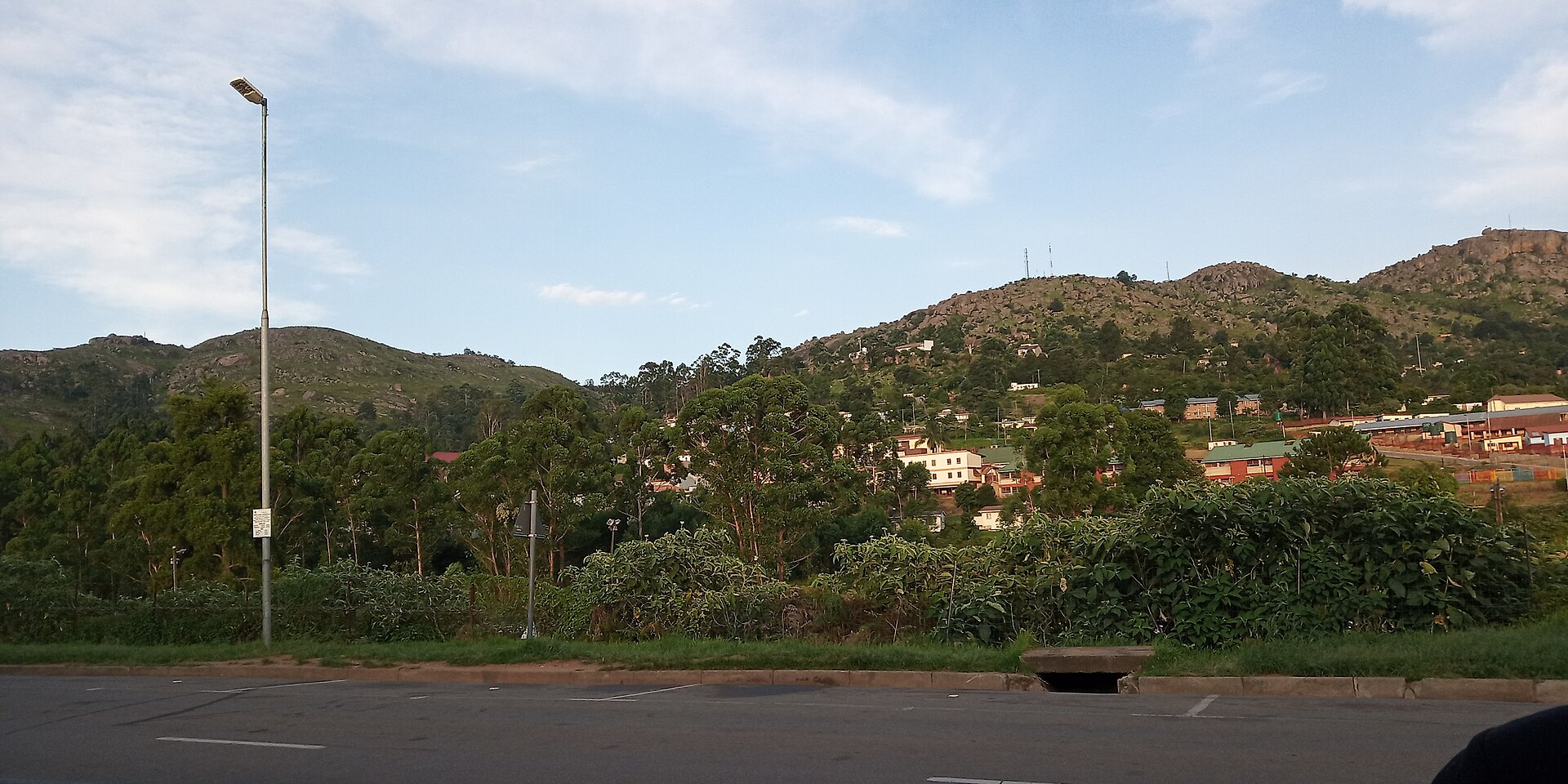
For bond investors and lenders, an affirmation at B2 means Moody’s view of credit risk is unchanged, but the debt path is heavier than at the 2024 upgrade. For background on the kingdom, see Eswatini Explained 2026.
More: Eswatini news in English, every day from The Rio Times.
Frequently Asked Questions
What does a B2 rating mean?
Moody’s places B2 below investment grade, a category for borrowers that carry higher credit risk. A stable outlook signals no change is expected soon.
Could Eswatini be downgraded?
Moody’s says a failure to rein in deficits would weaken the credit profile. Its stable outlook assumes the government resumes consolidation in 2027/28.
Part of our ongoing coverage
Africa: The New Scramble — the great-power contest over the continent.
Sources: Moody’s Ratings, rating action on the Government of Eswatini, reported on 27 November 2026 (full text not publicly accessible); International Monetary Fund, IMF staff statement on its 2026 annual review mission to Eswatini, 5 August 2026.
This article was produced by The Rio Times’ automated AI newsroom. Editorial responsibility: Matthias Camenzind, Publisher and Editor-in-Chief. The Rio Times also runs Ask Rio Times, which answers from 100,000+ of our own articles, the daily Latin America Power Map, and prediction-market odds on elections and markets.. How we use AI · Report an error