Milei Defends Central Bank’s Gold Hedge
The hedge loses money while gold rises and gains when it falls. The audit office stands by its 2025 loss figure, and its audit of the physical gold continues.

Economy: Argentina
President Javier Milei defended Argentina‘s central bank on Sunday 22 November against critics of its gold hedge, a set of contracts that protects the value of its gold. In a message on social media he asked whether anyone who questioned the hedge had come out to apologise.
The dispute began on Thursday 8 October, when the state audit office said the bank lost US$1.023 billion on gold contracts in 2025. The bank replied that the same position produced a net gain of US$2.505 billion.
Key Facts
- Who. Javier Milei, Argentina’s libertarian president, and the central bank (BCRA), which manages the country’s reserves.
- What. Milei defended the bank’s gold hedge; the state audit office reported a US$1.023 billion loss in 2025.
- When. Milei wrote on Sunday 22 November 2026; the audit was published on Thursday 8 October.
- Power Index. Argentina ranks 4th of 14 in The Rio Times Latin America Power Index, with 60.2 points (November 2026 edition).
- As of. 23 November 2026, 06:00 GMT
The hedge loses money while gold rises and gains when it falls. The audit office stands by its 2025 loss figure, and its audit of the physical gold continues.
Milei, a libertarian in office since December 2023, wrote in Spanish: “Can you imagine someone like that at the central bank, losing 40% of the gold position through technical failings? CIAO!” His message also cited a fall of 37.1% in gold, with no period stated.
Spot gold ended Friday 20 November 2026 at about US$3,525 an ounce, according to closing market data. That is about 37% below its record high of about US$5,595, reached on 29 January 2026.
The central bank, formally the Banco Central de la República Argentina (BCRA), said in a press release on 8 October that it has hedged its gold since 2007. A hedge here means derivative contracts, whose value follows the gold price, that move against the metal: “the underlying asset generates a gain, while the hedging instrument absorbs a loss”.
The bank said it hedges 100% of its gold position, so the contracts lose money in a year of rising gold. It added that a financial transaction cannot be both hedging and speculative at the same time.
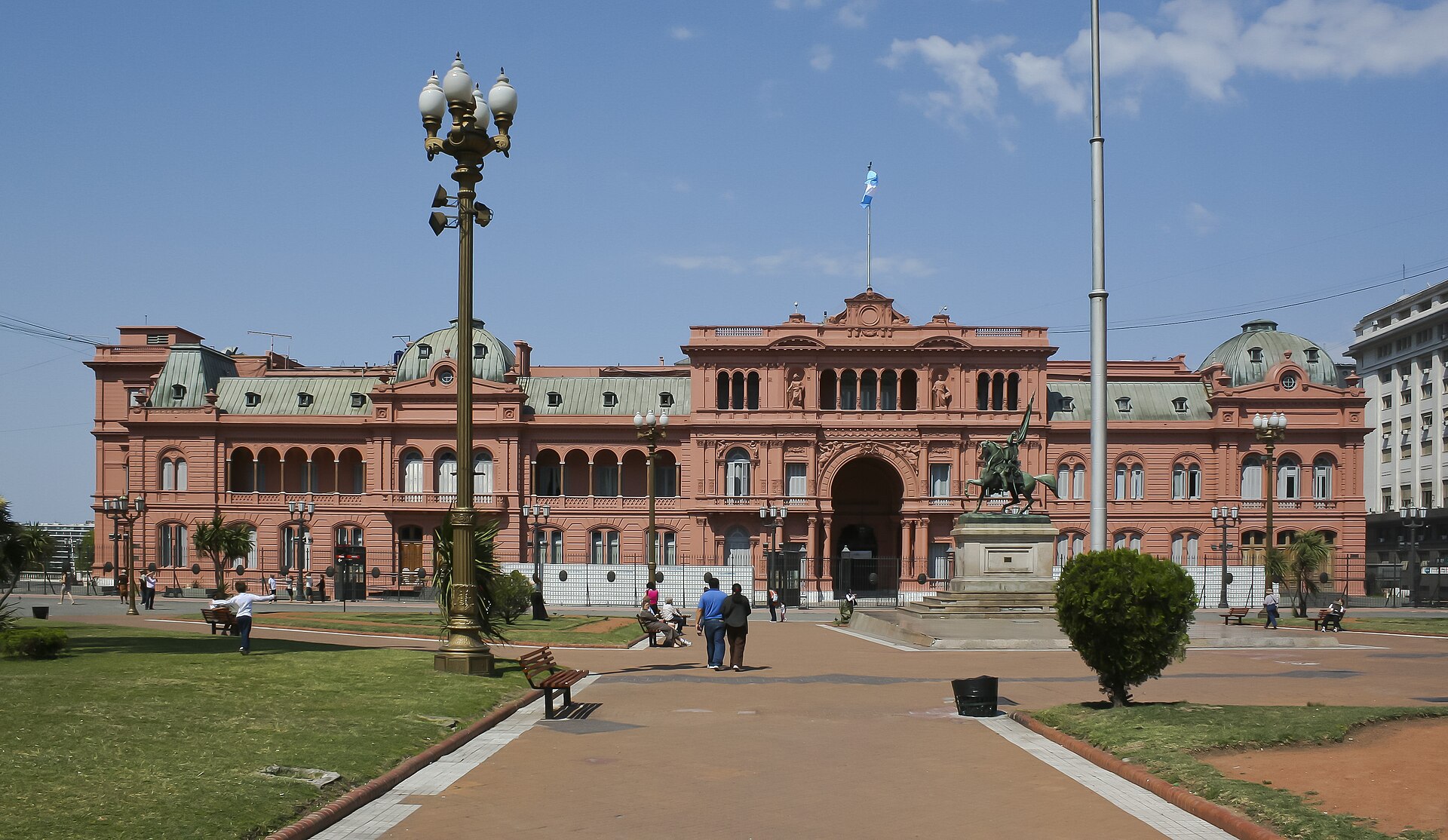
On 8 October the Auditoría General de la Nación, the state audit office led by Juan Manuel Olmos, published its audit of the bank’s 2025 accounts. It approved the accounts as reasonable, but Olmos said the bank lost US$1.023 billion on gold derivatives that year, made up of US$960 million of trading losses and US$62.8 million of fees for option contracts, paid from its foreign currency.
Olmos said: “In short, the Central Bank carried out financial operations speculating on a certain trajectory for the international price of gold, miscalculated and recorded a loss of US$1.023 billion, according to the accounting records.” He added that no loss of this size had been recorded since the audit office began auditing the bank, and that physical gold reserves had not been used before for risky transactions of this kind.
The bank answered the same day that its net result from the gold position in 2025 was a gain of US$2.505 billion. It said payments in 2007 to 2011, relative to the gold’s market value, were almost double those of 2025 and the audit office raised no observation then.
The bank accused the audit office leadership of acting “for purely political purposes”. Milei reposted its statement that day, writing “Lies are fought with information” in Spanish.
Martín Redrado, a former central bank president, called the loss a “technical calculation error” and asked for public explanations. Deputy Esteban Paulón, an opposition lawmaker, has filed a criminal complaint against Economy Minister Luis Caputo and central bank president Santiago Bausili, with no charges reported.
A separate dispute concerns where the gold is held, and on Wednesday 9 September 2026 central bank president Santiago Bausili told the Senate that part of the bars sent abroad in 2024 are held at the Bank for International Settlements, the Basel-based bank for central banks. The audit office has not confirmed where each bar sits.
Olmos wrote to Senator Juliana Di Tullio, of the Peronist opposition bloc, that the audit office was still analysing the traceability of the gold reserves. He said the delay of more than a year in giving the audit office access to the material was the reason, and that the 2025 accounts had not been approved at that date.
The bank’s 2025 financial statements list about 1.98 million troy ounces of gold, about 62 tonnes. At the 20 November price that stock is worth about US$7 billion, so each 10% move in gold shifts it by about US$700 million.
When gold falls, the hedging contracts gain, so the reserves lose less than the metal itself. The 2025 net gain is the bank’s own figure, and the audit office has not endorsed it.
The hedge does not settle the audit of the physical gold, which asks whether each bar can be traced rather than what the contracts earned. Olmos said the audit office is working on a separate management audit of the physical reserves and their transfer.
The audit office has said a separate management audit of the physical reserves is under way, and no date has been given. The bank is also pushing a reform of its charter that covers gold operations abroad, which is before Congress with no date known.
Frequently Asked Questions
What is a gold hedge?
It is a set of contracts that move opposite to the price of gold. They cost money when gold rises and pay out when it falls, so the bank’s holding keeps a steadier value.
Where is Argentina’s gold?
The central bank says part of it is held at the Bank for International Settlements. The audit office has not confirmed where each bar sits.
Sources
Banco Central de la República Argentina, press release “The BCRA recorded a net positive result of USD2,505 million from its gold position in 2025”, 8 October 2026 (BCRA); Auditoría General de la Nación, audit of the 2025 central bank accounts and statements by Juan Manuel Olmos, 8 October 2026; central bank president Santiago Bausili, Senate, 9 September 2026; Olmos letter to Senator Juliana Di Tullio; central bank weekly balance sheet, 7 September 2026; Banco Central de la República Argentina, comparative financial statements as of 31 December 2025; President Javier Milei, message of 22 November 2026; closing market data, 20 November 2026.
Connected Coverage
Argentina · Argentina central bank gold dispute · Latin America Power Map
In depth
This article was produced by The Rio Times’ automated AI newsroom. Editorial responsibility: Matthias Camenzind, Publisher and Editor-in-Chief. The Rio Times also runs Ask Rio Times, which answers from 100,000+ of our own articles, the daily Latin America Power Map, and prediction-market odds on elections and markets.. How we use AI · Report an error