Mercosur-Singapore FTA: A User’s Guide for Brazilian Companies

BRAZIL · TRADE
Key Facts
In force: Brazil promulgated the Mercosur-Singapore FTA through Decree No. 13,081, published on July 28, 2026; the agreement applies since August 1, 2026.
Singapore side: Immediate tariff elimination on 100% of Singapore’s tariff lines — though only liquors, tobacco, motor vehicles and petroleum products carried duties before.
Mercosur side: Duties phased out on 95.8% of negotiated lines — 25.6% immediately, the rest over four, eight, ten or fifteen years; 433 sensitive lines excluded entirely.
Proof of origin: Certificate of Origin from an authorized body such as FIEMG, or a Declaration of Origin on the commercial invoice — both in English, valid for one year.
Trade base: Bilateral goods trade reached US$10.7 billion in 2025; Brazil exported US$7.4 billion and ran a surplus of US$4.1 billion.
Block-wide soon: Argentina completed ratification on August 27 — once it deposits its instrument, the deal applies across all four founding members.
Runoff · Sunday, 25 October
Brazil Runoff 2026: Lula vs Flávio
Date, polls, debates, odds and how the runoff works, updated every day.
Brazil runoff polls · Polymarket and Kalshi odds · When results come
Prediction markets · who wins the runoff
Implied chance of winning Brazil’s presidency on 25 October, from traders’ prices.
Polymarket
Flávio Bolsonaro 76.5% · Lula 23.5% (US$188 million traded)
Kalshi (regulated in the US by the CFTC)
Flávio Bolsonaro 79% · Lula 21%
As of 19 October, 1:20 pm ET (18:20 Lisbon), updated every 20 minutes. Prices are bets, not polls, and can move fast.
Why we show this: prediction markets turn real-money bets into a live probability that moves within minutes of the news, which is why investors, campaigns and newsrooms in the United States now follow them closely. We show them next to polls and official results, never instead of them.
The Mercosur-Singapore FTA has been in force for Brazil since August 1 — this guide answers what exporters and importers actually ask: who gains, how to claim the tariff preference step by step, where the origin trap lies, and whether the deal is worth it.

Since August 1, Brazilian goods can enter Singapore duty-free — yet most companies that could benefit do not know which document they need, or whether they need one at all. The Mercosur-Singapore FTA is in force for Brazil; the practical question is no longer whether the deal exists, but how to use it.
What applies since when, in three sentences: Brazil promulgated the agreement through Decree No. 13,081, published in the Diário Oficial da União on July 28, 2026, and in force since August 1, 2026. Singapore grants immediate tariff elimination on 100% of its tariff lines; Mercosur phases out duties on 95.8% of negotiated lines — 25.6% immediately, the rest over four, eight, ten or fifteen years. We reported the ratification and headline numbers separately; this guide answers what exporters and importers are actually asking.
1. Am I affected?
That depends on the direction of your trade — and on an uncomfortable truth about Singapore.
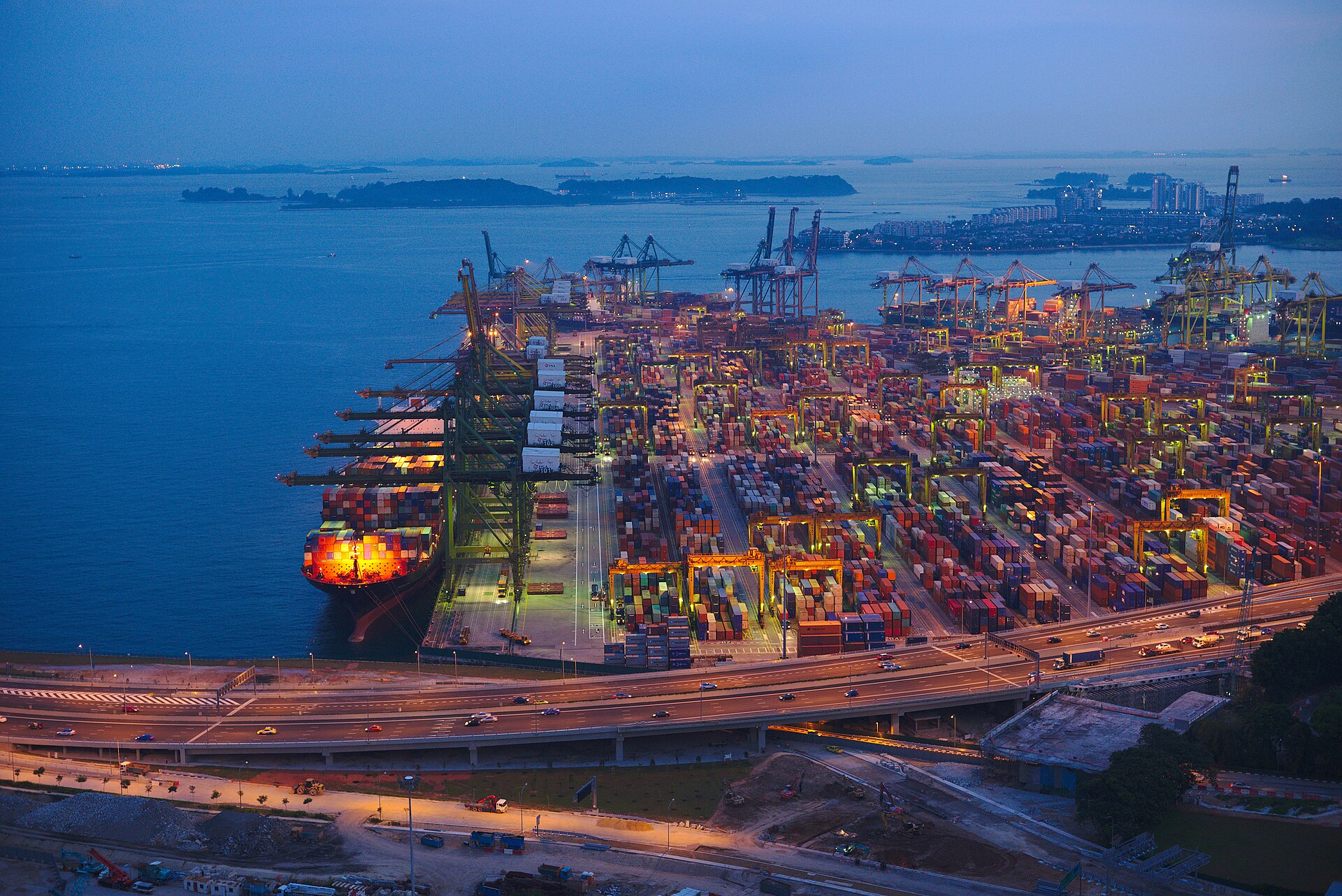
Exporting to Singapore. The city-state was already a free port: customs duties apply only to four categories — intoxicating liquors, tobacco products, motor vehicles and petroleum products. Everything else entered duty-free before the FTA. If you sell chicken, coffee, machinery or aircraft parts, the deal does not cut a tariff you were paying; it locks the zero rate into treaty law and adds the services and procurement chapters discussed below. Singapore’s 9% GST on imports is unaffected. If you export fuel — Brazil’s biggest sales line to Singapore — or beverages, verify your exact tariff line in the annexes before assuming the duty is gone.
Importing from Singapore. Here the phased liberalization is real. Of the lines Mercosur liberalizes, 25.6% dropped to zero on day one; the rest phase out over four, eight, ten or fifteen years. Another 433 lines — including sensitive plastics, machinery, electrical appliances and optical instruments — were excluded entirely. Brazil’s actual imports from Singapore concentrate in electronics, chemicals and equipment parts, so whether you gain depends on your NCM code, not the headlines. The lookup tool is the tariff dismantling table on the Siscomex commercial agreements page.
2. How do I claim the preference?
The Siscomex rules-of-origin manual lays out the sequence:
- Classify the product. Determine the correct HS/NCM tariff position — the preference attaches to the code, not to the product description.
- Check the staging category. Confirm in the dismantling tables whether your line is in the immediate-zero category or a staging basket.
- Test the origin rule. Look up the product-specific requirement in Annex 3-B of the agreement (see question 3).
- Produce proof of origin. Two options exist: a Certificate of Origin issued by an authorized Brazilian body — industry federations such as FIEMG issue it — or a Declaration of Origin that the exporter or producer places on the commercial invoice, packing list or other commercial document. Unlike other Mercosur states, Brazil enabled both modalities from day one. Both must be in English and are valid for one year.
- Claim at import. The preference is not automatic: the importer in Singapore must formally request it and hold the valid proof of origin.
Two compliance details matter. Keep all supporting documentation for at least five years — Singapore customs can verify origin retroactively. And if the document contains a formal error, the importer has 30 days to present a corrected version before the preference is lost.
3. Where is the origin trap?
A product assembled in Brazil from mostly Chinese components may not qualify. Origin is defined per tariff line in Annex 3-B — through a change of tariff classification, a regional value content threshold, or a specific processing requirement, depending on the product. Minimal operations (simple assembly, repacking, dilution) do not confer origin.
One mechanism helps: cumulation. Materials and processing from any Mercosur state — or from Singapore — count toward the origin of the final good. A Brazilian machine with Argentine components can still qualify. But misdeclaring origin is expensive: the agreement provides penalties for any person — exporter, producer, broker — who issues incorrect origin documents, and customs may suspend preferential treatment for repeat offenders.
4. What opens beyond goods?
Four chapters matter for non-exporters:
- Services. Market access and national treatment commitments, with sectoral annexes for financial, professional and postal services. Singapore highlights computer, R&D and construction services; for a Brazilian IT or engineering firm, the gain is a treaty-guaranteed right to equal treatment rather than a new market.
- Investment. The chapter covers pre- and post-establishment national and most-favored-nation treatment, free transfers of capital and returns, and a facilitation structure with focal points — “ombudspersons” — in each country to resolve investor grievances.
- Government procurement. Singaporean and Mercosur companies get non-discriminatory treatment in each other’s public tenders covered by the chapter — a concrete opening in one of Asia’s largest procurement markets.
- E-commerce. Mercosur’s first such chapter with an extra-regional partner: electronic authentication, online consumer protection, anti-spam rules, paperless trade and electronic invoicing. No commitments were made on taxing express shipments.
5. Is it worth it?
The honest answer requires the trade numbers. Bilateral goods trade reached US$10.7 billion in 2025: Brazil exported US$7.4 billion and ran a surplus of US$4.1 billion, making Singapore its seventh-largest export destination. But the flow is concentrated — fuel oils dominate, followed by machinery and meats. Brazil’s beverage exports to Singapore are around US$20 million a year, tobacco under US$100,000.
Because Singapore already charged zero duty on almost everything, the marginal tariff gain for most Brazilian exporters is small. The government projects about US$500 million per year in additional Mercosur exports to Singapore and an accumulated impact of R$28.1 billion (about US$5.5 billion) on Brazilian GDP by 2041. The more tangible medium-term gains sit on the import side — cheaper electronics, chemicals and machinery inputs as the staging calendars run down — and in the services and procurement chapters. Treat the deal as infrastructure, not a windfall.
6. What comes next?
Argentina’s Chamber of Deputies completed ratification on August 27 (234 votes to 4; the Senate approved in May), closing the last gap: once Argentina deposits its instrument, the agreement applies across all four founding members. For Brazilian exporters this changes little on tariffs but enlarges cumulation — Argentine inputs now clearly count toward origin. Further ahead, MDIC’s public consultation on a Mercosur–Japan FTA (Circular Secex No. 50/2026) closed on August 15, with talks expected to follow.
Where to find what
- Manuals and tariff tables: Portal Siscomex → Acordos Comerciais → Mercosul–Singapura (Manual de Regras de Origem; Manual de Desgravação Tarifária; staging tables).
- Certificate of Origin: issued by authorized entities such as state industry federations — FIEMG offers the service and a readiness self-diagnosis ([email protected]).
- Customs questions: Receita Federal (COANA) on the Brazilian side; Singapore Customs on the other.
- Singapore-side guidance: Enterprise Singapore’s MCSFTA page, including the legal text and rules-of-origin schedules.
- Government: MDIC/Secex for the agreement’s administration; Itamaraty for treaty status.
(Exchange rate basis: 5.15 reais to the dollar, Yahoo Finance, September 2, 2026.)
Background reading: Mercosur Strikes Its First Asia Deal, and Singapore Is the Door · Mercosur Singapore FTA: Brazil Opens Zero-Tariff Asia Trade · Argentina Ratifies Mercosur-Singapore Trade Deal in Final Vote
Background: our brazilian economy guide.
More: Brazil news in English, every day from The Rio Times.
Background: our brl to usd understanding the brazilian real exchange rate guide.
This article was produced by The Rio Times’ automated newsroom system. How we use AI · Report an error · Editorial responsibility: Matthias Camenzind, Editor-in-Chief