Liberia Tax Take Passes US$1.2 Billion
Liberia's tax haul has passed US$1.2 billion this year, but the books are unaudited and two mining payers carry much of the weight.

Liberia Economy
Liberia’s tax collectors had gathered US$1,211,728,275 in domestic revenue by Friday 27 November 2026, according to the Liberia Revenue Authority (LRA), the national tax and customs agency. The figure covers 1 January to that date and sits on the agency’s public online dashboard.
More than a third of it rests on two companies, ArcelorMittal Liberia, an iron ore producer, and Bea Mountain Mining Company, a gold miner. The International Monetary Fund (IMF), which lends to Liberia, has flagged a one-off mining concession payment as a priority for careful management.
Key Facts
- Who. The Liberia Revenue Authority, the national tax and customs agency.
- What. US$1.21 billion in domestic revenue, not yet audited, with two mining companies paying about 35%.
- Where. Liberia, a West African country that uses the US dollar.
- When. Year to date, as of the dashboard’s latest daily update.
- As of. 28 November 2026, 12:00 GMT.
Liberia’s tax haul has passed US$1.2 billion this year, but the books are unaudited and two mining payers carry much of the weight.
The dashboard is titled the LRA Unreconciled Collections & Revenue Performance Dashboard (FY2026). The agency calls the figures unreconciled, meaning they are not yet audited and matched to final accounts.
The total is therefore a running count and not a final result. It is still the most current public measure of what the Liberian state has collected at home this year.
The LRA said on 29 December 2025 that it had collected about US$818 million in 2025, up from US$699 million in 2024. This year’s running total is about 48% higher than that, and above the US$1.176 billion domestic revenue target that the LRA says the government set for fiscal year 2026.
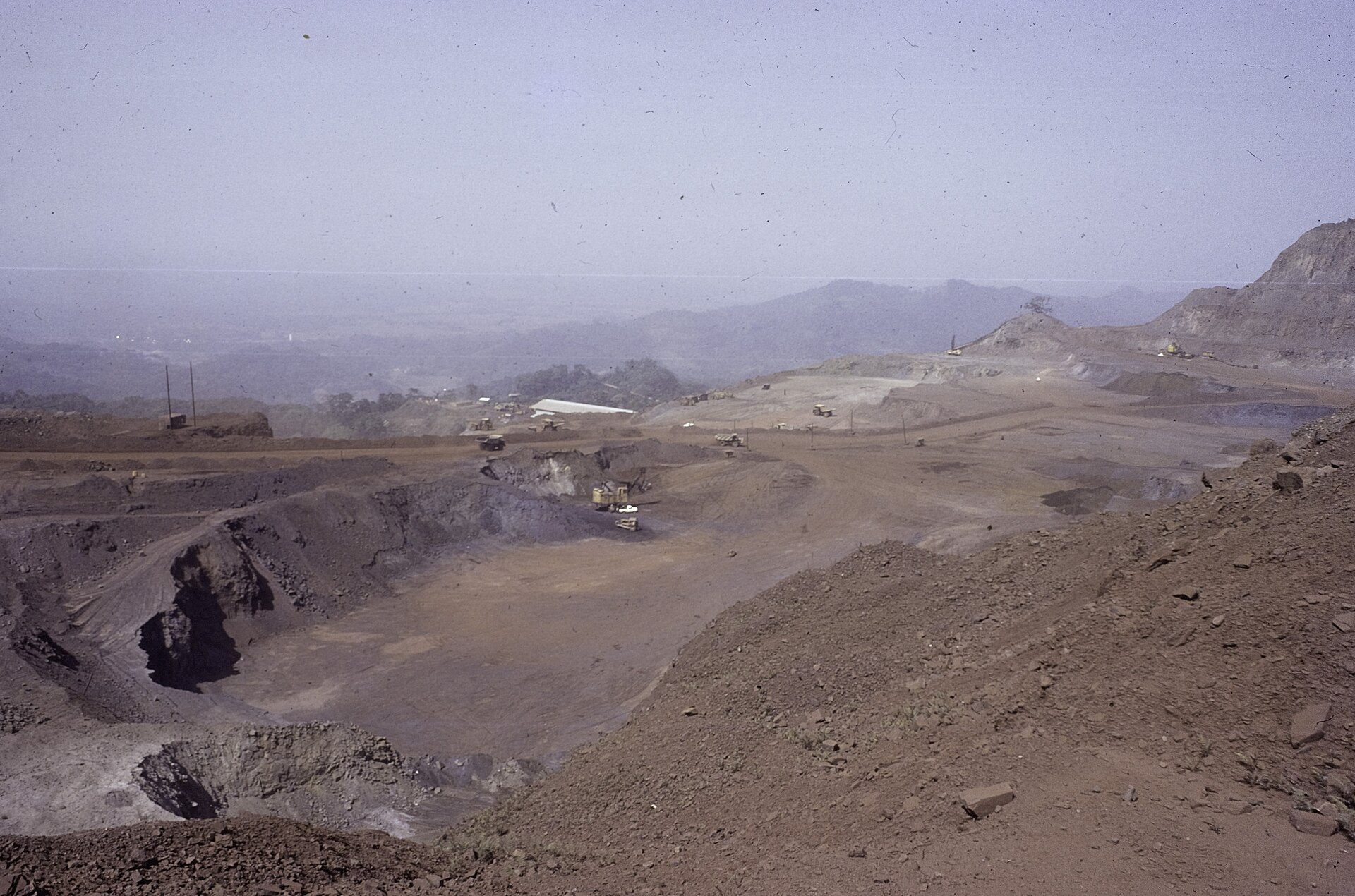
ArcelorMittal Liberia, the local arm of the global steelmaker, which mines iron ore at Tokadeh in Nimba County, is the largest payer at US$289.5 million, the dashboard shows. Bea Mountain Mining Company comes second at US$134.1 million.
Together the two paid US$423.5 million, about 35% of the total. The ten largest payers contributed US$608.3 million, about 50%.
The Civil Service Agency, a government body, is third at US$46.7 million, and Orange Liberia, a mobile phone operator, fourth at US$37.5 million. No other payer on the list passed US$24 million.
The concentration has a recent cause: Liberia’s legislature ratified an amended Mineral Development Agreement, the contract that sets ArcelorMittal’s mining terms, on 29 January 2026, extending it to 2050. ArcelorMittal’s filing of 30 January with the US Securities and Exchange Commission, the American market regulator, says the company “will pay $200 million to the Government of Liberia” for the mining rights extension and reserved railroad capacity.
The dashboard does not say how much of the steelmaker’s US$289.5 million is that one-off payment. The IMF, in a statement of 28 September 2026 on the fourth review of Liberia’s Extended Credit Facility (a lending programme), calls managing a “one-off mining concession payment” prudently and transparently “a stated priority”, without naming the company.
The authorities intend to “phase the use of mining windfall resources over 2026-27”, the IMF said, citing implementation capacity constraints. That means the money is meant to reach the budget in stages and not in a single year.
The Fund’s route to steadier income is the Value Added Tax (VAT), a sales tax collected at each stage of production, which the statement lists as a priority for 2027. Combined with mining tax reform and fewer tax exemptions, the IMF links a successful rollout to steadier revenue.
The economy is growing while this plays out. The IMF said real GDP growth reached 5.1% in 2025 and is projected to accelerate to 5.5% in 2026.
A tax base shaped like this depends heavily on the output and tax bills of a handful of firms. The published figures cannot yet separate ordinary taxes from the one-off payment, so the regular take is not known.
For American readers the ties are direct: Liberia uses the US dollar alongside the Liberian dollar. ArcelorMittal, whose Liberian mining deal was disclosed in a filing with the US Securities and Exchange Commission, tops the payer list.
The VAT is a stated plan for 2027, not a dated step. The IMF statement gives no date for the next review.
Liberia news · Liberia’s revenue milestone in September
Frequently Asked Questions
What does ‘unreconciled’ mean for these figures?
It means the collections have been counted but not yet audited and matched to final accounts. The totals are a running tally and can still be adjusted.
Why does mining matter so much to Liberia’s budget?
A few large mining firms pay a big share of all domestic taxes, so the state’s income follows their output and their agreements. That is why lenders press for a wider tax base.
Sources
- Liberia Revenue Authority, Unreconciled Collections & Revenue Performance Dashboard (FY2026)
- ArcelorMittal press release, 30 January 2026 (SEC Form 6-K, Exhibit 99.1)
- IMF press release, 28 September 2026, Liberia fourth review ECF and first review RSF
- Liberia Revenue Authority, ‘LRA Exceeds 2025 Revenue Target With US$818 Million Collection’, 29 December 2025
This article was produced by The Rio Times’ automated AI newsroom. Editorial responsibility: Matthias Camenzind, Publisher and Editor-in-Chief. The Rio Times also runs Ask Rio Times, which answers from 100,000+ of our own articles, the daily Latin America Power Map, and prediction-market odds on elections and markets.. How we use AI · Report an error