Djibouti Signs Status of Forces Agreement for EU Red Sea Mission

Africa · Eastern
Key Facts
—The Agreement. Djibouti and the EU signed a Status of Forces Agreement on 17 July 2026, establishing a legal framework for Operation ASPIDES on Djiboutian soil.
—The Mission. EUNAVFOR ASPIDES is a defensive naval operation launched in February 2024 to safeguard freedom of navigation against Houthi attacks in the Red Sea and Gulf of Aden.
—The Money. The EU has committed over €17 million in common costs for ASPIDES and a separate €10 million through the European Peace Facility to strengthen Djibouti’s navy.
—The Hub. Djibouti already hosts military bases belonging to the United States, China, France, and Japan, making it one of the world’s most crowded geostrategic chokepoints.
—The Signal. The agreement transforms ASPIDES from a floating presence into a based operation, signalling the EU’s intent to be a long-term security actor in the Indo-Pacific’s western flank.
Djibouti and the European Union sealed a new Status of Forces Agreement on 17 July 2026, granting EUNAVFOR ASPIDES a formal legal base to operate from Djiboutian territory and locking in Europe’s ability to protect commercial shipping through the Red Sea for as long as necessary.
The signing in Djibouti: what the Status of Forces Agreement delivers
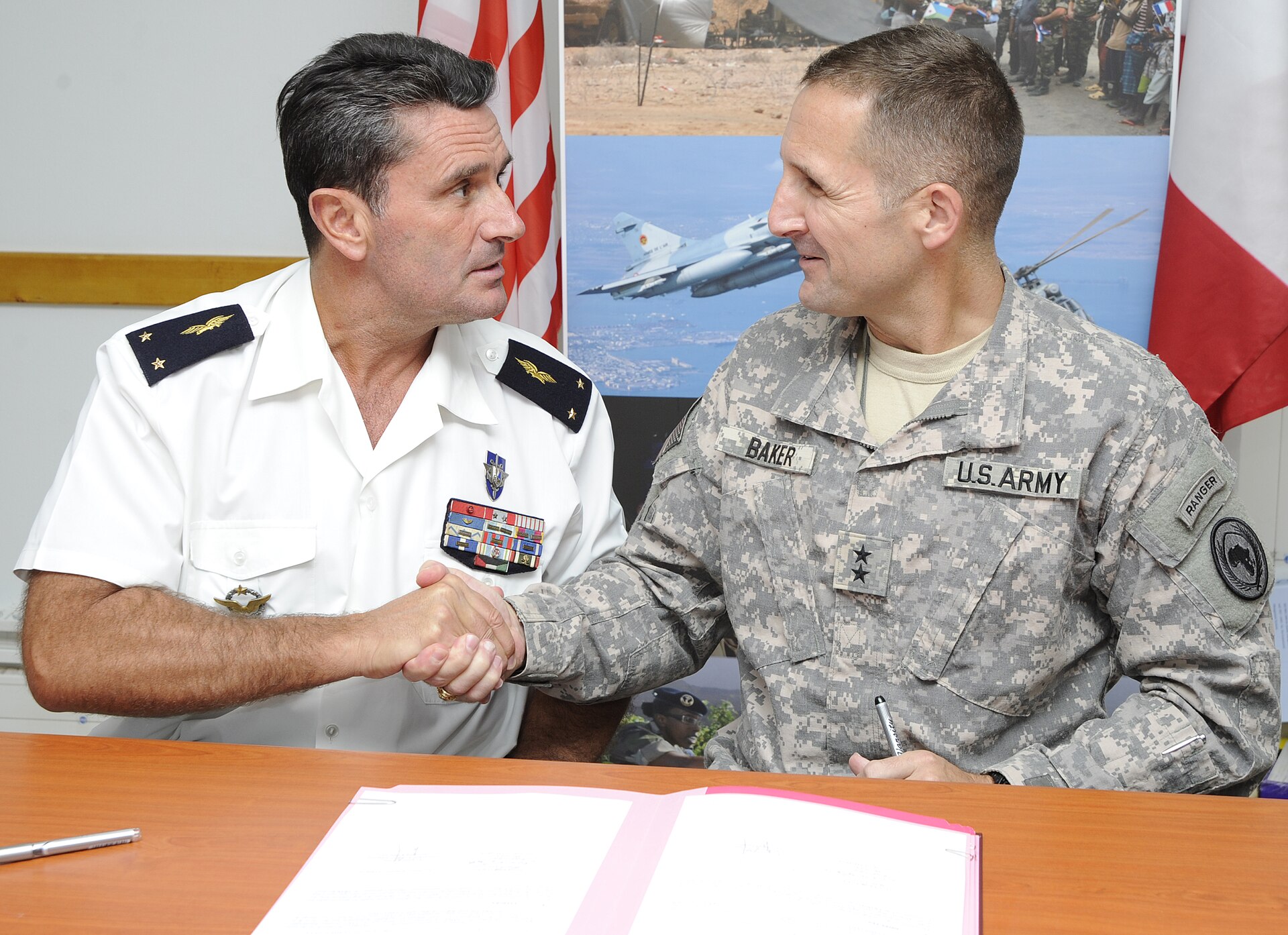
The agreement was signed during an official visit by Kaja Kallas, the EU’s High Representative for Foreign Affairs and Security Policy and Vice-President of the European Commission, and was announced by Djibouti’s state news agency. It establishes the legal framework for the EU’s EUNAVFOR ASPIDES naval operation in the country, governing the presence and activities of European forces on Djiboutian soil.
While the full text remains unpublished, the SOFA parallels the earlier EU–Djibouti agreement for Operation Atalanta, defining the status, privileges, and immunities of EU personnel, as well as rules for entry, exit, movement, jurisdiction, logistics support, and dispute settlement. Djiboutian and EU officials emphasised that the accord ensures access to and support for European ships and air assets for as long as they are needed.
Operation ASPIDES: mandate, money, and the Red Sea theatre
EUNAVFOR ASPIDES was created by a Council Decision of 8 February 2024 as a purely defensive maritime security operation responding to Houthi attacks on international shipping. Its core tasks include safeguarding freedom of navigation, escorting merchant vessels, increasing maritime surveillance, and defending against strikes targeting commercial traffic.
The operation’s theatre stretches from the Bab al-Mandab Strait and the Red Sea through the Gulf of Aden, Arabian Sea, Gulf of Oman, and into the Persian Gulf, intersecting the world’s most critical shipping lanes for container traffic, oil, and liquefied natural gas. The initial reference amount for common costs was €17 million, and when the Council prolonged the mandate until 28 February 2026 it raised that figure to over €17 million, though member states bear additional national operational costs that push total commitments considerably higher.
Djibouti’s chokepoint economy and the great-power crowd
Djibouti sits at the Bab al-Mandab Strait, the southern gateway between the Red Sea and the Gulf of Aden, and is often described as one of the world’s most important maritime chokepoints. Hosting foreign military bases has become a significant source of government revenue, with earlier analysis estimating that French military spending alone once accounted for roughly 20 percent of Djibouti’s annual GDP.
The country is uniquely crowded: it is the only place on earth with at least eight foreign military bases, including Camp Lemonnier for the United States, China’s first overseas military base built in 2017, a long-standing French presence under a new defence treaty signed on 2 July 2024, and facilities belonging to Japan. President Ismaïl Omar Guelleh has previously accused the UAE of destabilizing East Africa through what he termed “backroom deals backed with sacks of cash,” a charge that underscores the complex web of rivalries among the external powers jostling for influence on Djiboutian soil.
Our reporting has shown that this base-leasing model is the backbone of Djibouti’s economy, with annual rents from the U.S., France, China, and Japan alone estimated at $140–200 million. That economic dependence makes the arrival of a new EU tenant a direct reinforcement of President Guelleh’s strategic playbook, but it also deepens the country’s vulnerability to any geopolitical shock that could disrupt those revenue streams.
This concentration has turned Djibouti into a laboratory for new forms of military cooperation and a hub of great-power rivalry over airstrips, ports, and logistics centres, a dynamic we track closely in our pillar Africa: The New Scramble.
Why the EU is planting its flag now
Kallas’s visit to Djibouti coincided with reports that Tehran had asked the Houthis to shut the Bab al-Mandab if the United States strikes Iranian infrastructure, threatening a second global shipping chokepoint beyond the Strait of Hormuz. Recent Houthi missile attacks on Saudi Arabia reinforced the message that instability on land rapidly becomes insecurity at sea, and the EU’s decision to travel in person and sign a binding SOFA was framed by European outlets as Brussels planting its flag.
The agreement cements a European foothold in a country that already hosts American, French, Japanese, and Chinese bases within sight of one another, and it transforms ASPIDES from a floating naval presence into a based operation with predictable access to ports, airfields, fuel, and local contracts. For the EU, this is a concrete step toward strategic autonomy in protecting the supply chains, energy flows, and trade routes on which European economies depend.
Money, contracts, and the European Peace Facility
Beyond the SOFA itself, the EU is coupling its military presence with direct financial support to Djibouti’s armed forces. In 2024 the Council adopted a first assistance measure for Djibouti under the European Peace Facility worth €10 million, aimed at strengthening the navy to safeguard sovereignty and reinforce maritime security in the Red Sea.
This funding complements larger development flows, including a major desalination project that received approximately €73 million in European support for its first phase, and broader Global Gateway investments in port and logistics infrastructure. For European and regional contractors, the expanded EU footprint means rising demand for port services, bunkering, repair, housing, and construction.
What the Status of Forces Agreement means for business and risk
For shipping firms, insurers, and commodity traders, the SOFA and ASPIDES’ escort capabilities offer a measure of predictability on a route that has seen severe disruption since late 2023. EU-escorted corridors may become preferred pathways for European and allied carriers, affecting freight rates, transit times, and port throughput in Djibouti and neighbouring hubs.
Yet the concentration of foreign militaries also raises systemic risk: Djibouti’s growing reliance on multiple external powers makes it a potential front-line theatre in the event of a major confrontation or an attack on foreign facilities. Corporate risk managers will need to weigh the day-to-day deterrence benefits against the longer-term exposure that comes with operating in one of the world’s most militarised postcodes.
Connected Coverage
Frequently Asked Questions
What is a Status of Forces Agreement and why does it matter for EUNAVFOR ASPIDES?
A Status of Forces Agreement is a legal instrument that defines the rights, privileges, and immunities of foreign military personnel operating on a host nation’s territory. For ASPIDES, the new SOFA with Djibouti provides a predictable legal base, ensuring European ships and air assets can access ports, airfields, fuel, and logistics support for as long as the mission requires.
How does the EU’s presence in Djibouti fit into the wider great-power competition?
Djibouti already hosts military bases belonging to the United States, China, France, Japan, and Italy, making it a unique laboratory for military coexistence and rivalry. The EU’s new SOFA adds a distinct European pillar to this crowded landscape, giving Brussels direct situational awareness and a bargaining seat alongside Washington and Beijing in regional security dialogues.
What are the business implications of the Djibouti-EU agreement?
The agreement increases demand for port services, bunkering, logistics, and construction in Djibouti, creating contract opportunities for European and regional firms. For shipping and insurance markets, EU-escorted corridors through the Red Sea may reduce transit times and premium costs, though the concentration of foreign bases also introduces longer-term political risk.
This article was produced by The Rio Times’ automated newsroom system. How we use AI · Report an error · Editorial responsibility: Matthias Camenzind, Editor-in-Chief
Horn of Africa and the Red Sea
- Horn of Africa 2026: Why It Matters and Who Backs Whom
- Ethiopia’s Neighbors Explained, Ports, Eritrea, Somalia
- Eritrea Explained 2026, a Red Sea Country Guide
- Somalia Explained: Al-Shabaab, Somaliland, the Ports and the Fight Over a 2026 Vote